Walking through Jongmyo Shrine, Changdeokgung Palace, and Seolleung Tomb in the
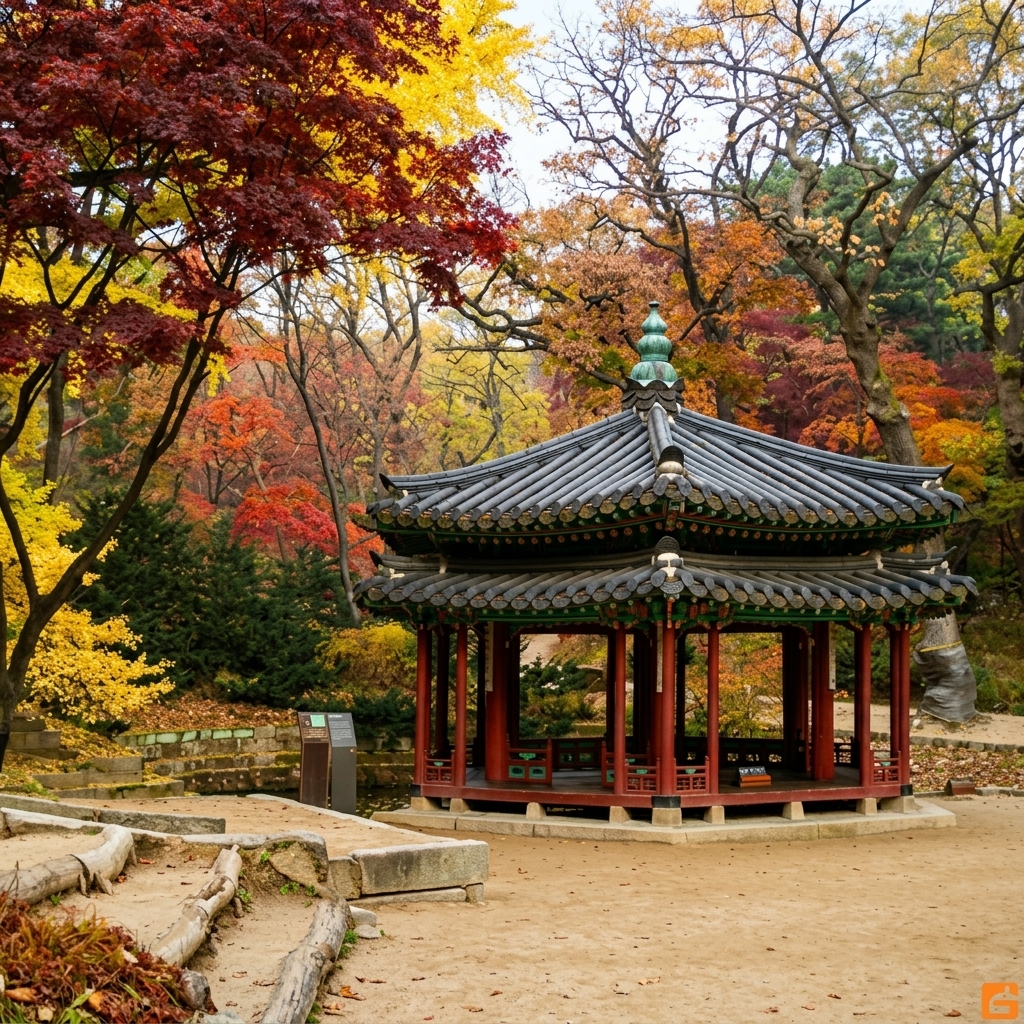
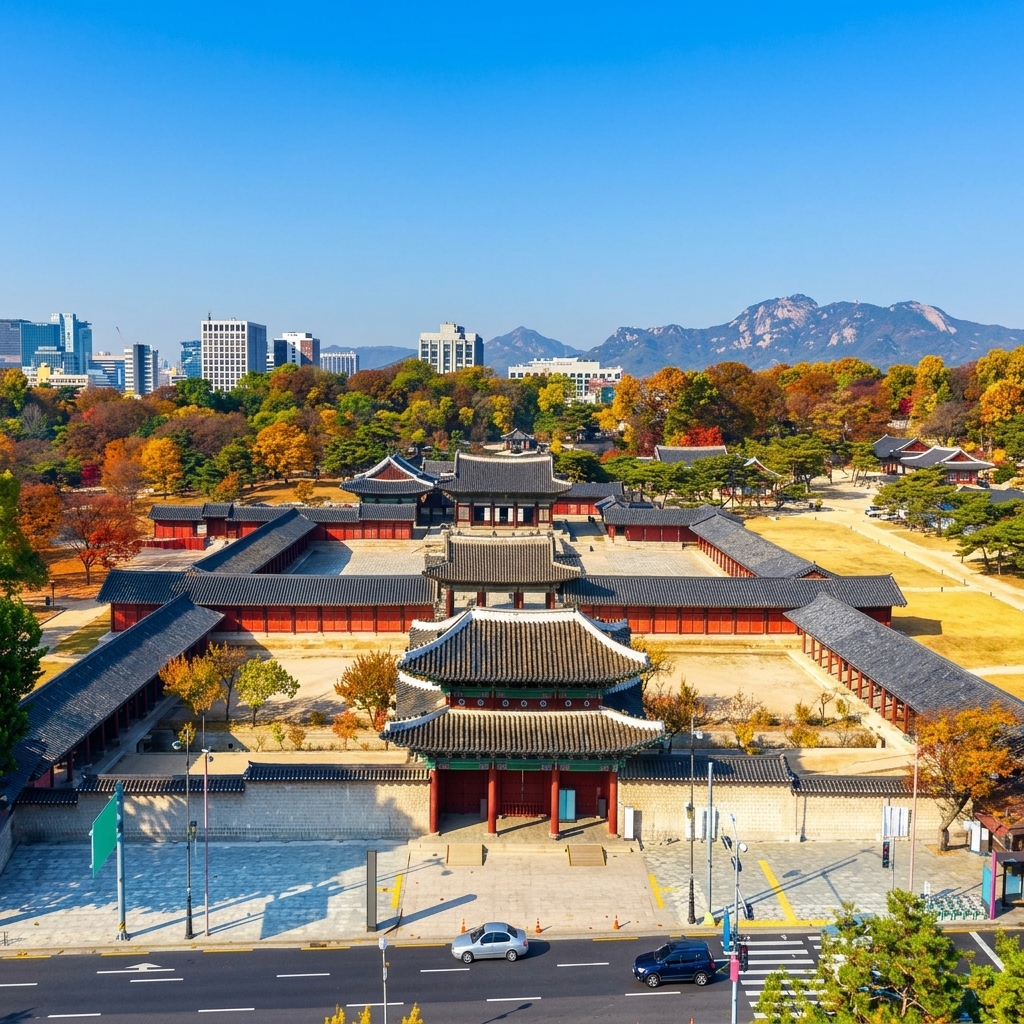
If you connect Jongmyo Jeongjeon, Changdeokgung Injeongjeon, Seolleung, and Jeongneung in a single flow, it becomes clearer how the old power and rituals of Seoul were arranged along a certain path. Jongmyo is a royal shrine that houses the spirit tablets of past kings and queens, Changdeokgung Injeongjeon is the hall where the king held national ceremonies, and Seolleung and Jeongneung are the royal tombs of the Joseon Dynasty, which remain within the Gangnam district. Rather than simply looking at the large buildings, you can naturally understand the order of rituals and national ceremonies by passing through the gates, entering the courtyard, and following the path to the main hall or the tomb.
Jongmyo and Changdeokgung in Jongno are easily accessible on foot, and Seolleung and Jeongneung can be added to a day trip by using the subway to travel to the Gangnam area. However, Jongmyo and the royal tombs have a strong character as quiet ritual spaces, and there are also areas with separate viewing methods, such as the Secret Garden of Changdeokgung, so it is best to check the official viewing guide before visiting.
Jongmyo Jeongjeon, a royal shrine created with a low and long horizontal line
Jongmyo is a national shrine where rituals were held for the past kings and queens of the Joseon Dynasty, and it was designated as a UNESCO World Heritage Site in 1995. If the palace was the space where the king lived and carried out politics, Jongmyo was the place where the spirit tablets of the deceased king and queen were enshrined and the foundation of the country was confirmed. Therefore, when you enter Jongmyo, it seems that the direction of the path, the height of the floor, and the empty courtyard speak to you before the flashy decorations catch your eye.
After passing through the outer gate, a path paved with stone slabs leads inward, and in the middle is the spirit path. The spirit path was considered the path for spirits and rituals, and the path for the king and the crown prince was separated. In the actual viewing route, visitors are often guided not to step on the middle path, so Jongmyo makes you feel the order of the ritual space through the way you walk.
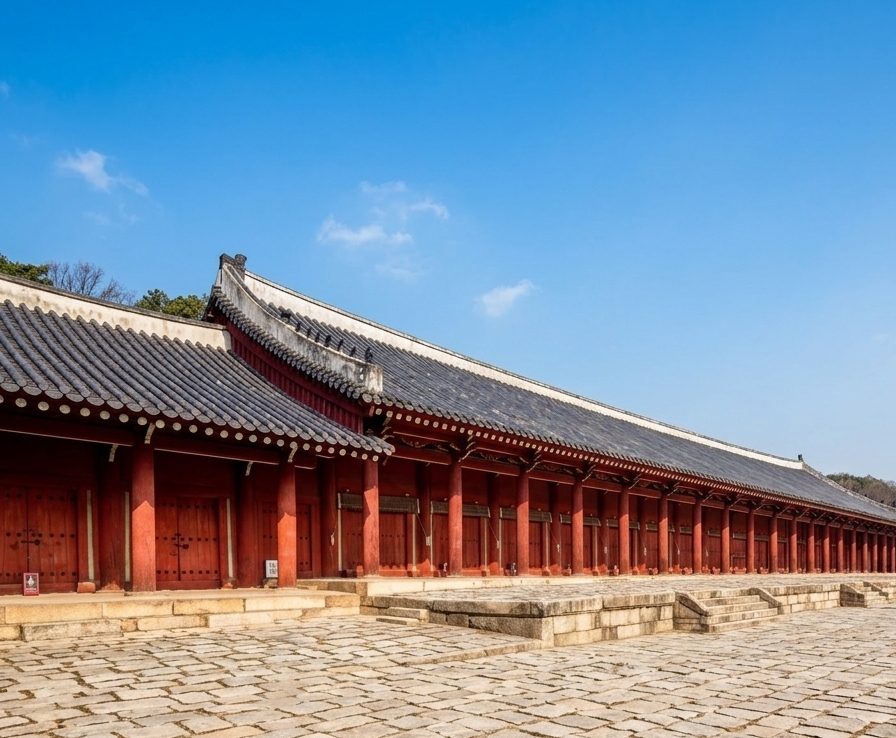
When you reach the front of Jeongjeon, a wide platform and stone courtyard stretch out, and behind it, the low roofline of Jeongjeon continues for a long time. Jeongjeon is the main building of Jongmyo, also called Taemyeongjeon, and currently houses the spirit tablets of 19 kings and queens. Yeongnyeongjeon, the annex, has 16 rooms, and the Gongsin Hall in front of the Jeongjeon platform houses the spirit tablets of meritorious subjects of the Joseon Dynasty, showing that Jongmyo was a space that remembered not only the royal ancestors but also those who made contributions to the country.
Jeongjeon was not always as long as it is now. As the dynasty continued, the number of spirit tablets to be enshrined increased, and each time, rooms were added, expanding it into the long building it is today. Rather than adding decorations to establish authority, the repeated pillars, the shadows under the dark eaves, and the wide, empty platform create solemnity. Even though it is the same wooden architecture, it is different from the flamboyant decorations of the palace's Jeongjeon, and the austerity and restraint that Confucian rituals valued are reflected in the building's expression.
Rather than simply looking at the Jeongjeon Hall and leaving, if you also consider the roles of the Hyangdaecheong, Jaegung, and Jeonsacheong, you will get a more concrete picture of Jongmyo Shrine. The Hyangdaecheong was where incense, ritual texts, and ceremonial food were stored for use in rituals, and the Jaegung was the space where the king and crown prince prepared their minds and bodies before the ceremony. Ritual food was prepared at the Jeonsacheong, so the Jongmyo Shrine's ritual was not just an event that took place in front of the Jeongjeon Hall, but a national rite completed by various buildings within the grounds each taking on its own role.
Even today, the Jongmyo Great Sacrifice and Jongmyo Ritual Music are preserved at Jongmyo Shrine. In the Joseon Dynasty, rituals were held according to the season, and today, rituals, music, and dance are performed together according to a set schedule. After viewing, it is nice to walk towards Changgyeonggung Palace or Changdeokgung Palace, and Jongno 3-ga and Ikseon-dong alley are also nearby, so you can naturally combine a quiet tour of cultural heritage with a stroll through the city.
Changdeokgung Palace's Injeongjeon Hall, where the king's rituals and traces of modernity remain
Changdeokgung Palace's Injeongjeon Hall is the main hall of Changdeokgung Palace, where national official ceremonies such as the king's inauguration, courtiers' greetings, and receptions for foreign envoys were held. The name "Injeong" contains the meaning of virtuous politics, and the building is designated as a national treasure. Changdeokgung Palace itself was registered as a UNESCO World Heritage Site in 1997, and its characteristic feature is that it arranged the main buildings and rear garden without disturbing the mountainside and topography.
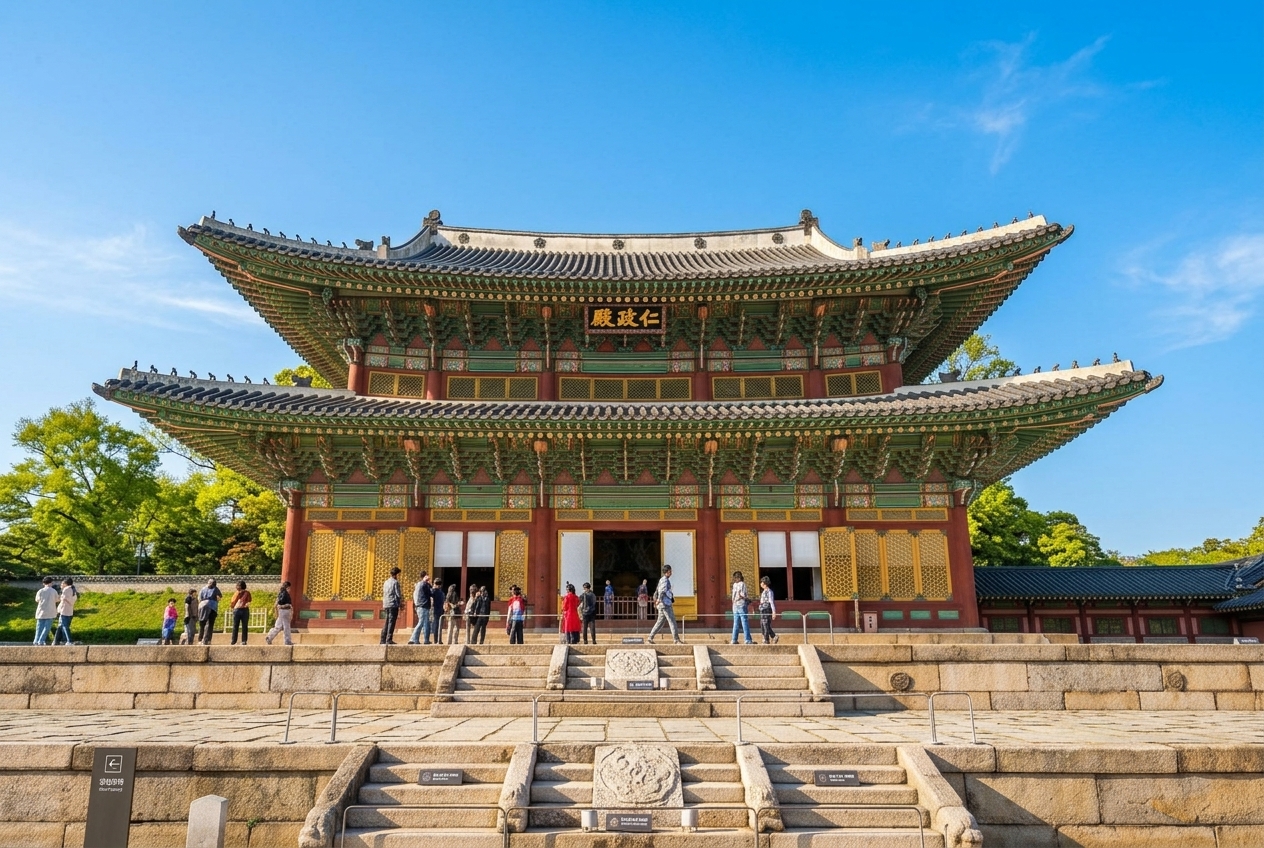
As you pass through Donhwamun Gate and cross Geumcheon Bridge, you will gradually feel like you have entered the palace grounds. When you pass through Injeongmun Gate and stand in front of Injeongjeon Hall, you will see a row of rank stones, which were where court officials stood according to their ranks during ceremonies. The hall where the king stayed is located on a high platform, and the courtyard where courtiers lined up is spread out below it, so the hierarchy of Joseon Dynasty palace rituals is conveyed even by the height of the floor.
Injeongjeon Hall was built at the same time as Changdeokgung Palace during the reign of King Taejong of Joseon and has undergone several fires and reconstructions. It is said that the current building was rebuilt in 1804, the fourth year of King Sunjo's reign. The hall, which has five bays on the front and four bays on the side, appears to be a two-story building from the outside, but the inside is composed of a high, open space, giving it the grandeur befitting the king's ceremonial space. The brackets supporting the eaves and the colorful paintings are elaborate, but thanks to the wide courtyard surrounding the hall, it does not feel too heavy.
Inside Injeongjeon Hall, there is the king's seat, called the eojwa, and behind it is placed a painting of the sun, moon, and five peaks. The painting of the sun, moon, and five peaks, which depicts the sun, moon, and five mountains, is a painting that symbolizes royal authority, and it was the background for palace ceremonies that were only completed when the king sat on the eojwa. The ceiling and interior decorations are also decorated with elements symbolizing royal power, so you can see that Injeongjeon Hall was not just a meeting place but a stage where national official scenes were staged.
The reason this hall is particularly interesting is because it contains both the traditions of Joseon Dynasty palaces and the changes of the late Korean Empire in one space. After King Sunjong moved his residence to Changdeokgung Palace in 1907, electric lights, glass windows, and curtains were installed during the renovation of Injeongjeon Hall, and the floor was also changed from stone tiles to wooden floors. The fact that modern lighting and glass windows remain next to the eojwa and painting of the sun, moon, and five peaks, which are symbols of royal rituals, shows the atmosphere of the time when Joseon palaces were changing.
After visiting Injeongjeon Hall, if you continue walking towards Gungnaegaksa, Seonjeongjeon, and Heojeongdang, you will find that the spatial arrangement of Changdeokgung Palace is well organized. Gungnaegaksa is the area where the palace's government offices were located, and Seonjeongjeon is the hall where the king discussed state affairs with his officials. As you move towards Heojeongdang and Daejojjeon, the area becomes more of a royal living space, allowing you to naturally compare the formality of Injeongjeon Hall with the palace's everyday functions.
The Secret Garden of Changdeokgung Palace may have different viewing and operating methods, so it is best to check in advance whether reservations are required. If you plan to visit the Secret Garden as well, it is recommended to first see the Injeongjeon area and then follow the path that leads to Buyongji Pond, Aeryeonji Pond, and the Jondeokjeong area, so that you can calmly observe how the palace buildings and garden are connected.
Seolleung and Jeongneung: The Royal Tombs Remaining in the Gangnam City Center
Seolleung and Jeongneung are royal tombs located in the Gangnam district, amidst the high-rise buildings of Samsung-dong. Seolleung is the tomb of King Seongjong, the ninth king of the Joseon Dynasty, and his third queen, Queen Jeonghyeon. Jeongneung is the tomb of King Jungjong, the eleventh king of the Joseon Dynasty. The royal tombs of the Joseon Dynasty were designated as a UNESCO World Heritage Site in 2009, and Seolleung is a representative place where you can walk through the royal tomb's ritual space and forest path in the heart of Seoul.
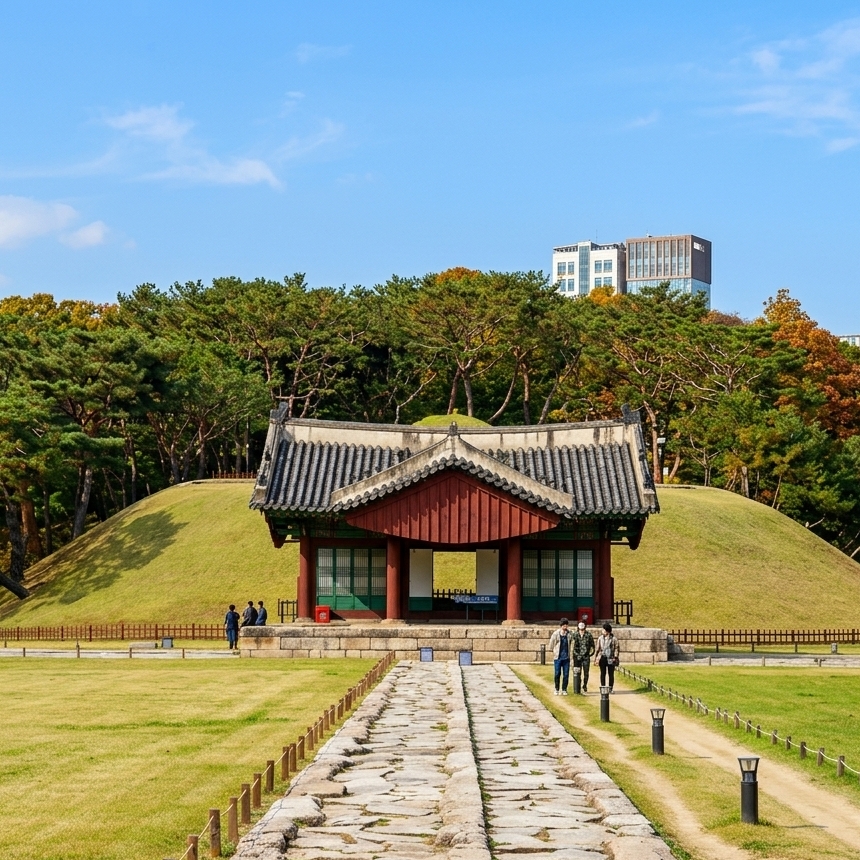
As you pass the entrance and enter the forest path, the noise from the surrounding roads subsides, and the basic structure of the royal tomb, consisting of the red gate, the ceremonial path, and the Jeongjajeong pavilion, appears in order. The red gate marks the beginning of the sacred area, and the ceremonial path shows the distinction between the path where incense and offerings were carried during the ritual and the path where the officiating priests walked. The Jeongjajeong pavilion is the building where the ritual was held, and it is not directly facing the tomb but is located below the tomb in accordance with the ritual procedure.
Seolleung is in the form of a double tomb, where the tombs of King Seongjong and Queen Jeonghyeon are located on different hills within the same tomb area. When viewed from the front of the Jeongjajeong pavilion, the tomb of King Seongjong is on the western hill, and the tomb of Queen Jeonghyeon is on the eastern hill. It is known that the tomb of King Seongjong is surrounded by a screen stone and a balustrade stone, while the tomb of Queen Jeonghyeon has a balustrade stone without a screen stone, so you can observe the difference in the arrangement of the stone structures even within the same Seolleung area.
Around the tomb, stone sculptures such as the Munseok-in, Museok-in, stone horse, and Jangmyeongdeung are arranged to create the formality of the royal tomb. However, access to the area close to the tomb is restricted for preservation purposes, so it is best to view it from the designated viewing path. The royal tomb is not just a tomb with a single grassy mound, but a space that is designed with the ritual sequence from the red gate to the Jeongjajeong pavilion and the tomb, as well as the surrounding forest and the gentle terrain.
Jeongneung is the tomb of King Jungjong, which was originally built in a different location but was moved to its current location in 1562 according to the wishes of Queen Munjeong. King Jungjong was the son of King Seongjong and the eleventh king of the Joseon Dynasty, and he ascended the throne after the Jungjong Coup. Although the current Jeongneung is located in the same tomb area as Seolleung, it has a separate ritual space from Seolleung, so it is easy to compare the arrangement of the two royal tombs within the same area.
Seolleung and Jeongneung still bear traces of war. According to records, the two tombs were damaged during the Imjin War in 1592, and they were repaired and reburied the following year. Behind the neat mounds and the Jeongjagak that we see today lies the overlapping history of damage and restoration that the Joseon royal family experienced during the war. Therefore, the forest path of Seolleung is not just a simple green walking path, but a space that embraces the ups and downs of the royal tomb system and royal history.
In the Seolleung forest, pine trees and deciduous trees are mixed, and the feeling of the path changes with each season. In spring, the greenery around the tomb area quickly rises, in summer, the shade of the trees extends long, and in autumn, the grass around the mounds and the colors of the forest are clearly divided. In winter, the height of the tomb and the location of the Jeongjagak are more clearly visible between the trees that have lost their leaves.
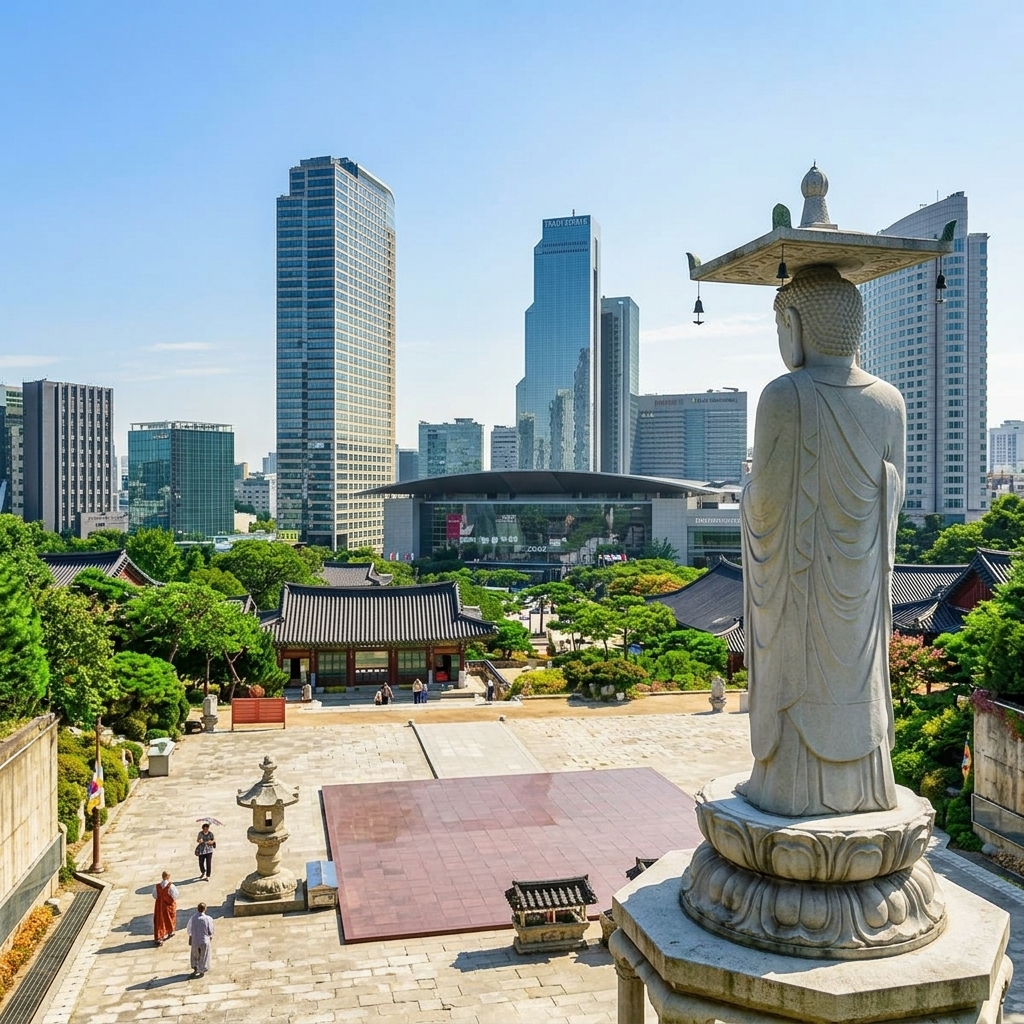
This place is easily accessible from Seolleung Station and Seolleung Station, and it is not far from COEX and the Bong-eunsa area. It is a good place to visit for a short walk in the middle of Gangnam, but when you pass through the red gate, follow the path to the Jeongjagak, and then look at the hill where the mounds are located, you will naturally understand why the Joseon royal tombs were designed with consideration for the mountain range, water flow, and ritual procession route. After the visit, you can continue to Bong-eunsa or COEX to see the unique scenery of Gangnam, where high-rise office buildings and the royal tomb forest are side by side.