A day of strolling through three places, from Bukchon to Hyangwonjeong.
This is a course that begins with choosing a hanbok. After adjusting your attire in Samcheong-dong and Bukchon, take a short walk through the hanok alleys, then proceed through the forest path of Changgyeonggung Palace's Tongmyeongjeon and Chundangji, and finally reach the pond garden of Gyeongbokgung Palace's Hyangwonjeong. This creates a fairly in-depth palace walk within the heart of Seoul.
Bukchon is an old residential area located between Gyeongbokgung and Changdeokgung Palaces, so the tiled roofs and low walls are close by. Changgyeonggung and Gyeongbokgung Palaces feature the wooden tones of the buildings, the colors of the ponds, and the seasonal changes in the trees, all of which complement the lines of the hanbok.
This route is also relatively easy to navigate. In the Samcheong-dong and Bukchon areas, there are many hanbok rental shops, making it convenient to choose the length of the skirt, the color of the jacket, and accessories such as norigae or daenggi in one place. Afterward, you can take a taxi or public transportation to visit Changgyeonggung and Gyeongbokgung Palaces separately. If you plan to walk through both palaces on the same day, it is best to check beforehand that the skirt does not drag on the ground and that the shoes are suitable for the stone paths.
Samcheong-dong Bukchon Hanbok Experience Village
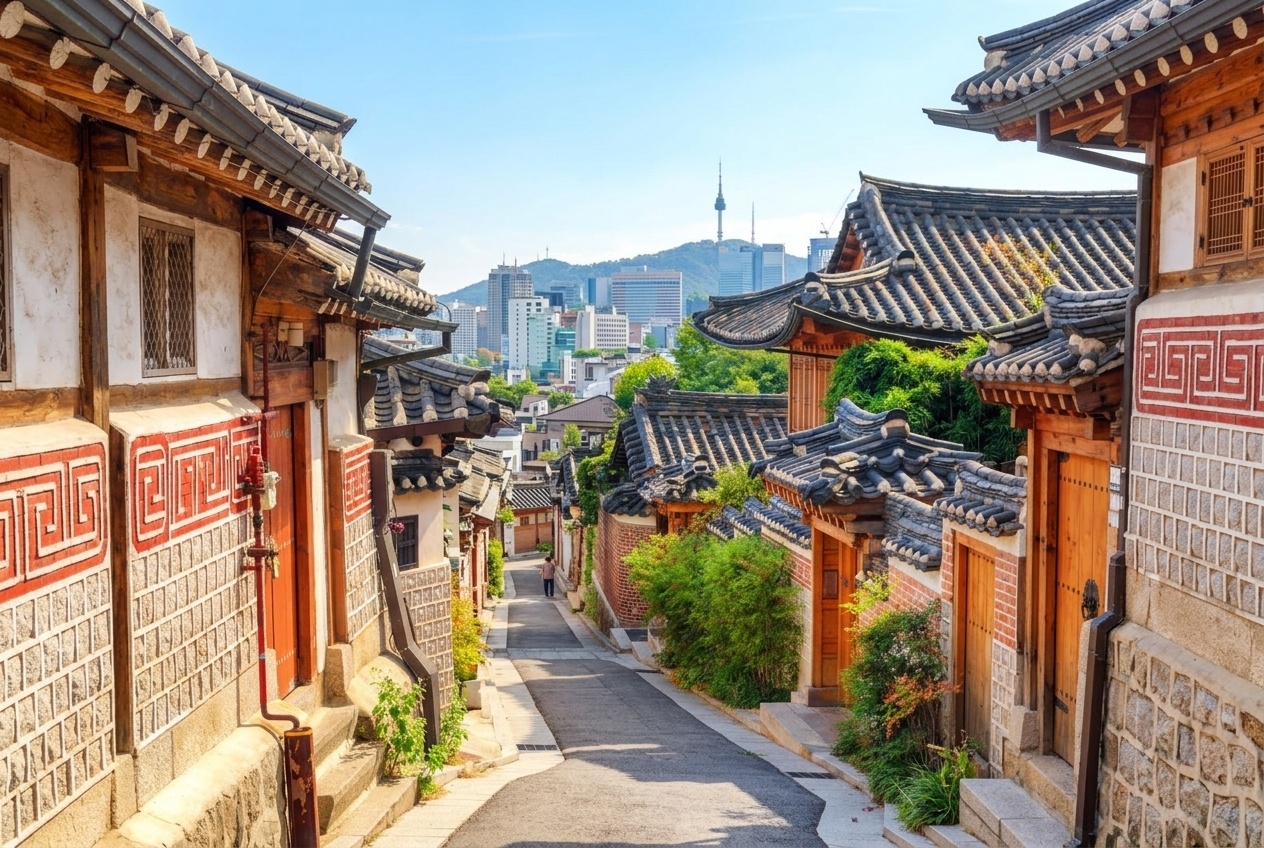
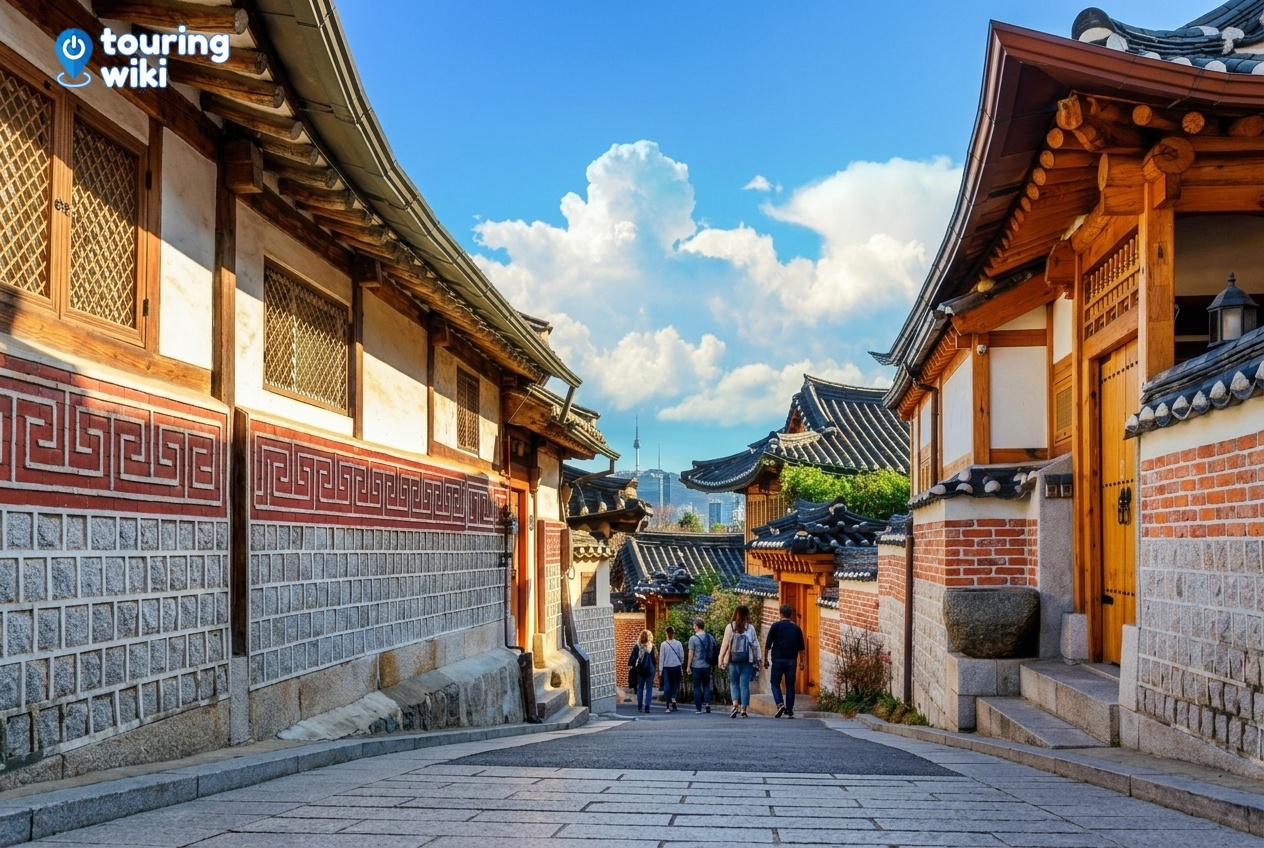
The path from Samcheong-dong to Bukchon Hanok Village is a natural starting point for hanbok photoshoots. Along the main street, you will find cafes, workshops, galleries, and hanbok rental shops. As you venture deeper into the alleys, the tiled roofs of the hanoks in Gahoe-dong and Gye-dong gradually come into view. Bukchon is known as a place where the upper class of the Joseon Dynasty resided, and many of the current hanok clusters were formed in the 1930s as the city expanded.
When choosing a hanbok, consider not only the first shooting location, Bukchon, but also the palace ponds that you will visit later. This will make the color combinations much clearer. In front of the gray stone walls and dark tiled roofs of Bukchon, deep-colored skirts such as navy blue, purple, or dark green stand out vividly. In places with a lot of water and trees, such as Gyeongbokgung Palace's Hyangwonji, a white jacket or soft-colored skirts in pink, lavender, or light green will not clash with the wooden pavilions.
In Bukchon, the alleys with short steps and low walls are better for capturing the flowing lines of the hanbok. In the alleys of Gahoe-dong, the eaves hang low overhead, and around Gye-dong, you can see a mix of old hanoks and modern shops, adding variety to the route. However, this is not just a tourist area but also a residential neighborhood. It is best to avoid standing in front of gates for long periods or having multiple people pose at the same time in narrow streets. Spend a short time in the alleys, and step aside when people or vehicles pass by. This will prevent the hanbok skirt from being stepped on and allow you to move smoothly through the neighborhood.
When walking from Samcheong-dong to Bukchon, you'll find that there are more uphill sections than you might expect. If you're wearing a long Hanbok skirt, make sure it's short enough to lift slightly with your hands, and avoid skirts that are too voluminous, as they can be cumbersome on narrow stairs. If you plan to move to Changgyeonggung Palace after your photoshoot, it's better to conserve your energy in the early stages rather than walking around the Bukchon alleys for too long, as you'll still need to walk quite a bit within the palace grounds to reach Chundangji.
Changgyeonggung Palace, Tongmyeongjeon Hall, and Chundangji Pond
Changgyeonggung Palace is slightly different from palaces like Gyeongbokgung Palace, which have a strong, wide central axis. After passing through the main gate, Honghwamun, you'll first encounter the main hall, Myeongjeongjeon, and then move deeper into the palace to find the inner palace area, which was the royal family's living space, and the forest paths leading to the rear garden. Changgyeonggung Palace, along with Changdeokgung Palace, was known as the Eastern Palace, and its buildings and paths are laid out along the terrain, so as you walk, the height and shade of the trees naturally change.
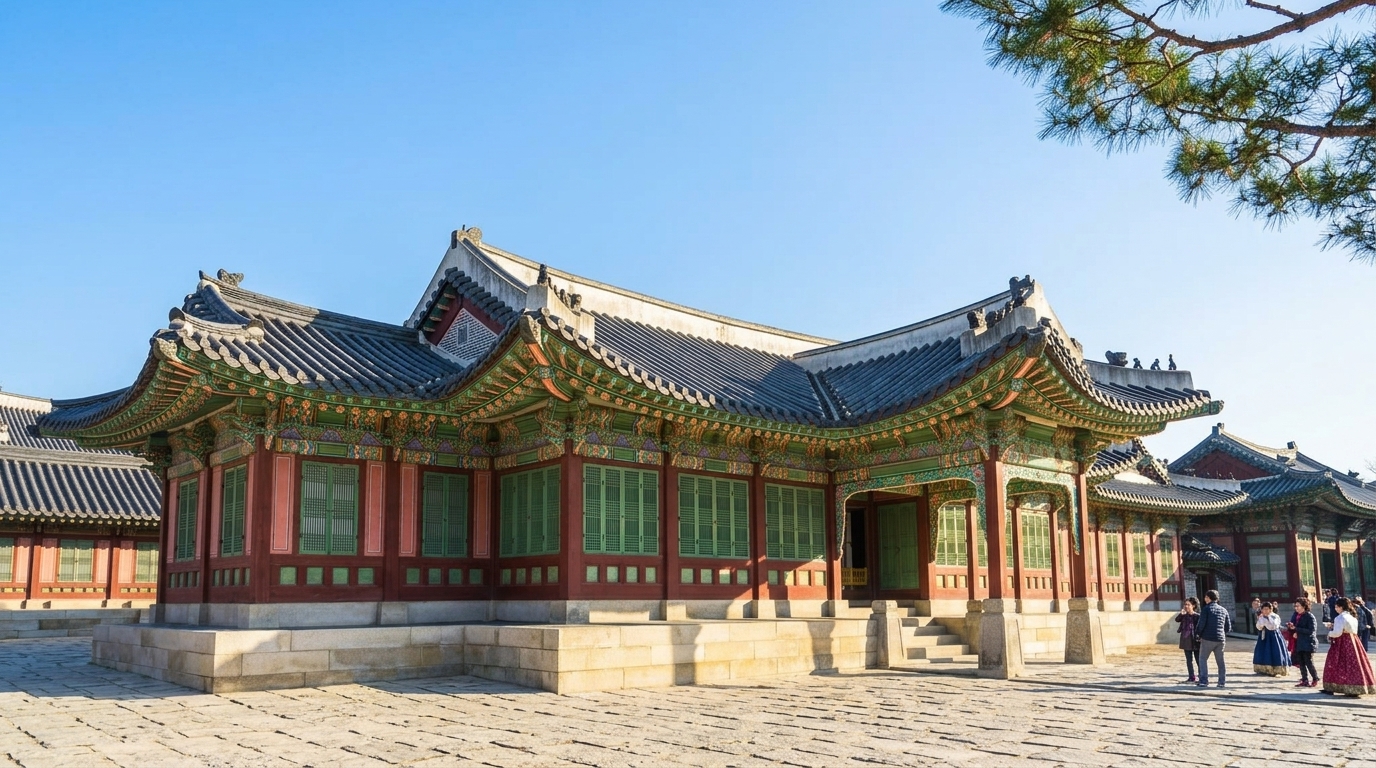
Tongmyeongjeon Hall is the main hall of the inner palace at Changgyeonggung Palace. According to national heritage records, it was used as the queen's residence, and records in the Annals of the Joseon Dynasty also confirm that it was mainly used as the living space for the grand queen dowager. It is said to have been first built in 1484 during the reign of King Seongjong, and the current building was rebuilt in the mid-19th century after the Imjin War and a fire. Unlike the main hall, which has strong red and blue decorations, the area around Tongmyeongjeon Hall features a wide platform, low-hanging eaves, stone steps, and a courtyard with paving stones, creating a calm atmosphere that doesn't overwhelm the colors of the Hanbok.
In front of Tongmyeongjeon Hall, it's better to stand at a distance where you can see part of the foundation and eaves rather than trying to capture the entire building in the frame, as this will help to create a more stable and balanced image of the Hanbok. The wide platform makes it easy to arrange the skirt, and at the bottom of the stairs, the lines of the jacket and the gentle curve of the hip-and-gable roof can be captured in a single frame. To the west of Tongmyeongjeon Hall, there is a small pond and garden decorated with stones, so you can capture both the building and the garden in close proximity within Changgyeonggung Palace.
The path from Tongmyeongjeon Hall to Chundangji is a section that will slow down the pace of your photoshoot at Changgyeonggung Palace. Chundangji is a pond in the rear garden of Changgyeonggung Palace, and it is divided into two ponds: Sochundangji, the smaller pond, and Daechundangji, the larger pond. The current Daechundangji is known as a space that was renovated during the restoration of Changgyeonggung Palace in 1984 to resemble a traditional Korean garden, and weeping willows and forest paths line the water's edge. In spring, the new leaves around the pond emerge brightly, in summer, the shade of the trees spreads widely over the water, and in autumn, the colors of the autumn leaves are reflected in the water, making it a good time to choose a Hanbok color that reflects the season.
Around Chundangji, it's better to find a spot where you can see both the water and the trees from within the walking path rather than trying to get too close to the edge of the pond. Depending on the day, you may see koi or water birds, but this is a space where the palace landscape and ecology are managed together, so it's important to stay on the designated paths. When taking a low-angle shot near the water, make sure that the hem of the skirt doesn't touch the dirt path or the water's edge, and if it's windy, take a moment to stop and adjust the jacket sleeves and skirt pleats to keep them from being ruffled.
Gyeongbokgung Palace, Hyangwonjeong Pavilion, Wooden Hexagonal Pavilion
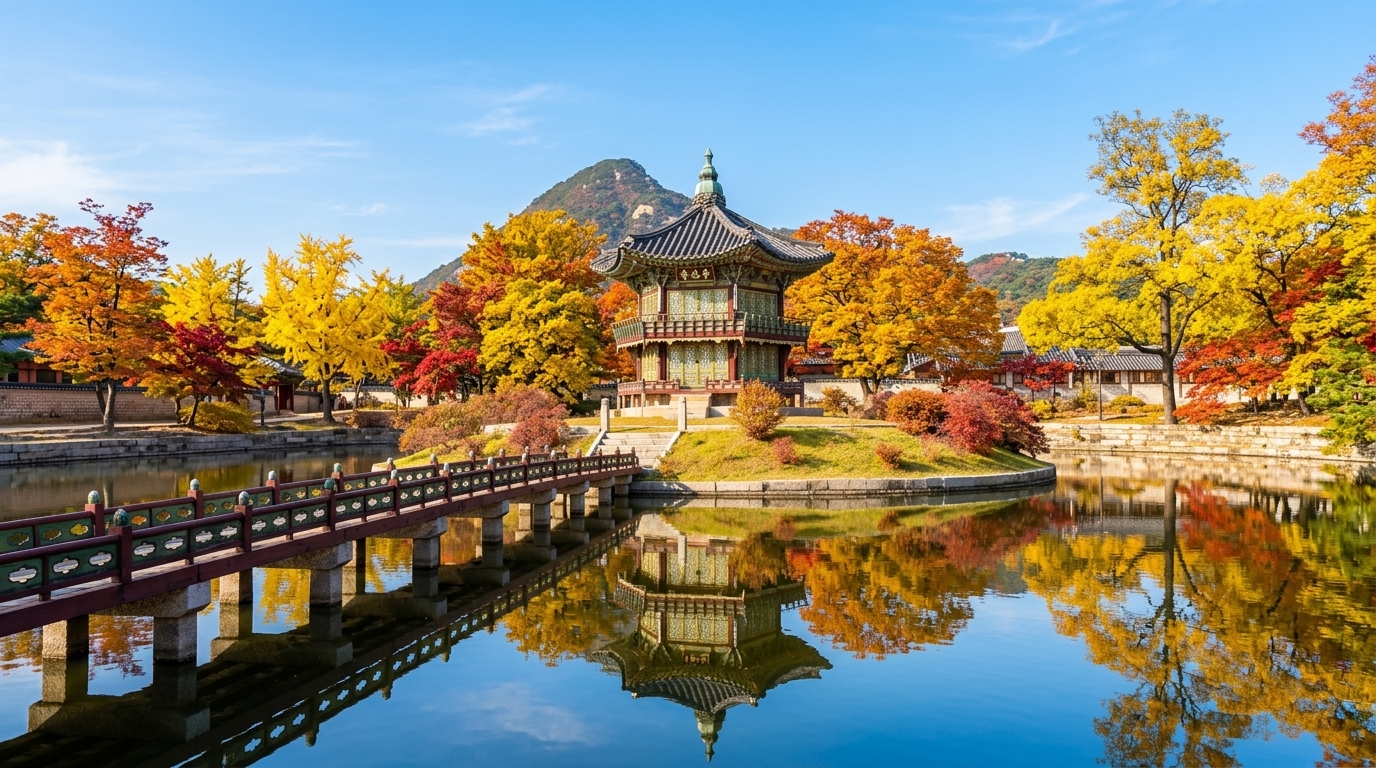
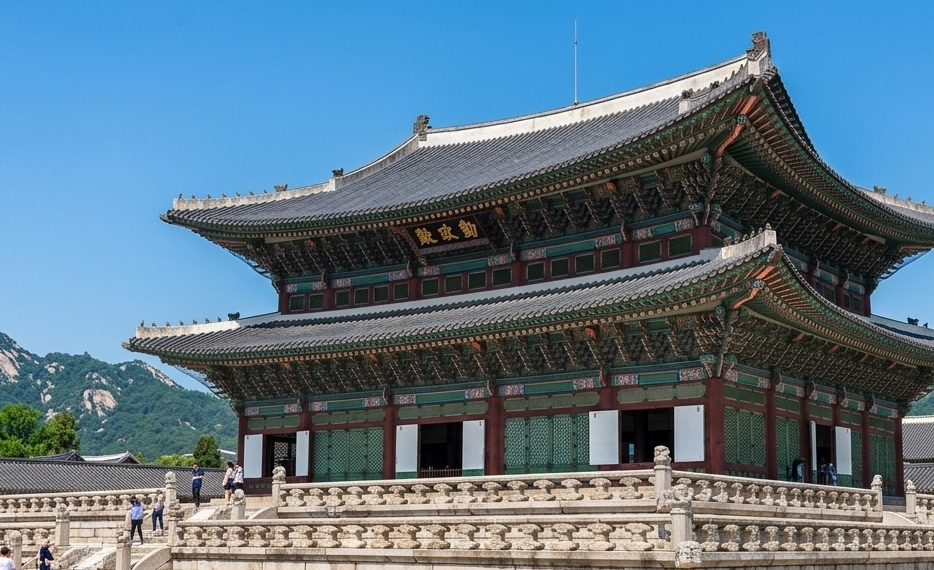
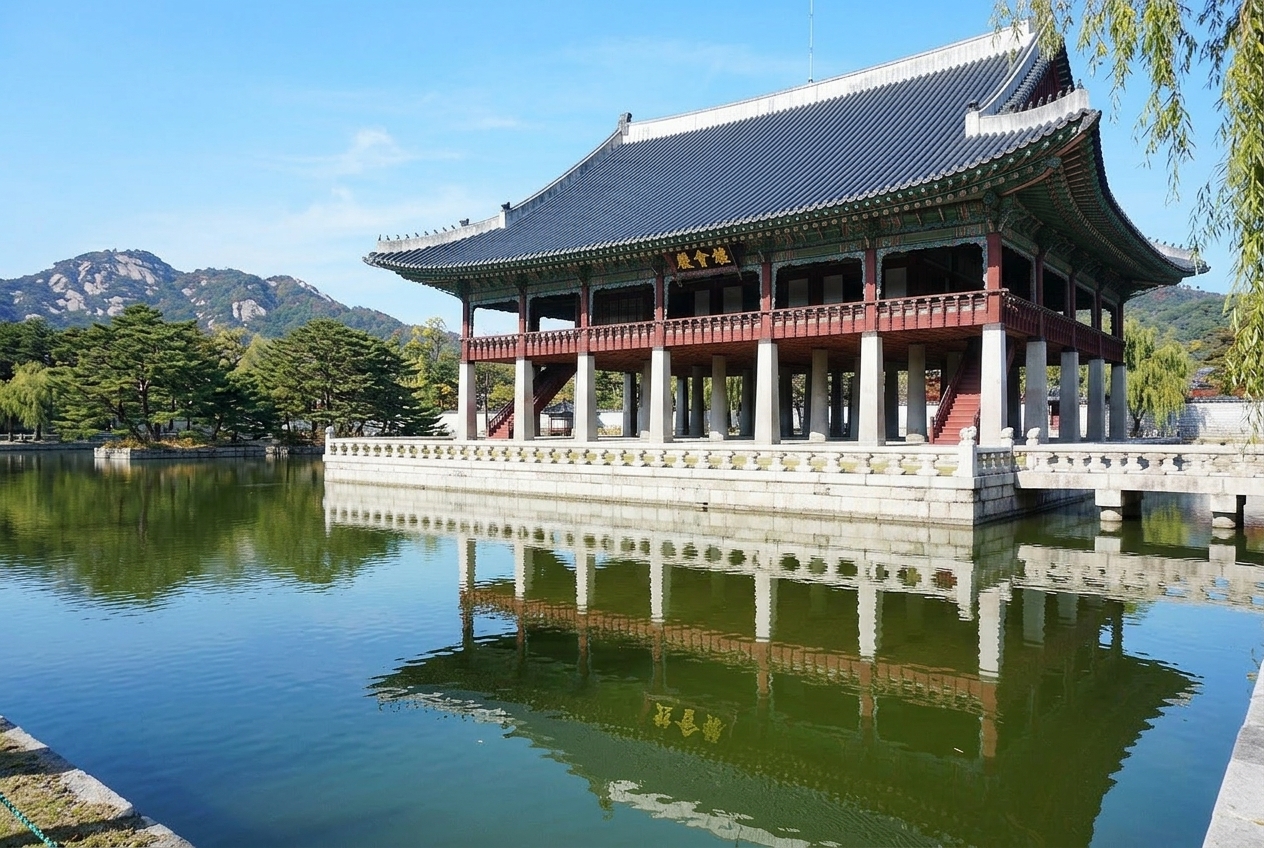
Gyeongbokgung Palace's Hyangwonjeong is a hexagonal pavilion located in the middle of Hyangwonji Pond, resembling a small island. It is situated in the northern rear garden of Gyeongbokgung Palace, and the name "Hyangwonji" carries the meaning of "fragrance spreading far." While Geunjeongjeon and Gyeonghoeru demonstrate the scale of the palace with their vast courtyard and grand water surface, Hyangwonjeong is a space where the pavilion standing in the middle of the pond, the gentle curves of the shoreline, and the bridge leading towards Geoncheonggung are delicately intertwined.
Along with Hyangwonjeong, another element that immediately catches the eye is the Chihyanggyo Bridge. Chihyanggyo was a bridge built to connect Geoncheonggung to Hyangwonjeong, but it was damaged during the Korean War and, for a while, was located south of its original position. During the recent restoration process, it underwent excavation and research and was moved back to its original location north of Hyangwonjeong, regaining its form as a white arched wooden bridge based on old photos and records. Therefore, when viewing Hyangwonjeong, it is better to consider the relationship between the bridge and the pavilion, where the bridge crosses the pond and leads to the pavilion from the direction of Geoncheonggung, rather than simply viewing the pavilion in isolation, as this allows for a more natural understanding of the space.
Hyangwonji Pond has a shape where the corners of the square pond are gently curved, so the shoreline does not end abruptly. Aquatic plants and lotus flowers grow in the pond, and fish also live there, so the color of the water surface changes slightly with the seasons. In early summer, the leaves become lush, and the greenery around the pavilion becomes denser, while in autumn, the trees in the northern rear garden reflect their colors on the water. On days when the colors of the hanbok are vivid, it is more pleasing to position oneself slightly off-center along the perimeter of the pond rather than directly in front of Hyangwonjeong, as the hexagonal roof can be seen through the trees, and the white wooden railing of Chihyanggyo can be seen on one side, creating a harmonious contrast between the colors of the clothing and the texture of the pavilion's wood.
To reach Hyangwonjeong within Gyeongbokgung Palace, you must pass through Gwanghwamun Gate, then through the Heungnyemun Gate and the Geunjeongjeon area, and then pass through the Sajongjeon, Gangnyeongjeon, and Gyotaejeon before ascending to the northern rear garden. The stone path in the center of the palace looks neat, but if you wear hanbok and walk for a long time, it can put strain on the soles of your feet, so shoes with low heels are more comfortable. In summer, you can take a break near Gyeonghoeru or under the eaves of the palace buildings, and in winter, the wind by the pond can be cold, so it is a good idea to bring a thin shawl or outerwear to maintain your body temperature between shots.
The area around Hyangwonjeong is a popular spot for visitors within Gyeongbokgung Palace. In particular, on weekend afternoons, the walking path around the pond can be crowded, so if you want to take photos with a focus on people, it is better to consider visiting during the relatively less crowded times, either shortly after opening or before closing. The availability of free admission for hanbok wearers and the palace's operating hours may vary depending on the season and events, so it is best to check the official palace information before visiting. A good shooting route would be to start lightly in Bukchon, pass through the palace buildings and forest paths in Changgyeonggung Palace, and finish with scenes of the pond at Hyangwonjeong in Gyeongbokgung Palace, which will create a gradual transition between the colors of the hanbok and the spatial feel of the Seoul palaces.