Walking Through Three Landscapes of Seoul in Early Summer
If you want to experience the scenes you've become familiar with in dramas or K-pop videos set in Seoul by walking through them in a single day, you can combine Namsan N Seoul Tower's Love Lock Plaza, Bukchon Hanok Village's alleys, and Dongdaemun Design Plaza (DDP) into a single itinerary. Although all three locations are in the city center, Namsan offers a panoramic view of the city from above, Bukchon allows you to closely observe the tiled roofs and walls within narrow alleys where only one or two people can pass through, and DDP presents a combination of its curved metal exterior and the dazzling lights of the Dongdaemun shopping district.
The most natural route is to start at Namsan during the day, move to Bukchon in the afternoon, and then head to DDP after sunset. From the top of Namsan, you can first see the Han River and the overall outline of the city, and as you enter Bukchon, the narrow streets between Gyeongbokgung Palace and Changdeokgung Palace slow down your pace. In the evening, DDP is illuminated with lights on its silver-gray aluminum panels, and the linear lights of the surrounding shopping malls and roads contrast with the curves of the building.
Namsan N Seoul Tower Love Lock Plaza
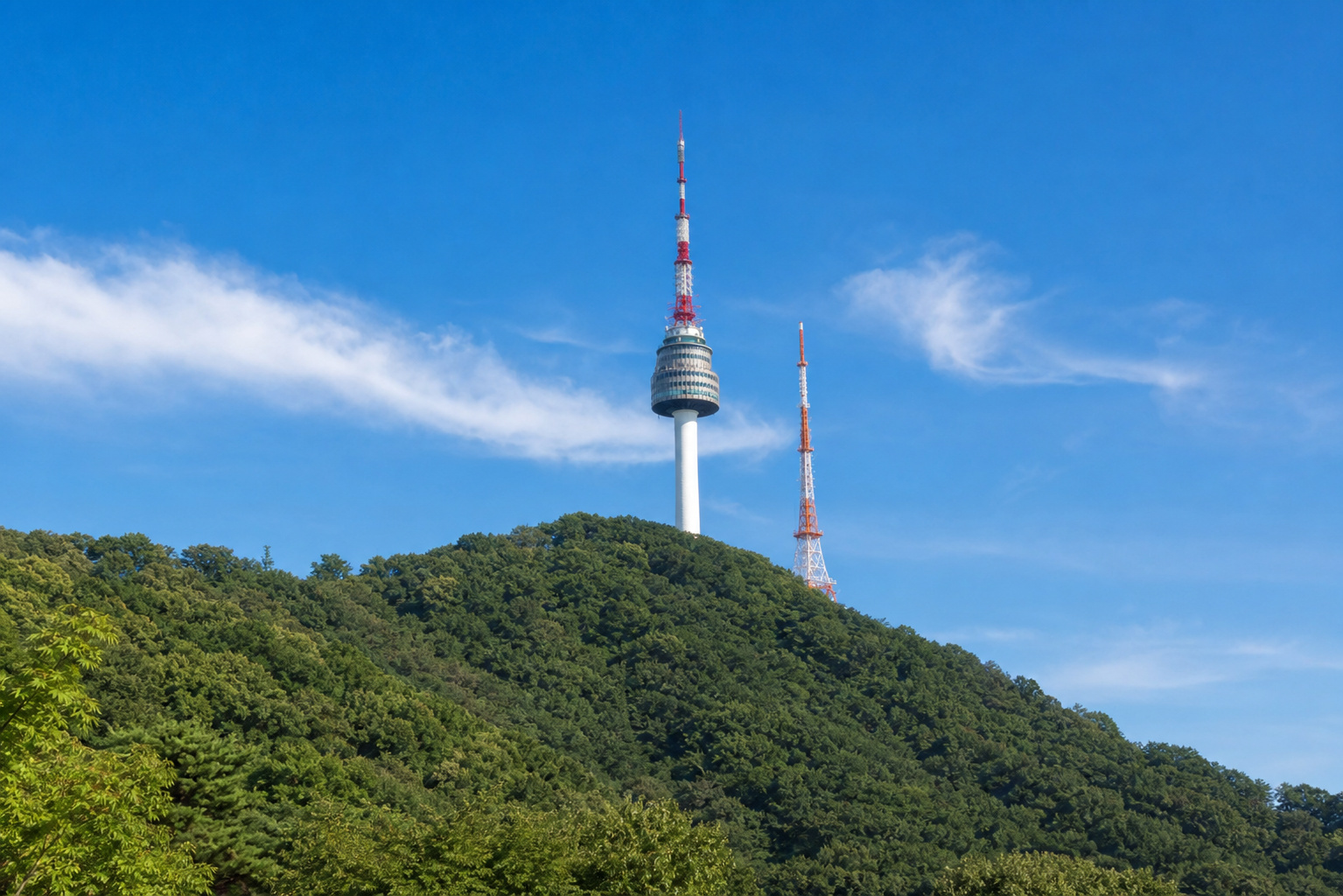
N Seoul Tower is a tower built on the top of Namsan, serving as a broadcasting transmission and tourist observation facility. It is a representative broadcasting tower in Korea, with construction starting in 1969 and completion in 1975. It was opened to the public in 1980, becoming a popular spot to view Seoul from above. The tower itself is 236.7 meters high, and when combined with Namsan's elevation, the observation deck and outdoor deck offer a wide view of the Seoul city center. Although it is still referred to as N Seoul Tower, Namsan Tower, or Seoul Tower, its official name is YTN Seoul Tower.
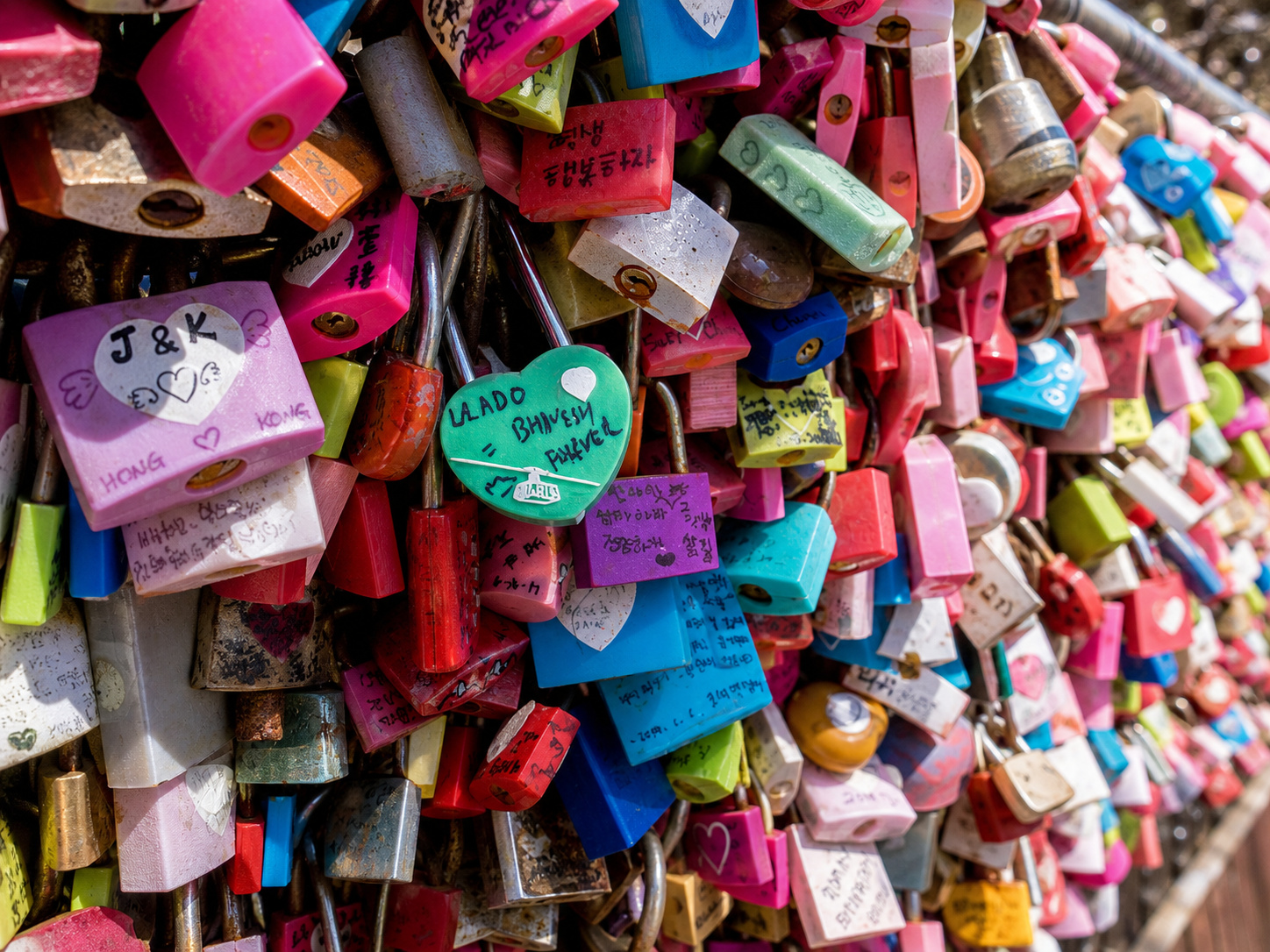
The Love Lock Plaza is located below the main tower, around the outdoor deck and observation railings. When you get close, you'll notice that the way the locks are attached to the railing-shaped metal structures, grid fences, heart-shaped sculptures, and tree-shaped lock trees is slightly different. Some locks are hung in a row along the railing, while in other areas, they are stacked in multiple layers, resembling a small metal wall. Among the red, yellow, pink, and blue locks, you can find names, dates, short sentences, flag stickers, and character decorations, showing that the visitors have left a very dense mark.
The reason this space frequently appears in video shoots is easy to understand when you look at its structure. If you place a person in front of the lock wall and inside the railing, the Namsan forest, the buildings of Seoul, and the distant mountain range can all be seen in a single frame. Rather than just looking at the locks up close, if you also observe the height of the deck floor, the base of the tower, and the cityscape beyond the railing, you can get a clearer sense of the position that the top of Namsan occupies in the middle of Seoul.
Reading the Outline of Seoul from the Top of Namsan
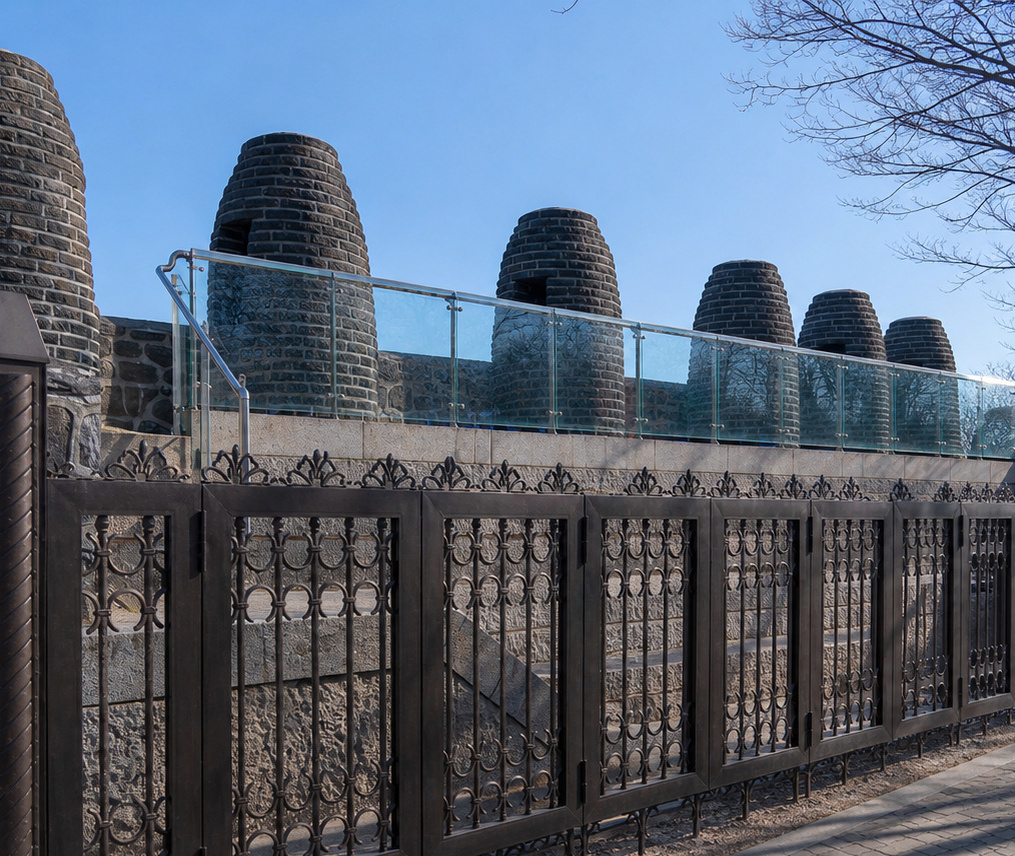
Around the Love Lock Plaza, there are observation decks and walking trails on Namsan. In the Joseon Dynasty, Namsan was called Mokmyoksan and was a mountain that protected the south of Hanyang, the capital city, and was also related to the beacon fire system. Around the octagonal pavilion below the tower, you can also see the remains of the Namsan beacon tower, which was an important point where beacon signals from all over the country were transmitted to the capital during the Joseon Dynasty.
When you stand on the observation deck, Seoul appears to be divided into several layers. Nearby, you can see the Namsan Forest Trail and roads, and beyond that, the buildings of Jongno and Yongsan, as well as the apartment complexes and business districts along the Han River. To the north, the palace area, Bukhansan Mountain, and the ridgeline of Inwangsan Mountain extend behind the low rooftops, and to the south, the high-rise buildings and bridges of Gangnam beyond the Han River divide the view. If you slowly turn your head towards the west, in the direction of Yongsan and Yeouido, and towards the east, in the direction of Dongdaemun and Seongdong, you can get a good overview of Seoul's topography, roads, and the direction of the river.
Around sunset, the building windows and streetlights begin to light up, and after a while, the lines of the Han River bridges and major arterial roads become even clearer. If you took the cable car, you can naturally continue to the tower area from the disembarkation point, and then visit the observation deck, the Love Lock Plaza, the tower lower plaza, and the beacon tower area. Since there are several routes up and down Namsan, it is best to decide in advance whether to focus on the outdoor deck or go up to the indoor observation deck if you are planning a day trip, as this will make it easier to move to the next location.
Things to do in Namsan before going to Bukchon
Namsan has various access methods, including walking, a circular bus, and a cable car. However, if you plan to visit Bukchon and DDP in one day, it is best not to exhaust yourself completely at Namsan. Bukchon has alleys with ups and downs, and DDP also has a longer walking distance than you might think as you walk along the exterior walls and plaza. At Namsan, you can get a good view of Seoul's height and urban scenery by simply visiting the Love Lock Plaza, the observation railing, the tower lower plaza, and the area around the beacon tower before heading down.
When you look up at the tower from close by, you can see the observation deck and antenna structure extending above the cylindrical pillars. If you stand a little further away, you can clearly see the vertical structure rising above the Namsan Forest and the difference in height between the surrounding buildings, and it becomes clear that it is a broadcasting tower located in the middle of the city. When moving to Bukchon, many people use the subway or bus routes that connect Myeongdong, Chungmuro, and Anguk Station.
Bukchon Hanok Village's Eight Scenic Spots
Bukchon is a traditional residential area formed on the hillside above Yulgok-ro, between Gyeongbokgung Palace and Changdeokgung Palace. It encompasses Gahoe-dong, Gye-dong, Samcheong-dong, Wonseo-dong, and Jae-dong, and during the Joseon Dynasty, it was a residential area for government officials and the upper class due to its proximity to the palace. The name "Bukchon" also comes from its geographical location, which is north of Cheonggyecheon Stream and Jongno. Today, it is a mix of traditional houses where actual residents live, workshops, cafes, small museums, galleries, and traditional cultural spaces.
The Eight Scenic Spots of Bukchon refer to eight points within the village where the traditional houses and surrounding scenery are best displayed. These include the point with a view of Changdeokgung Palace, the Wonseo-dong workshop street, the area around Gahoe-dong 11, the hill and alley of Gahoe-dong 31, and the Samcheong-dong stone staircase. Rather than trying to find all the points, it is less complicated to start near Anguk Station or the Bukchon Cultural Center and follow the flow that leads to Gye-dong-gil, the Gahoe-dong hill, and the Samcheong-dong direction.
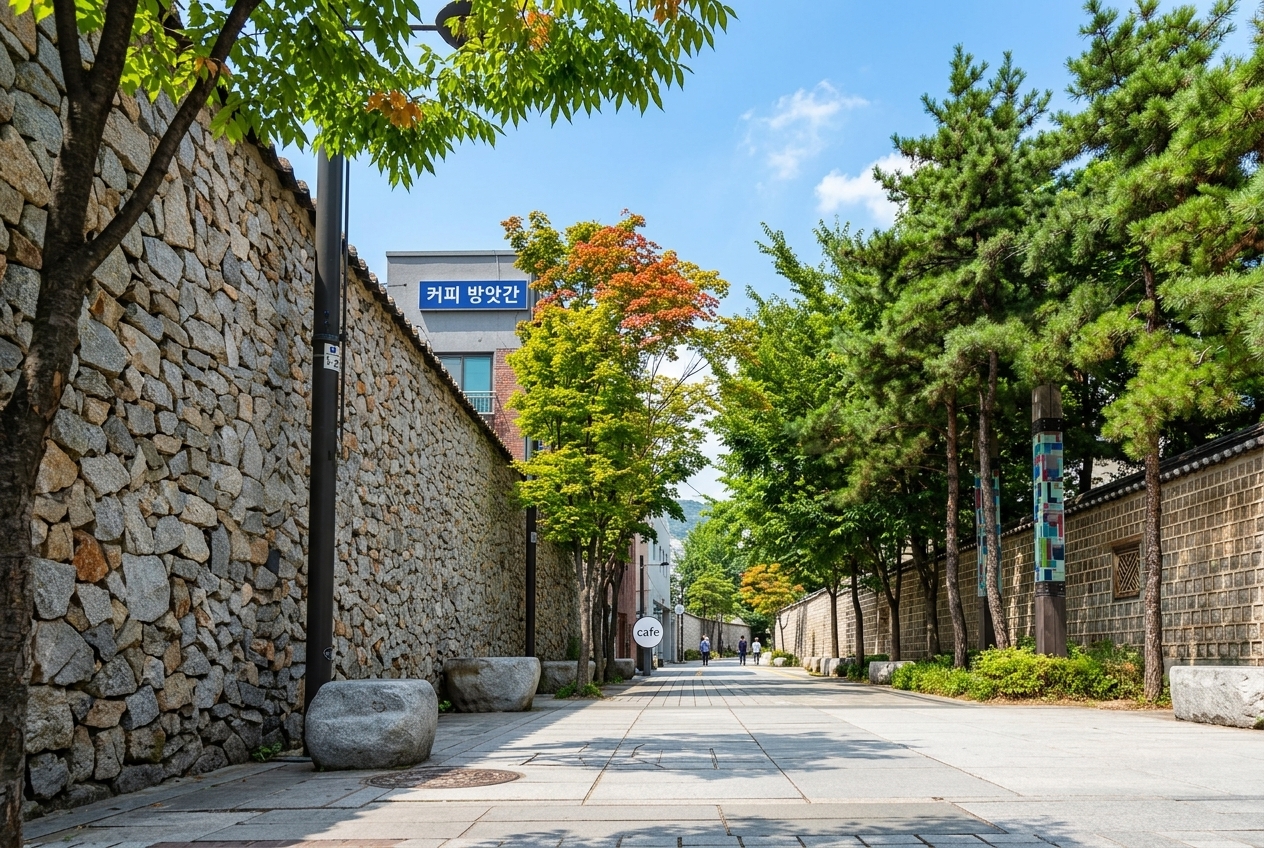
In Bukchon alleyways, the rooflines are the first thing that captures your attention. The gray tiles, which alternate between dark and light colors, the gentle curve at the eaves, and the trees in the courtyard that can be glimpsed over the walls, all blend together with the slope of the alley. Each house has a different color and design for its gate. Some have dark wooden gates with metal handles, while others have white walls, low walls, and modern door locks alongside traditional wooden gates. Although it is an old residential area, not everything remains as it was in the same era, and traces of repairs made while people continued to live there can be found naturally throughout the alley.
Gahoe-dong Hill and Samcheong-dong Stone Stairway Road
The area around 31 Gahoe-dong is often introduced as a representative scene of Bukchon. When viewed from the top of the hill, the roofs of the hanoks overlap like steps, and some of the modern buildings in the Jongno city center can be seen in the background. When viewed from below, the slope of the alley, the height of the walls, the gates, and the rooflines all converge in one direction, making the depth of the alley even more pronounced. Even on the same road, depending on the height at which you stand, the roofs may be the main focus, or the gates and walls may be the main focus.
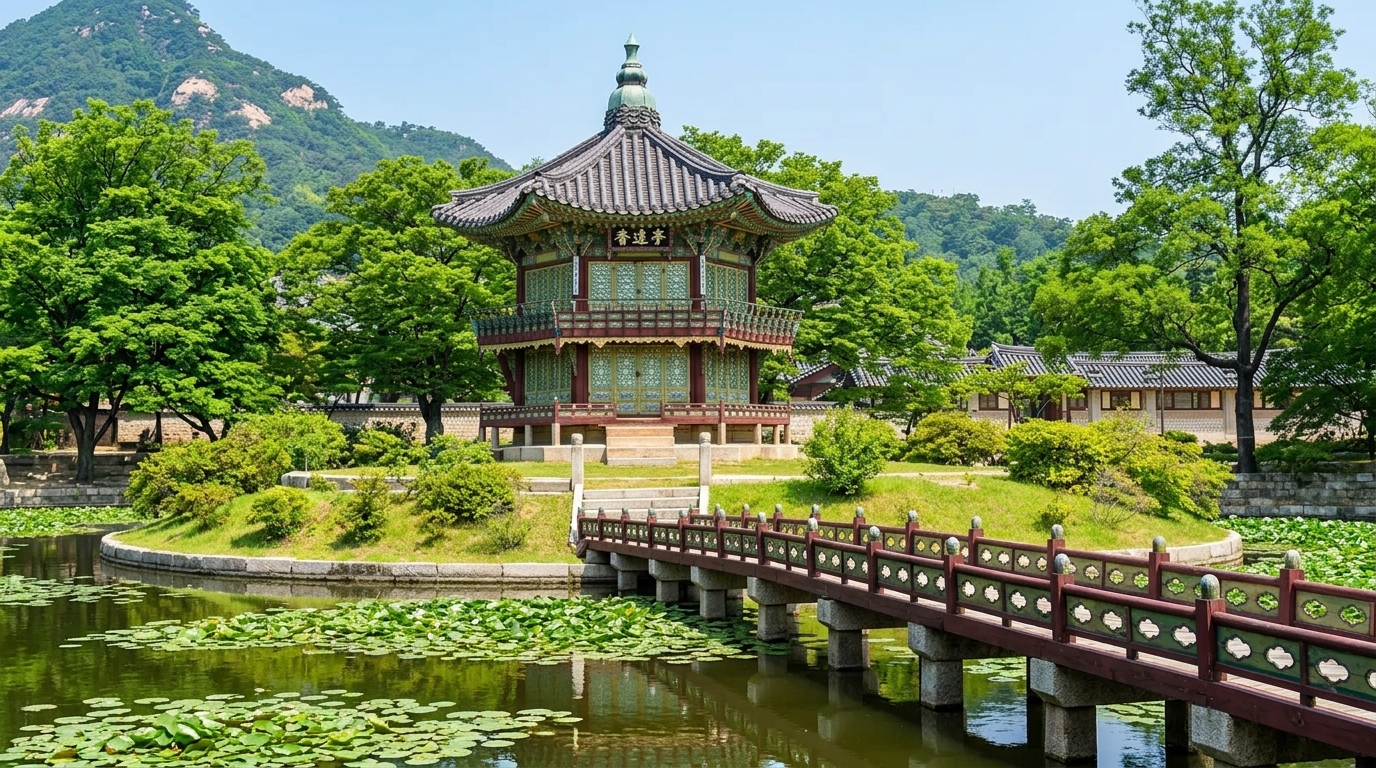
If you walk towards the Wonseo-dong workshop street, you will see small signs and workshop windows between the hanok gates. There are spaces for woodworking, metalworking, and everyday items, so you can see residential and work spaces side by side. Near the Changdeokgung Palace wall, the palace forest and the roofs of the buildings appear at the end of the alley, and even though it is in the middle of the city, the pace of the road slows down a bit.
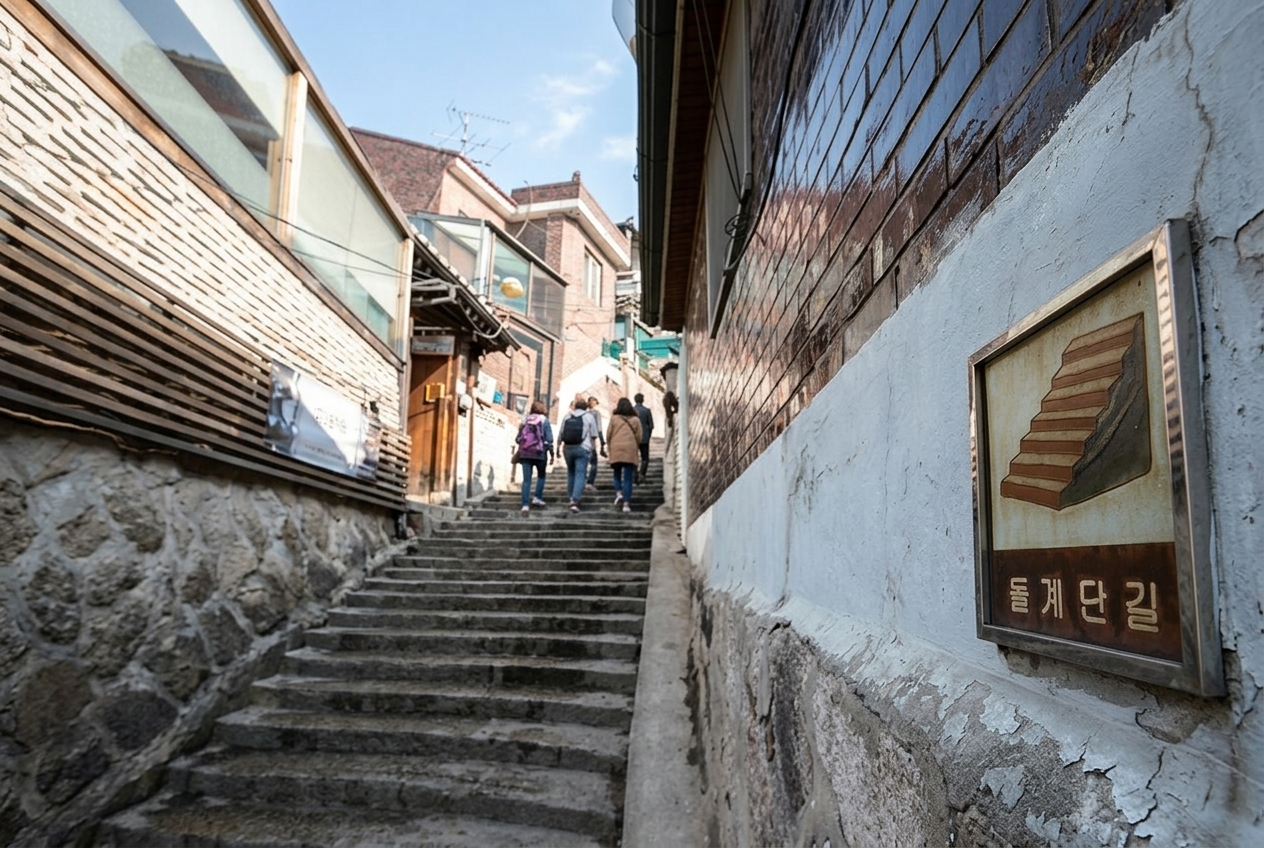
When going down the Samcheong-dong stone stairway road, it is good to look at the stone steps, the drainage ditches, and the stone foundations under the walls. Bukchon is not just a place with beautiful roofs; it is a neighborhood where you can see how the houses, walls, and stairs are arranged to match the height of the hill. After passing the stone steps and going down towards Samcheong-dong, you will see more cafes, galleries, and shops, and the atmosphere changes from a traditional residential alley to a commercial street within a short distance.
Walking Etiquette to Observe in Bukchon
Bukchon is widely known as a tourist destination, but many of the hanoks are actually residential spaces. The courtyards, windows, and entrances inside the gates are directly connected to the residents' daily lives, so you should be careful about the distance and direction when taking pictures. In some areas, visiting hours or traffic guidance are in place to protect residents, so it is important to follow the on-site guidance and instructions from the staff.
- Even if the gate is open, do not look into the courtyard or windows.
- In narrow alleys, do not stop for too long, and step aside towards the wall to allow people to pass.
- Finish group photos quickly, and do not block the flow of traffic on stairs or uphill roads.
- Voices, phone calls, and the sound of suitcase wheels can echo loudly in the alley, so keep your voice down in residential areas.
- Do not touch or lean on the hanok gates, handles, or wall decorations.
During peak hours, it's okay not to stick to just the alley at 31, Gahoe-dong. If you head towards Gye-dong Street, you'll find a series of small shops and residential alleys. If you walk in the direction of Wonseo-dong, you can see the streets around the Changdeokgung Palace wall and workshops. If you go down to Samcheong-dong, there are many cafes and restaurants where you can take a break, making it a good place to rest before moving on to the next destination, DDP.
Dongdaemun Design Plaza (DDP)
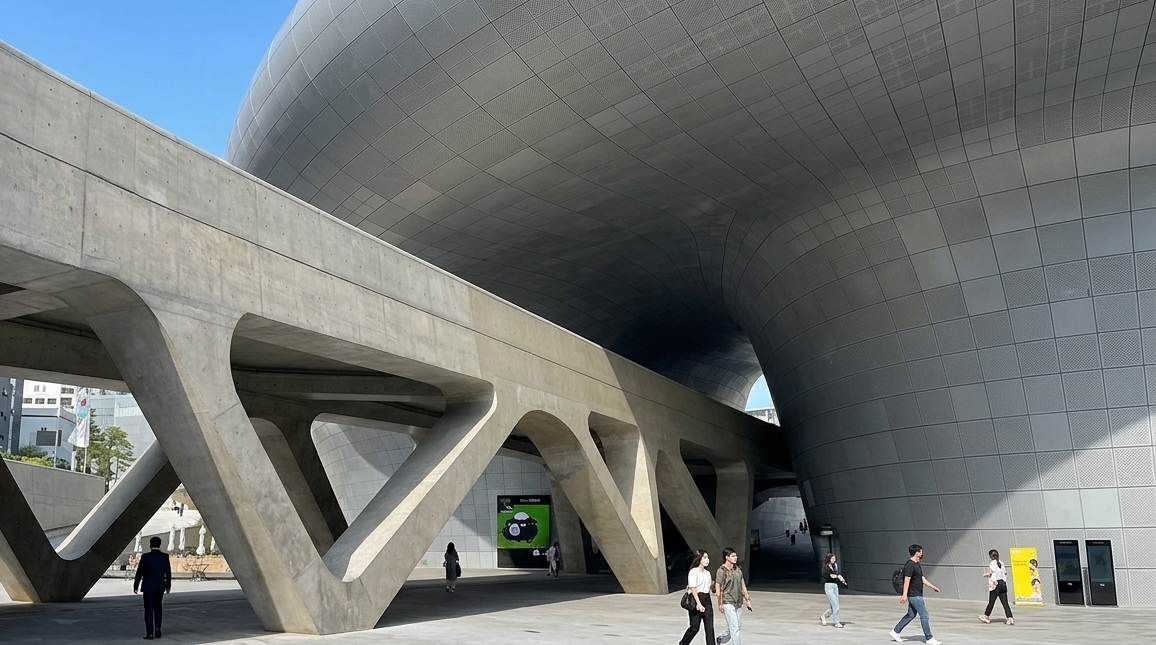
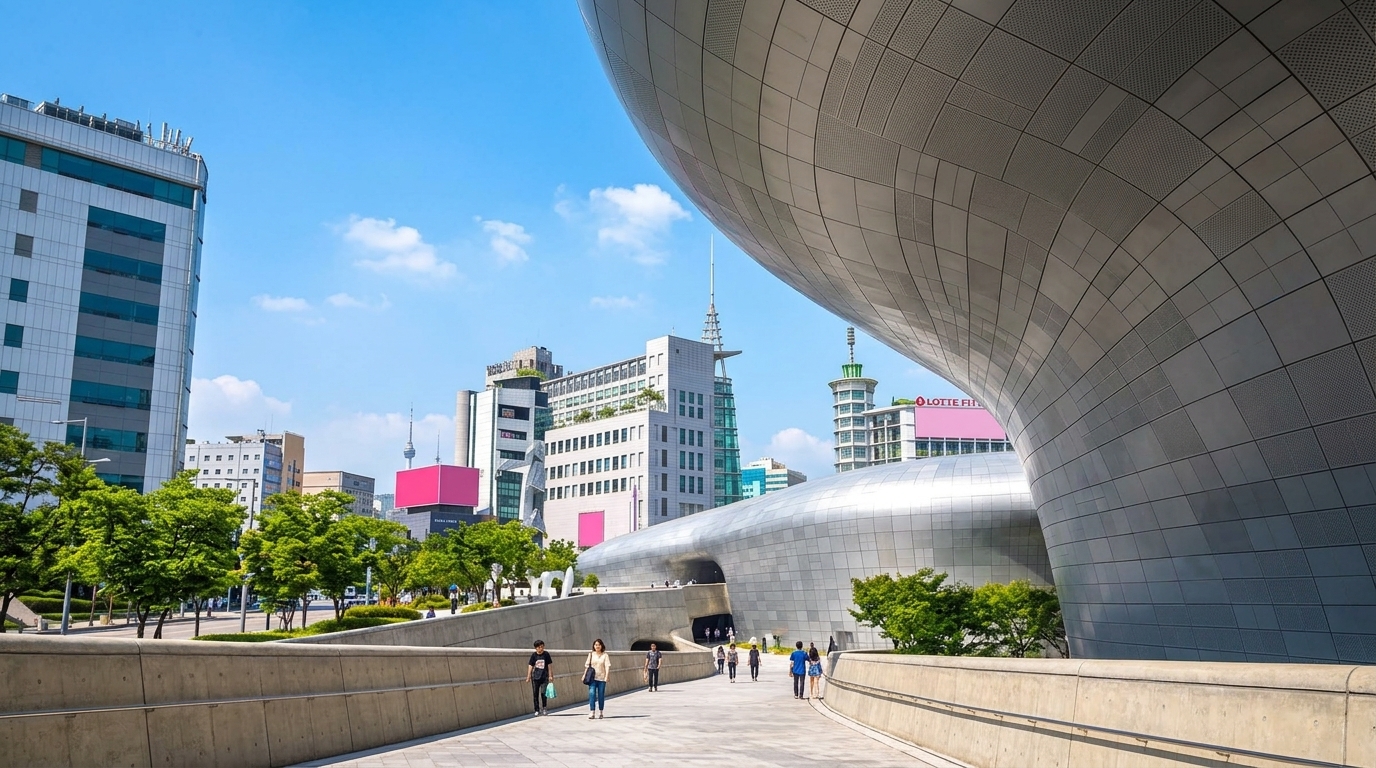
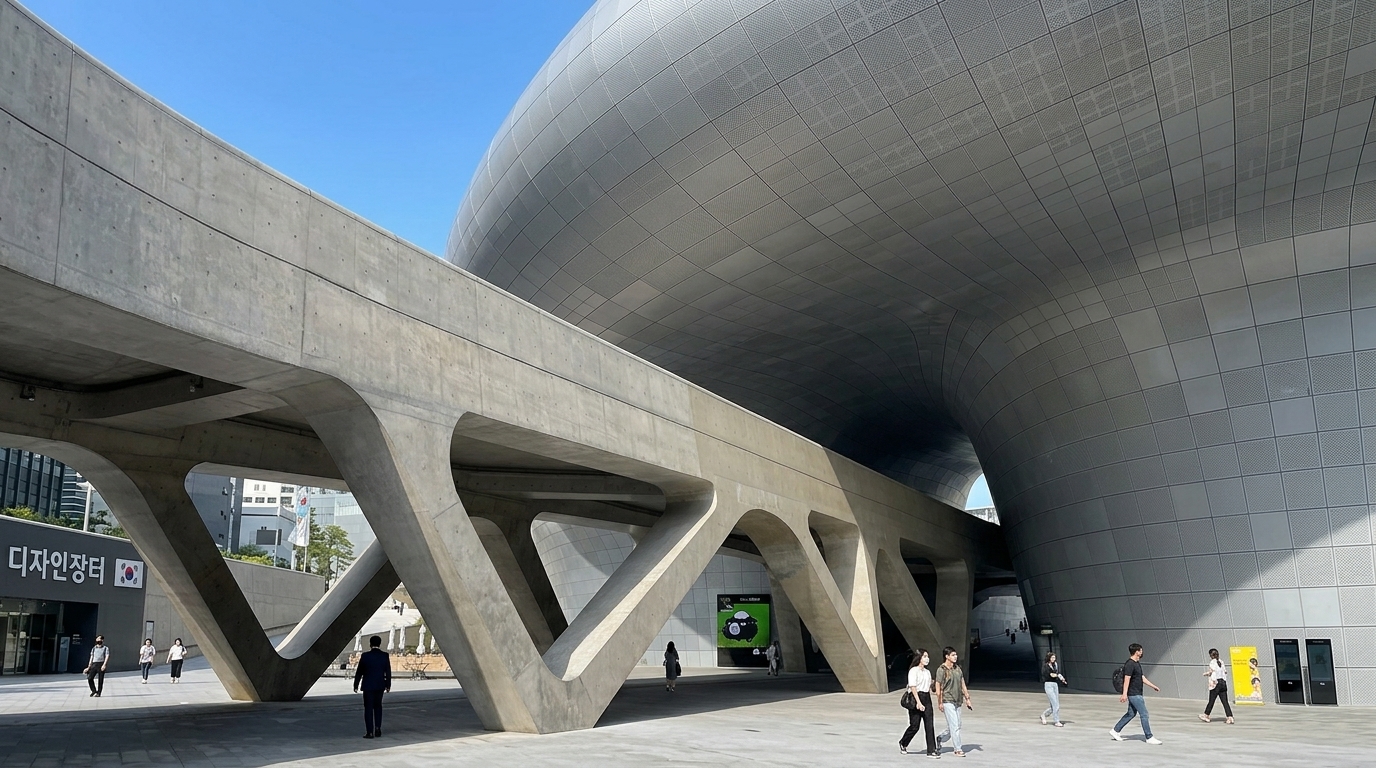
DDP is a complex cultural space that opened in 2014, and it is a representative modern building in Seoul, with the participation of Zaha Hadid, an Iraqi-born British architect, in its design. It was built on the site of the former Dongdaemun Stadium and serves as a venue for exhibitions, fashion shows, design markets, and a public plaza. According to its official introduction, the exterior uses 45,133 aluminum panels of different sizes and patterns, and these panels wrap the entire building in a streamlined curve.
When you stand in front of DDP, you'll first notice the exterior wall, which is dominated by curves rather than straight lines. The corners of the building are not sharply angled, and the walls, roof, and walkways seem to flow together as one. When you get closer, you can clearly see the seams between the panels, the reflection of the metal surface, and the shadows that change along the curved surface. From a distance, it looks like one large mass, but up close, you can see that the small metal panels are intricately connected to form a huge shape.
Around the Harmony Plaza, the low curved exterior wall and the wide floor area are naturally connected. If you go up a little along the stairs and ramps, you can see the upper curve of the building and the high-rise buildings in the Dongdaemun area together. In the design market and around the entrances, you can see the glass doors, guide signs, subway station connection, and the flow of people all at once. DDP is a building that changes its form as you walk slowly along the exterior wall, rather than just looking at it from one point and leaving.
DDP Night Lighting and Dongdaemun Shopping District
After sunset, DDP looks different from the daytime. During the day, the reflection of the silver-gray metal panels and the shadows on the curved surface are the main features, but at night, the light coming up from the bottom of the exterior wall, the bright areas around the entrances, and the lights falling on the plaza floor are more noticeable. Up close to the exterior wall, you can see the size and seams of each panel, and when you step back towards the plaza, you can see the entire building flexibly connected between the road and the shopping mall.
The route connecting the entrance connected to Dongdaemun History & Culture Park Station, the Harmony Plaza, and the Design Lab is perfect for an evening stroll. When viewed from a low position, the curve of the exterior wall, which seems to curl up towards the sky, is emphasized, and from the upper walkway, you can see the plaza, the road, and the linear facades of the surrounding buildings together. During exhibitions or fashion shows, temporary booths, guide structures, and installations may be added to the outdoor plaza, so the scene you see may vary slightly depending on the operating status on the day of your visit.
The area around DDP is a district with large shopping malls and high-rise buildings, which are the main features of the Dongdaemun fashion district. Even late at night, the shopping mall facades, signs, streetlights, and pedestrian crossing signals continue to shine, creating a strong contrast with the curved exterior of DDP. If you sit for a moment on the benches and steps at the edge of the plaza, you can see the people coming up from the subway entrance, the pedestrians heading to the shopping mall, and the lights of the vehicles flowing along the road, all moving in harmony with the curves of the building.
DDP and Dongdaemun History & Culture Park
DDP is best explored together with Dongdaemun History & Culture Park. This area used to be the site of the old Dongdaemun Stadium, and during the redevelopment process, the remains of the Hanyang Fortress and the traces of modern and contemporary sports facilities were also highlighted. As you walk along the outer promenade, you will naturally notice that modern architecture, the history and culture park, and the Dongdaemun shopping district are all located in the same space.
If you arrive during the day, you can first visit the park's promenade and the remains, and then, as the sun sets, walk around DDP's exterior lighting and the Harmony Square. The Dongdaemun area is a district where wholesale and retail clothing businesses are thriving, so the lights of the surrounding buildings tend to stay on relatively late. Rather than looking at DDP in isolation, if you look at the shopping mall facades, the flow of pedestrians on the road, and the signs around the subway entrance, it becomes clear that this place is not just a building, but an urban space connected to the Dongdaemun shopping district.
How to combine the three locations into a single day's itinerary
If you visit all three locations in one day, the most convenient order is Namsan in the morning, Bukchon in the afternoon, and DDP in the evening. Namsan is a good place to get a sense of the topography of Seoul and the direction of the city center, and Bukchon has many alleys that pass through residential areas, so it is safer and more comfortable to walk around during the day. DDP's curved exterior becomes even more prominent in the evening, when the exterior lighting and the lights of the surrounding shopping district are added.
When moving from Namsan to Bukchon, you can use public transportation routes that pass through Myeongdong, Chungmuro, and Anguk Station. In Bukchon, if you choose the direction of Gye-dong, Gahoe-dong 31, or Samcheong-dong based on Anguk Station, the walking flow will be natural, and it will also be easy to move to Dongdaemun History & Culture Park Station using the Jongno subway line. All three locations are easily accessible by public transportation, but since the actual sightseeing involves a lot of walking, it is important to take breaks in between.
If you focus on the locks plaza and observation deck in Namsan, the tiled roofs, gates, walls, and alley slopes in Bukchon, and the aluminum panels, curved exterior, and night lighting in DDP, you will see that each location shows Seoul in a distinctly different way. If you arrange meals or breaks in the Gye-dong and Samcheong-dong areas of Bukchon, or in the shopping district around Dongdaemun History & Culture Park Station, it will not disrupt the overall itinerary too much.