Cobalt-Blue East Sea, Pine Forest, and a Day Connecting Gangneung’s Beaches, Lak
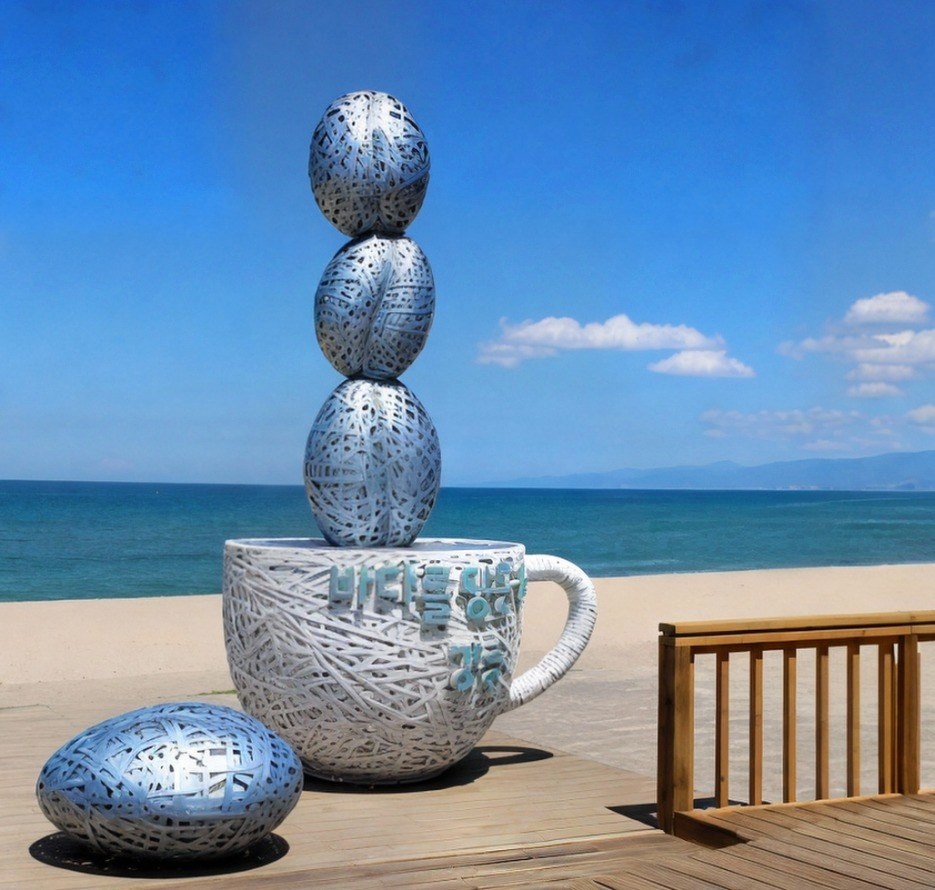
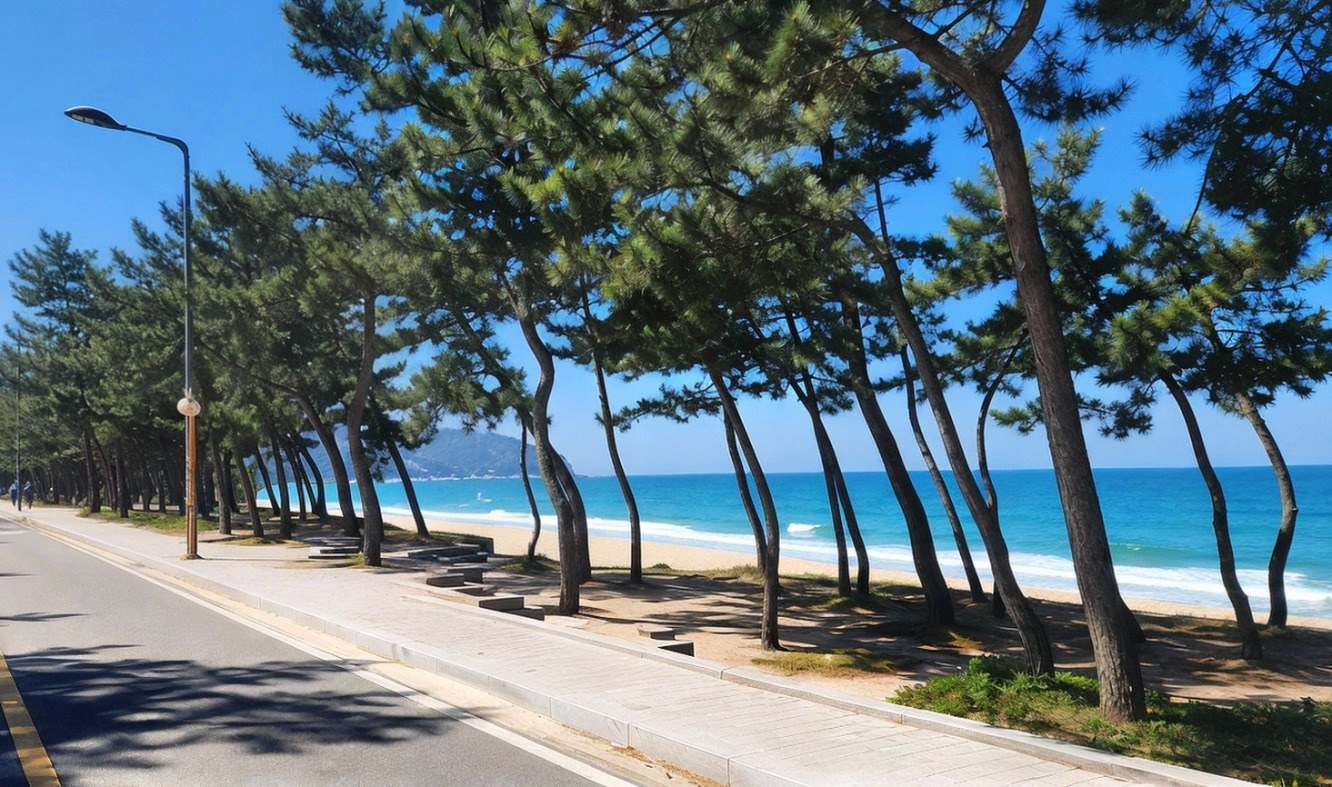
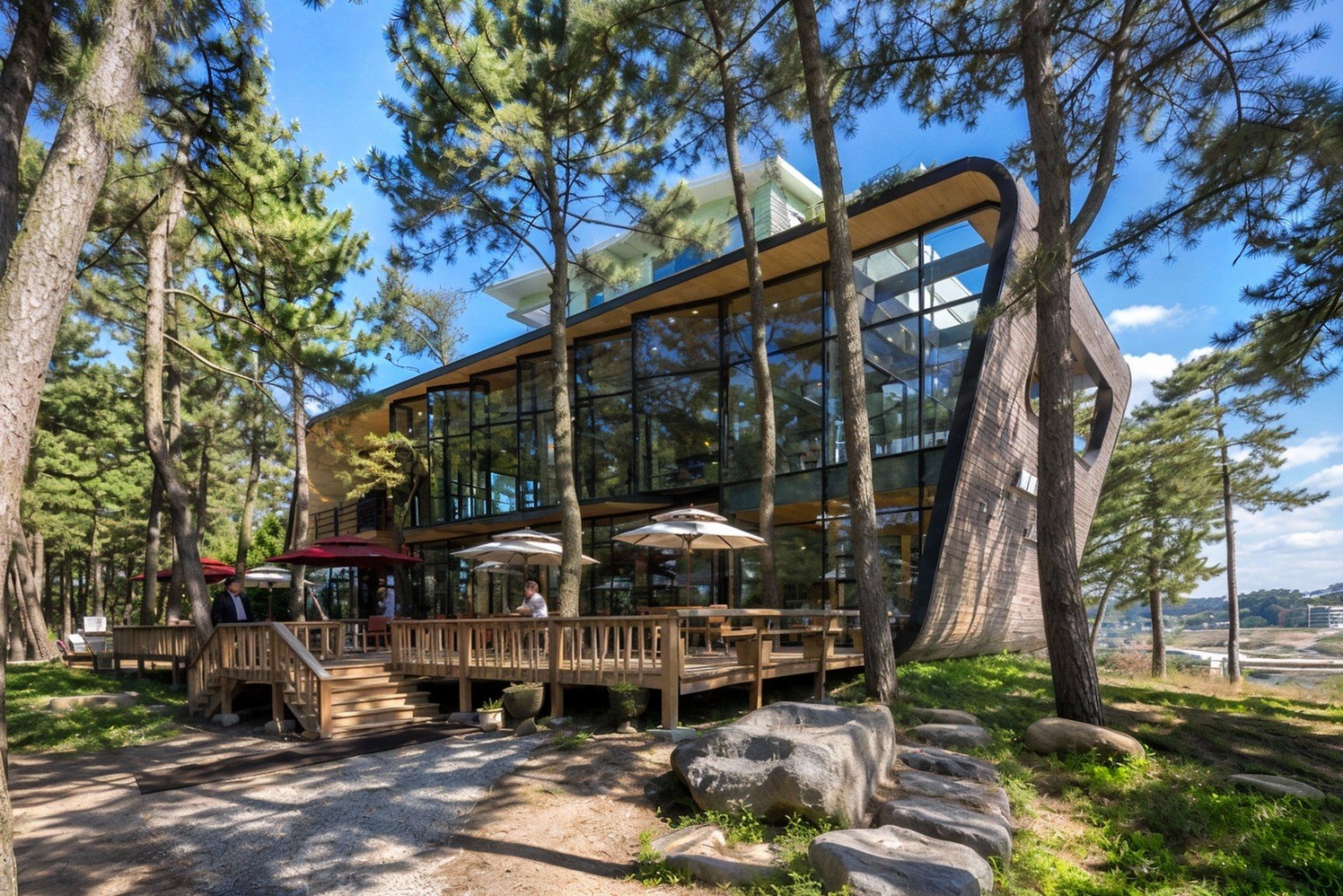
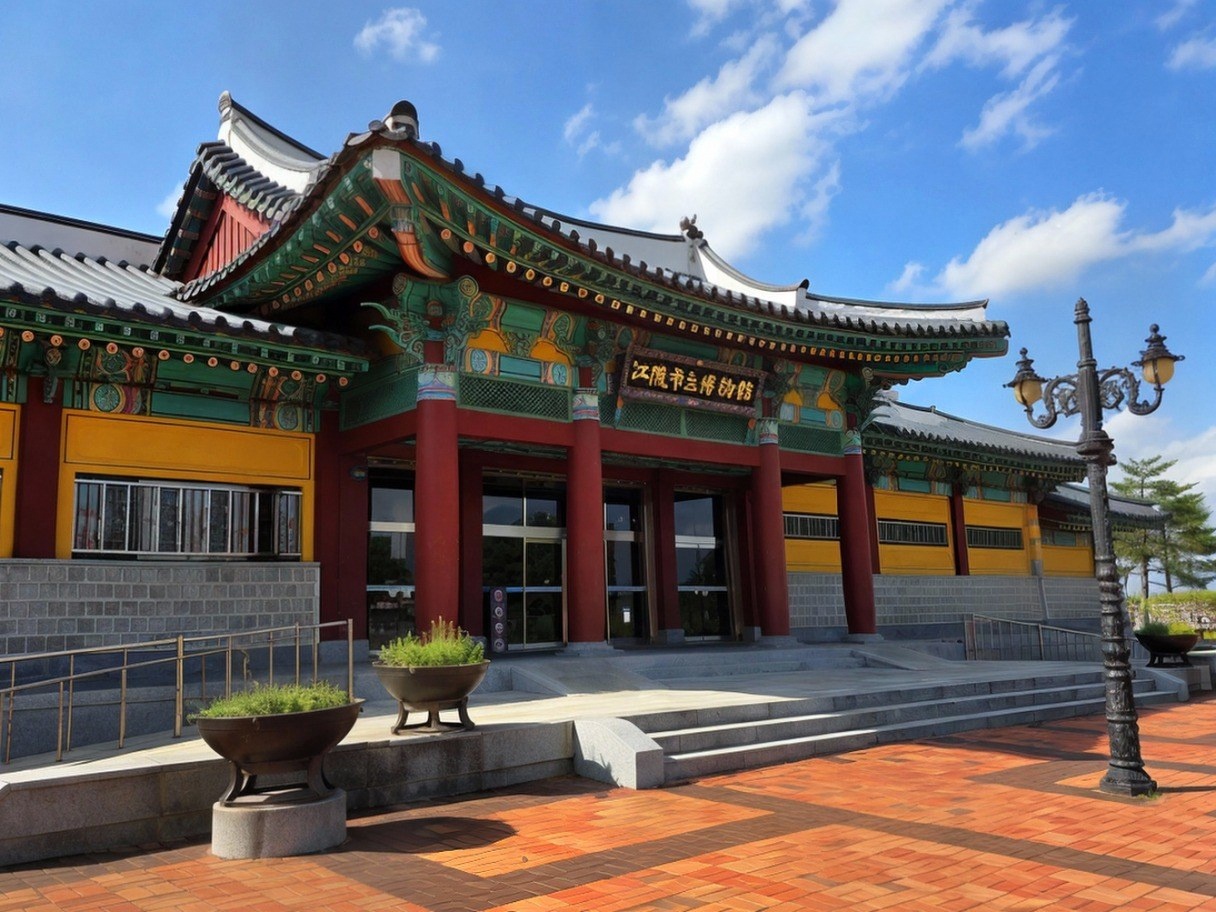
Start your day by taking a stroll along the Anmok Beach Coffee Street, with a cup in hand, enjoying the silver sandy beach and the cobalt-blue East Sea. Then, take a walk around the Gyeongpo Lake, surrounded by a dense forest of pine trees, and continue to the Ojukheon, an old traditional Korean house surrounded by black bamboo. This is a one-night itinerary for Gangneung. The three elements – the sea, the lake, and the traditional Korean house – are all located on the eastern coast and the lake area near Gangneung, so you can easily travel from one place to another by car in about 20 minutes. In just half a day, you can experience a change of scenery from the salty coast to the calm lake, and then to the garden of a building that is almost 500 years old.
Gangneung Anmok Beach Coffee Street
Anmok Beach Coffee Street is Gangneung's representative coastal promenade, with cafes lined up along the sandy beach and breakwater. In the 1980s and 90s, it was just an ordinary beach with many seafood restaurants, but there were a lot of coffee vending machines on this beach. The coffee street started when taxi drivers who brought customers and people from Gangneung who came to see the sea enjoyed the coffee vending machines lined up on the beach. At one time, there were about 50 vending machines in the 1 km section, and each vending machine had a slightly different taste because the coffee bean brand and the ratio of sugar and creamer were slightly different. It is said that customers had their own favorite vending machines.
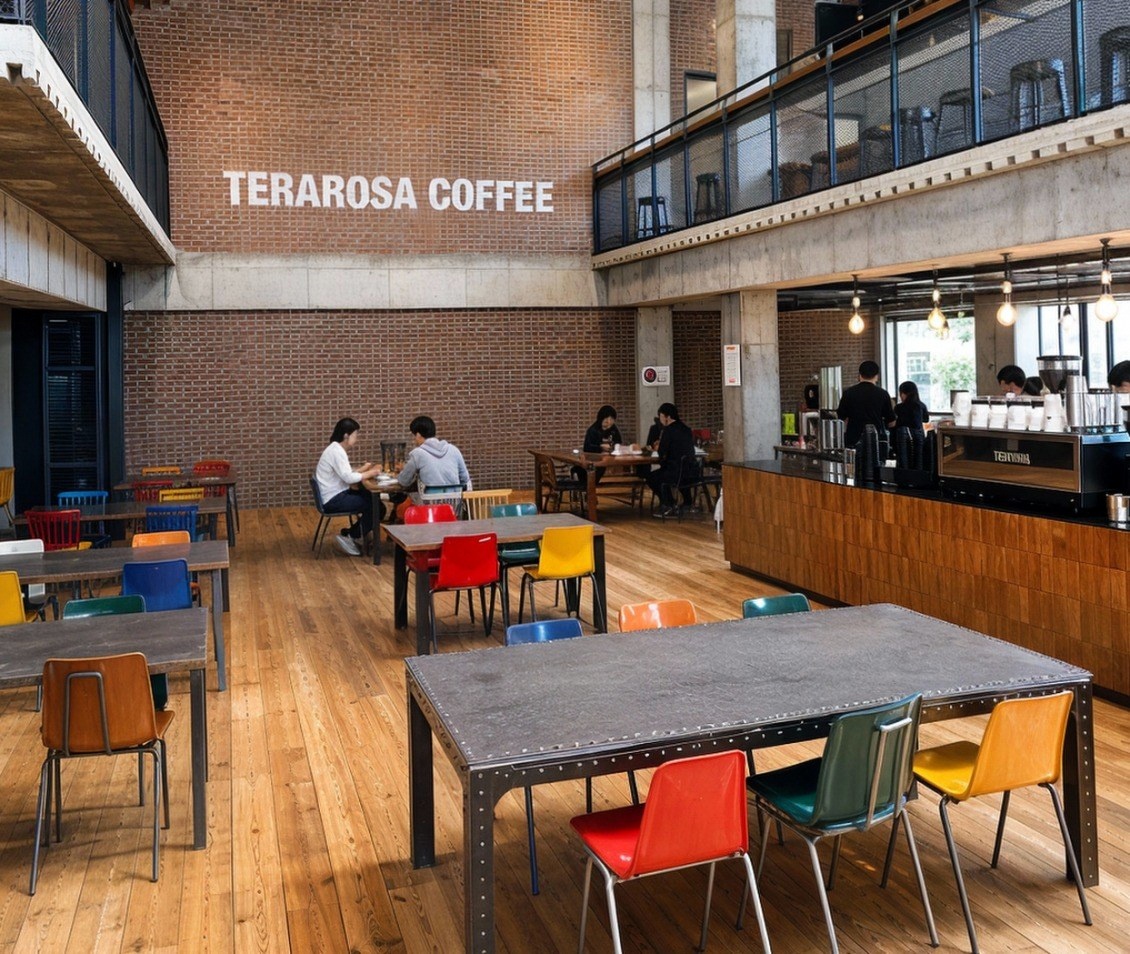
In the 2000s, roasters based in Gangneung established themselves, and this beach, which was known for its vending machine coffee, became a hub for coffee beans. Bohemian and Terarosa are the places that are always mentioned when talking about the roots of Gangneung coffee beans. Park I-chu, who is considered one of the first-generation baristas in Korea, opened 'Gabe Bohemian' in Seoul's Hwaye-dong in 1988, and then moved to Anam-dong and Gangneung. The Bohemian main store is now located near Sacheon Beach in the north. Kim Yong-deok, the CEO of Terarosa, who was born in Gangneung, opened a roasting factory and store in Gangneung Gujeong-myeon in 2002, and became another force that made Gangneung a coffee city. As these roasters opened their main stores in various parts of Gangneung, the coffee bean culture spread beyond Anmok Beach to the alleys of the city, and in 2009, the Gangneung city started holding a coffee festival, solidifying the image of "Gangneung = Coffee."
When you enter the street, it is better to take a walk along the cafes, with your back to the sandy beach, and then choose a place to sit. Each store has its own unique selling point, so pay attention to the following as you walk.
- Coffee shops that roast their own beans — You can tell what kind of coffee a shop serves by the aroma of roasting beans that wafts from the entrance, the sacks of green coffee beans and drum roasters lined up on display, and the labels on the beans that indicate their origin and roasting level.
- Second-floor and rooftop seating — Seats overlooking the horizon beyond the breakwater and windows with views of the lighthouse and passing fishing boats. Even on the same street, the height of the seat changes the view of the sea.
- Small shops that focus on takeout — Convenient for those who want to take a short walk along the breakwater promenade with a cup in hand. If you connect it to the path leading to the Anmok Port breakwater and the red lighthouse at the end, you can walk to the end of the coast with a cup of coffee in one hand.
Vending machines are now only found in a few places along the street. The old way of inserting coins and receiving a paper cup and the current way of receiving freshly brewed hand-drip coffee from a roastery coexist on the same street. If you walk to the end of the breakwater, you can see the fishing boats and lighthouse that come and go to Anmok Port up close, so it is nice to take a cup of coffee and walk slowly along the coast.
Gyeongpo Lake Pine Tree Walking Trail, Gangneung
Gyeongpo Lake is Gangneung's representative brackish lake, where seawater and freshwater mix, and the walking path and bicycle path that circle the lake are well maintained. The walking path along the lake is about 4.3 km long, and the path is mostly flat with few slopes. It is easy to walk with a stroller or bicycle, and old pine trees, cherry trees, and forsythia line both sides of the path, so you can walk with the pine breeze and the lake. If you ride a bicycle, it doesn't take long to go around the lake, but if you stop at the pavilion to look at the lake and stop at the wetland deck, a couple of hours will pass quickly.
It is best to decide on a direction before you start, so that your route is clear. Walk alternately along the open lake section and the forest path where the shade of the pine trees is deep, and follow the order of lake surface → pine forest path → Gasiyeon wetland → Gyeongpo Pavilion. There are several bicycle rental shops along the lake, and it is free to walk on the walking path, cherry blossom path, and climb to Gyeongpo Pavilion.
- Gyeongpo Pavilion — A pavilion located on a hill overlooking the lake, where you can see the lake, pine forest, and the East Sea in the distance when you go up to the floor. There are about ten old cherry trees around the pavilion, and in the spring, thick petals fall from the old trees.
- Gasiyeon Wetland — An ecological area in the Gyeongpo Wetland Ecological Park, where Gasiyeon flowers bloom from July to September. A wooden deck is laid out to the inside of the wetland, so you can see the water plants and birds up close, and at the end of the wetland park, the Heo Gyun and Heo Nanseolheon Memorial Park is nearby.
- Spring Cherry Blossom Season — The Gyeongpo Cherry Blossom Festival is held in early April in the Gyeongpo area, and the walking path becomes a cherry blossom tunnel. The main venue in the wetland square has a cherry blossom walking path, a lighting tunnel, and programs such as busking, so you can enjoy it even after sunset.
As you walk along the lakeside, you'll find several spots where the pine forest, the water surface, and the distant Baekdudaegan mountain range come together in a single view. Around the lake, there are also places to visit, such as the Chamsori Gramophone and Edison Science Museum and the March 1st Independence Movement Memorial Park, making it a good idea to take breaks and enjoy the exhibitions along the way. If you include Gyeongpo Lake in the middle of the course, it will naturally connect Anmok Beach and Ojukheon, and if you rent a bicycle, it won't be too much of a burden to go around the lake.
Gangneung Ojukheon History Museum
Ojukheon is a detached building built in the early Joseon Dynasty, and it is the birthplace of Shin Saimdang (1504-1551) and her son, Yulgok Lee I (1536-1584). It is said that the house was first built by Choi Chi-woon (1390-1440), a minister during the reign of King Sejong of Joseon, and then passed down to his son, Choi Eung-hyeon, and then to his son-in-law, Lee Sa-on, who was Shin Saimdang's father. Shin Saimdang and Yulgok were born here. The building is named "Ojukheon" because of the black bamboo trees that grow in the backyard. It was designated as Treasure No. 165 in 1963, and you can also see it on the back of the 5,000 won bill.
To get a good understanding of the museum, it is best to walk along the axis from the main gate to the main building. Here are the details to look at in order:
- Mongnyongsil — This is the ondol room where Shin Saimdang gave birth to Yulgok Lee I in 1536. The name comes from the dream in which a dragon appeared at the entrance, and Yulgok's childhood name was also "Hyeonryong." Inside the room, there is a portrait of Shin Saimdang, and the left room is said to be where Yulgok studied until he was about six years old.
- Structure of the building — The pillars show a transitional style from jushimpo to ikgong. This is also the reason why it was designated as a treasure, so take your time to look up at the pillars and eaves and learn about the changes in Korean residential architecture.
- Courtyard and foundation — If you look at the width of the courtyard, the height of the foundation, and the color of the eaves and dancheong in order, you will see the neat proportions of the detached building.
- Backyard Ojuk — The black bamboo forest surrounds the back of the building, so you can take a walk around it.
Beyond the backyard Ojuk, you will reach the Yulgok Memorial Hall, where you can see Yulgok Lee I's petitions, letters, and poems, as well as Shin Saimdang's paintings and calligraphy. The relics of Shin Saimdang's children, Oksan Lee Woo and Mae Chang, are also on display, allowing you to see the writings and paintings of a family together. There is also the Gangneung City Museum and the Yulgok Human Education Center in the area, so you can enjoy the exhibitions and take a break. It is a good place to visit with your family and spend time without rushing.