Silla's Thousand-Year Legacy: Exploring the History of Gyeongju
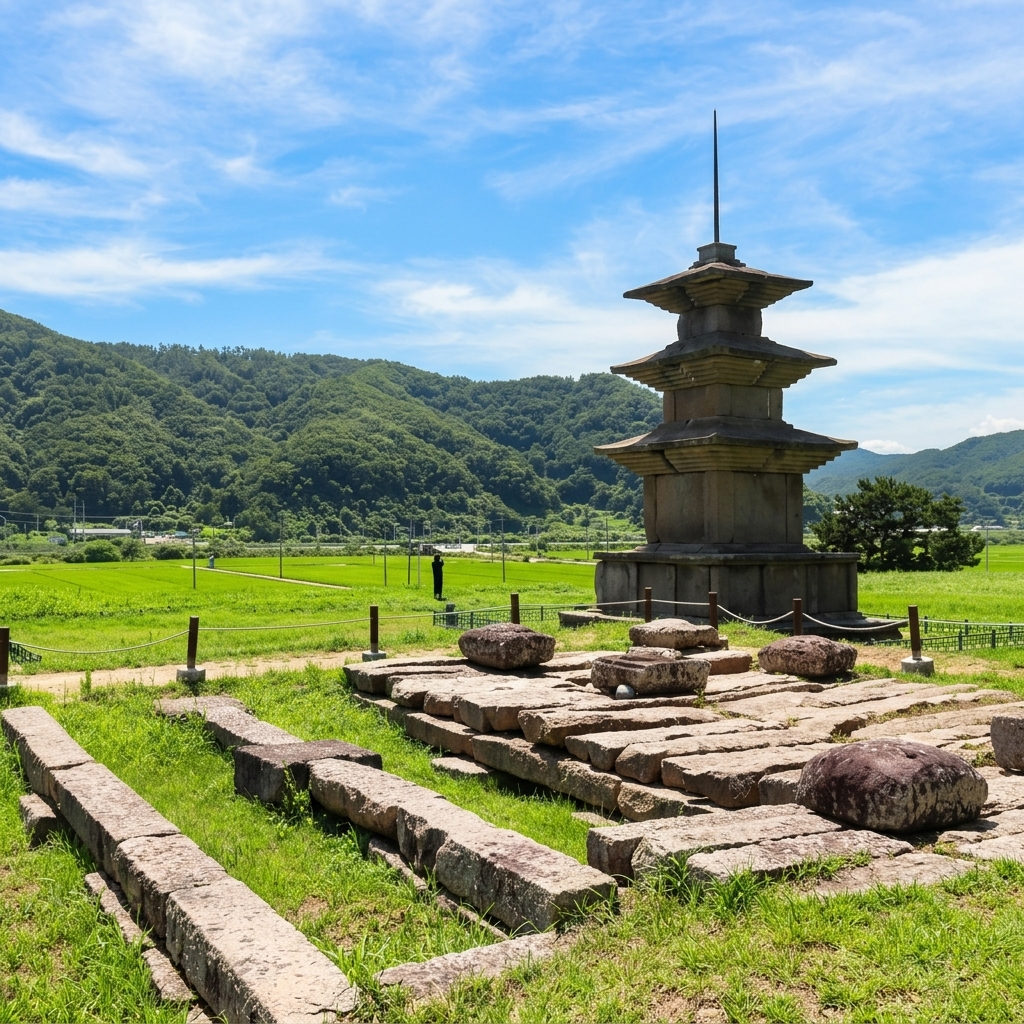
When you want to calmly trace Silla in Gyeongju, it is good to start at Bunhwangsa Temple, pass through the National Gyeongju Museum, and continue to Cheonmachong Tomb. At Bunhwangsa Temple, the site of a temple built during the reign of Queen Seondeok and the stone pagoda made of bricks piled up show the weight of Buddhism that was located in the center of the Silla capital. The museum displays gold crowns, gold belts, and horse harnesses excavated from tombs, which vividly depict the rituals of kings and nobles. Finally, when you enter the forest path of Cheonmachong Tomb, the myth of Kim Alji's birth is naturally placed among the low hills west of Wolseong Fortress and old trees.
The three places have slightly different characteristics. Bunhwangsa Temple shows 7th-century Silla Buddhism through the arrangement of stones and temple sites, and the National Gyeongju Museum explains the authority and skills of the people of the capital with excavated artifacts. Cheonmachong Tomb is a place where the founding myth in literature leads to an actual forest, stele, and walking path around Wolseong Fortress, so it is good to see the temple, tomb artifacts, and royal myths together in one day.
Gyeongju Bunhwangsa Temple Dangganjijoo and Moyeonseoktap Pagoda
Bunhwangsa Temple is said to have been founded in 634, the 3rd year of Queen Seondeok's reign. Although the scale of the temple feels relatively small among the remains of the capital, when you look at the records and excavation results together, it has a significant place in the history of Silla Buddhism. The "Samguk Yusa" and "Samguk Sagi" state that Bunhwangsa Temple was built during the reign of King Seondeok, and it is also known as a place where the Silla monks Jajang and Wonhyo stayed and spread Buddhist teachings.
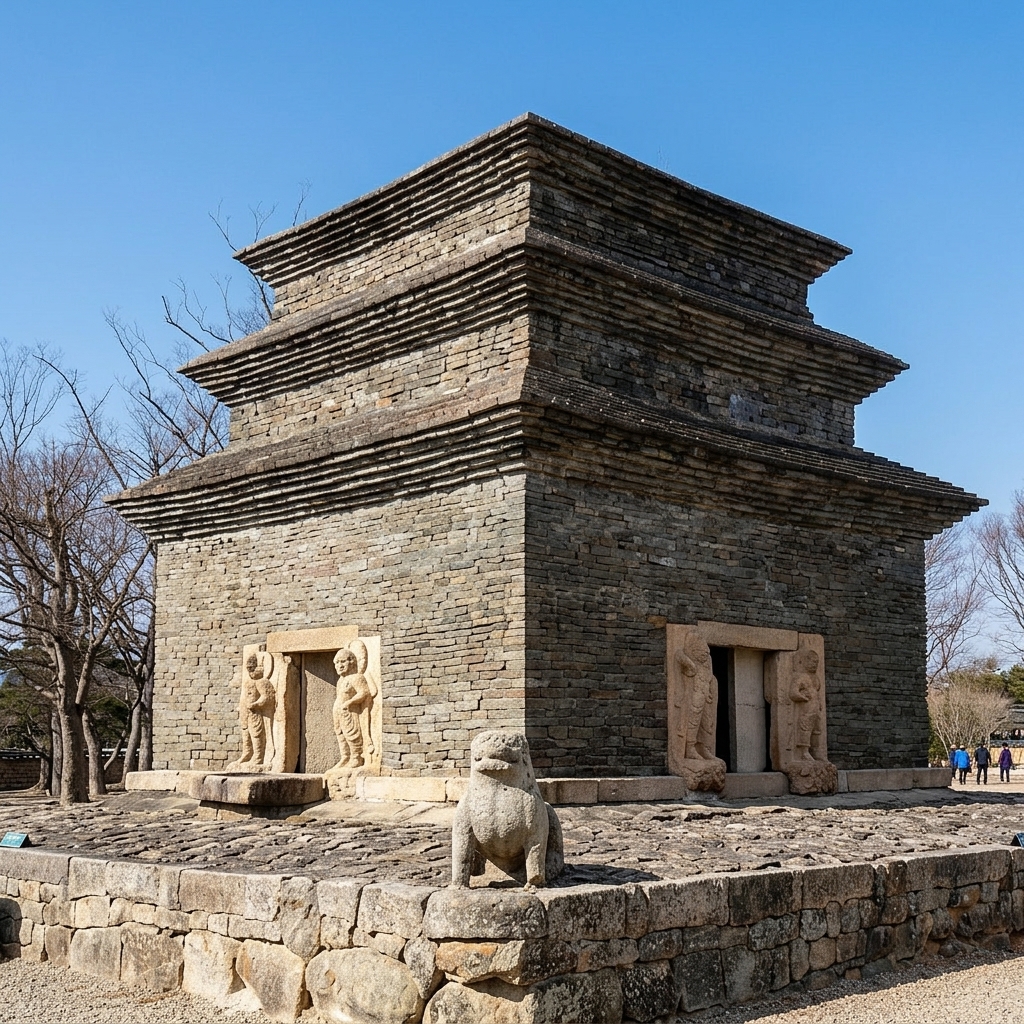
When you enter the courtyard, the first thing that catches your eye is the Bunhwangsa Moyeonseoktap Pagoda. This pagoda, designated as a national treasure, is considered to be the oldest stone pagoda among the remaining Silla stone pagodas. As the name "Moyeon" suggests, it is not a brick pagoda made by baking clay bricks, but a pagoda built by stacking small, rectangular pieces of grayish-black andesite.
Unlike the unified Silla granite stone pagodas that are commonly associated with Gyeongju, the Bunhwangsa Temple Pagoda has each stone overlapping like bricks, giving it a different texture. Records say that it was originally nine stories high, but now only three stories remain. The structure consists of a wide base on which the first body is placed, and above it, the second and third stories gradually decrease in size, so the weight of the lower part firmly holds the entire pagoda together. At each corner of the base, there are lion statues carved from granite, which seem to be both decorations for the pagoda and guardians of all four sides. If you look closely, you will notice that the expressions and poses of the lion statues are not all the same, which adds to the fun of looking at the old stone carvings.
On each of the four sides of the first body, there are niches that look like doors, and on either side of them, there are guardian figures carved to protect Buddhist teachings. The guardian figures are considered important materials for studying the 7th-century Silla sculpture style, and if you look closely, you can see that the twist of the body and the strength of the arms are clearly visible even in the shallow relief. The roof stones form steps on the top and bottom, and a lotus-shaped decoration made of granite is placed on top of the third roof stone. The fact that a sarira box and beads were discovered inside the pagoda during the restoration in 1915 also tells us that this pagoda was not just a sculpture but a center of worship and faith.
Bunhwangsa Temple site is also a place where the layout of the temple at the time of its founding was confirmed through excavation surveys conducted from 1990 to 2014. It was a "U-shaped temple with one pagoda and three golden halls," with the pagoda in the center and the golden halls arranged to the east, west, and north. This is described as the first form confirmed in Silla. The temple site that you see in front of you now is simple, but if you imagine the layout revealed through the excavation, it becomes even clearer that Bunhwangsa was a key temple in the royal capital, close to Hwangryongsa Temple.
The "Gyeongju Bunhwangsa Dangganjiju" remaining near the entrance is also worth taking time to see, just like the stone pagoda. The Dangganjiju is a stone pillar that held the long pole on which a flag called "dang" was hung during ceremonies or events at the temple. The danggan that was placed in the middle has disappeared, but the two pillars and the turtle-shaped gandae stone that supported the danggan remain, giving us an idea of the ritual space at the entrance of a Unified Silla temple.
Inside the two stone pillars, circular holes for fixing the danggan are arranged at the bottom, middle, and top. Because there are not too many decorations, the proportions of the stone are clearly visible, and the line that narrows slightly as it goes up is stable. In particular, it is known that the case with the turtle-shaped gandae stone is the only example among the existing Unified Silla Dangganjiju, so when you look at the Bunhwangsa Dangganjiju, it is better to look at not only the stone pillars but also the structure that supported the danggan from the ground.
The area around Bunhwangsa is close to Hwangryongsa Temple site, so it is also suitable for walking and connecting the temple area of the Silla royal capital. Hwangryongsa is known as the largest temple in Silla, and Bunhwangsa is said to be one of the seven temples established in the royal capital, along with Hwangryongsa and Heungryunsa. When you leave the temple site and look at the surrounding plains, you will naturally think that this area, which now looks like a quiet historical trail, was once a space where the royal family, temples, and urban life were connected.
National Gyeongju Museum, Silla Gold Crown Gallery
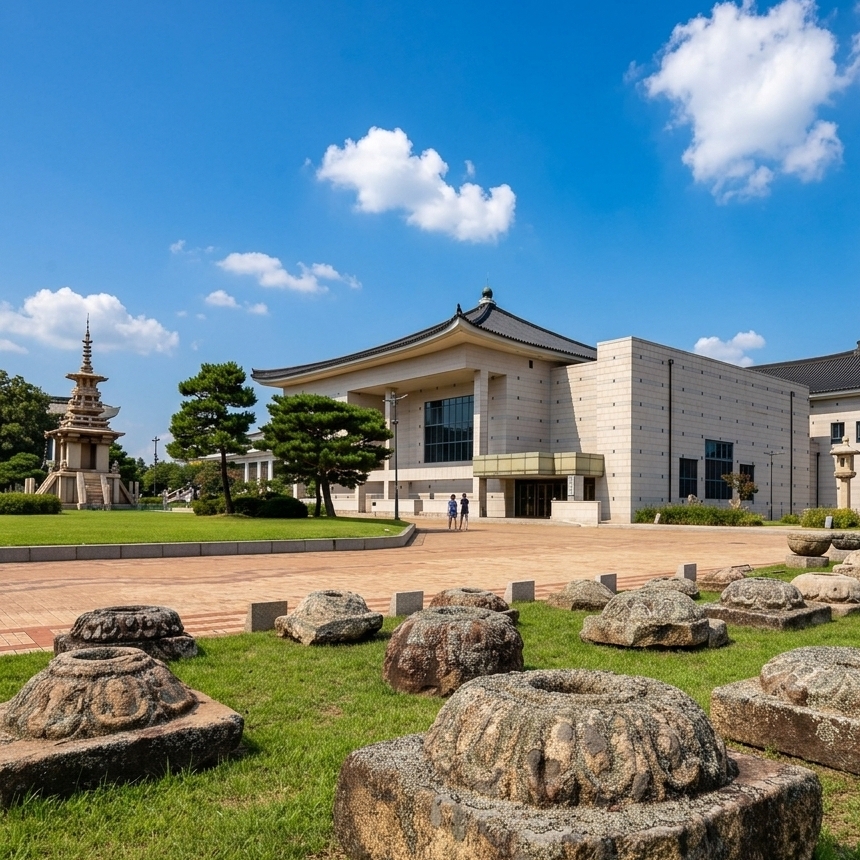
After seeing the stone pagoda and Dangganjiju at Bunhwangsa, if you move to the National Gyeongju Museum, the materials for understanding Silla will expand from stone to metal, glass, and horse gear. The museum's "Silla History Hall" covers the history of Silla from 57 BC to 935 AD, and shows the founding and growth, royal capital culture, and golden culture in the exhibition hall. Among them, the space dealing with golden culture displays artifacts from tombs, such as gold crowns, gold earrings, gold belts, glass cups, and decorated swords, which specifically explain the authority and funeral rituals of the Silla ruling class.
When you stand in front of the Silla gold crown, the first thing that catches your eye is the tree branch-shaped upright decoration that rises above the headband. Decorations that branch out like deer antlers are added to this, and small gold plate decorations called dalgae are densely attached to the thin gold plate. If the gold crown actually swayed according to the wearer's movements, the dalgae and gogeunok would have swayed together in gold and green, making the scene of the ritual even more intense. The gold crown is interpreted as an object that reveals the status of the wearer as a ruler and a priest, rather than as an everyday ornament.
When viewing the gold crowns, it is recommended to not only look at the central, raised ornaments but also to observe the pendants hanging down from the crown and the position of the jade ornaments. Silla gold crowns combine symbolic elements such as trees, deer antlers, birds, jade ornaments, and pendants. The National Gyeongju Museum introduces that these ornaments are interpreted as representing a sacred tree connecting heaven and earth, abundance and transcendent power, and vitality and regeneration. The method of cutting and attaching thin gold plates and engraving patterns is also worth noting.
The Cheonma Tomb Gold Crown, which is often mentioned as a representative artifact, is a Silla gold crown from the 6th century, with a height of 32.5 cm. The Cheonma Tomb was named as such after a horse-shaped object with a picture of a flying horse was discovered during the excavation of a tomb in Hwangnam-dong, Gyeongju, in 1973. In addition to the gold crown, bracelets, gold earrings, gold belts, and horse-related artifacts were also found, showcasing the funeral attire and the display of power through horses of the Silla ruling class.
The Cheonma Tomb Gold Crown is a typical Silla gold crown with three tree-shaped ornaments and two deer antler-shaped ornaments placed on top of the headband. It is said to have a high density of ornaments compared to other gold crowns, as many jade ornaments and pendants are attached to the entire crown. If you look at only the gold crown, it appears to be a single, magnificent crown, but when viewed together with the gold belt, gold earrings, and horse-related artifacts, it can be understood as a complete set of ceremonial attire that connects the head, waist, and horse decorations.
When visiting the museum, it is recommended to first view the golden cultural artifacts in the Silla History Hall and, if time permits, continue to the Buddhist-related exhibition in the Silla Art Museum. On the second floor of the Silla Art Museum, the Buddhist Temple Hall introduces pagodas, roof tiles, bricks, and wall tiles from Silla temples such as Hwangryongsa, Bunhwangsa, Gamsunsa, and Sacheonwangsa. If you have already visited Bunhwangsa and seen the actual temple site, you will be able to more clearly understand where the temple artifacts in the museum were used.
For reference, the special exhibition “Silla Gold Crown, Power and Prestige”, held to commemorate the 80th anniversary of the National Gyeongju Museum and the APEC 2025 KOREA Summit, was open to the public from November 2, 2025, to February 22, 2026. Although it was an exhibition that brought together six Silla gold crowns and six gold belts, it has now ended, so the exhibition location and availability of the gold crowns and major artifacts may vary depending on the time of your visit.
The National Gyeongju Museum is generally open from 10:00 to 18:00, and from March to October, it offers extended evening hours until 20:00 every Saturday. Admission is allowed until 30 minutes before closing, and it is closed on January 1, Lunar New Year, and Chuseok (Korean Thanksgiving). The second Monday of March and November is also designated as a temporary closing day, so if you are visiting to see the gold crowns or a specific exhibition, it is best to check the museum's announcements and the operating hours of the exhibition hall before you go.
Gyeongju Gyerim Silla Ancestral Forest
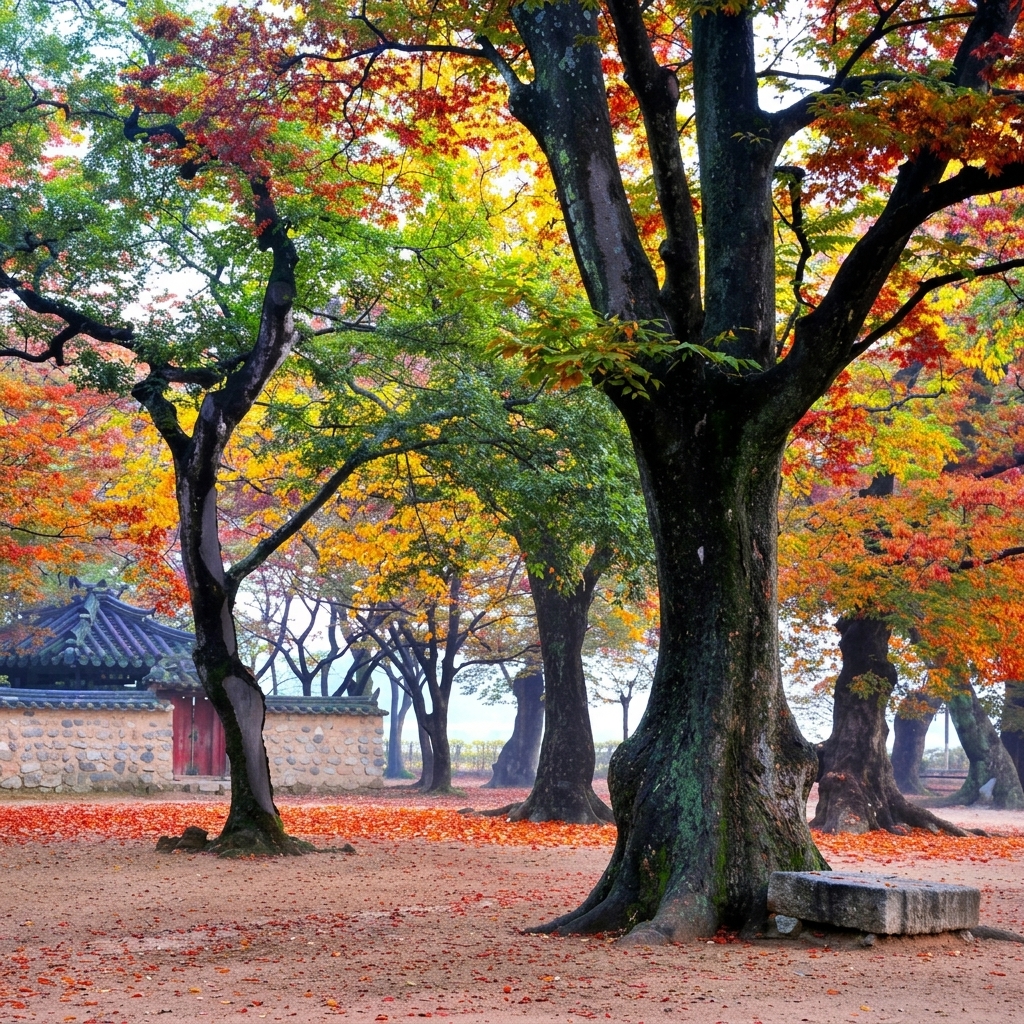
When you leave the museum and head towards Gyerim, the atmosphere of the space changes again. Gyerim is a forest that holds the legend that Kim Alji, the progenitor of the Gyeongju Kim clan, was born there, and it was designated as a historic site on January 21, 1963. It covers an area of 23,023㎡ and is located west of Wolseong, between Cheomseongdae and Gyo-chon Village, making it a place you naturally pass when walking around the Gyeongju city area.
The name of this forest originates from Sirim, which is said to have existed since the founding of Silla. According to the legend, in the 4th year of King Talhae (60 AD), the sound of a rooster and a bright light were heard in Sirim, west of Geumseong. The king sent his servants to investigate, and they found a small golden box hanging on a branch, with a white rooster crowing beneath it. When the box was opened, a bright and intelligent boy was inside, and the king believed that he was sent from heaven, so he made him a prince.
The boy was given the name ‘Alji,’ which means ‘baby,’ and his surname was Kim because he came from the golden box. Later, Alji ceded the throne to Pasa, and it is said that his descendant, King Michu, became the first king of the Kim clan in Silla. The explanation continues that after King Naemul, the descendants of Kim Alji ruled the country until the end of Silla, and Gyerim became a place that holds the origin of the Silla Kim royal family, rather than just a simple forest.
Inside the forest, there is a stone monument related to the birth of Kim Alji, which was built in 1803, the 3rd year of King Sunjo of the Joseon Dynasty. Around the monument, old trees such as king willows, zelkova trees, and maple trees spread their branches widely, and the dirt path gently connects to the walking path towards Wolseong. Gyerim is not a very large forest, but the space between the trees is generous, and the path is gentle, making it a good place to take a leisurely walk after visiting the museum.
When walking through Gyerim, it is easier to understand if you also think about the location of Wolseong. Wolseong is a historic site known as the site of the Silla palace, and Gyerim is a forest located to its west. Cheomseongdae, Gyeongju Hyanggyo, and Gyo-chon Village are also nearby, so it is better to walk around the surrounding sites together rather than just visiting Gyerim and turning back. In the strong summer sun, the shade of the forest is helpful, but the dirt path can be slippery after rain, so it is best to wear comfortable shoes.
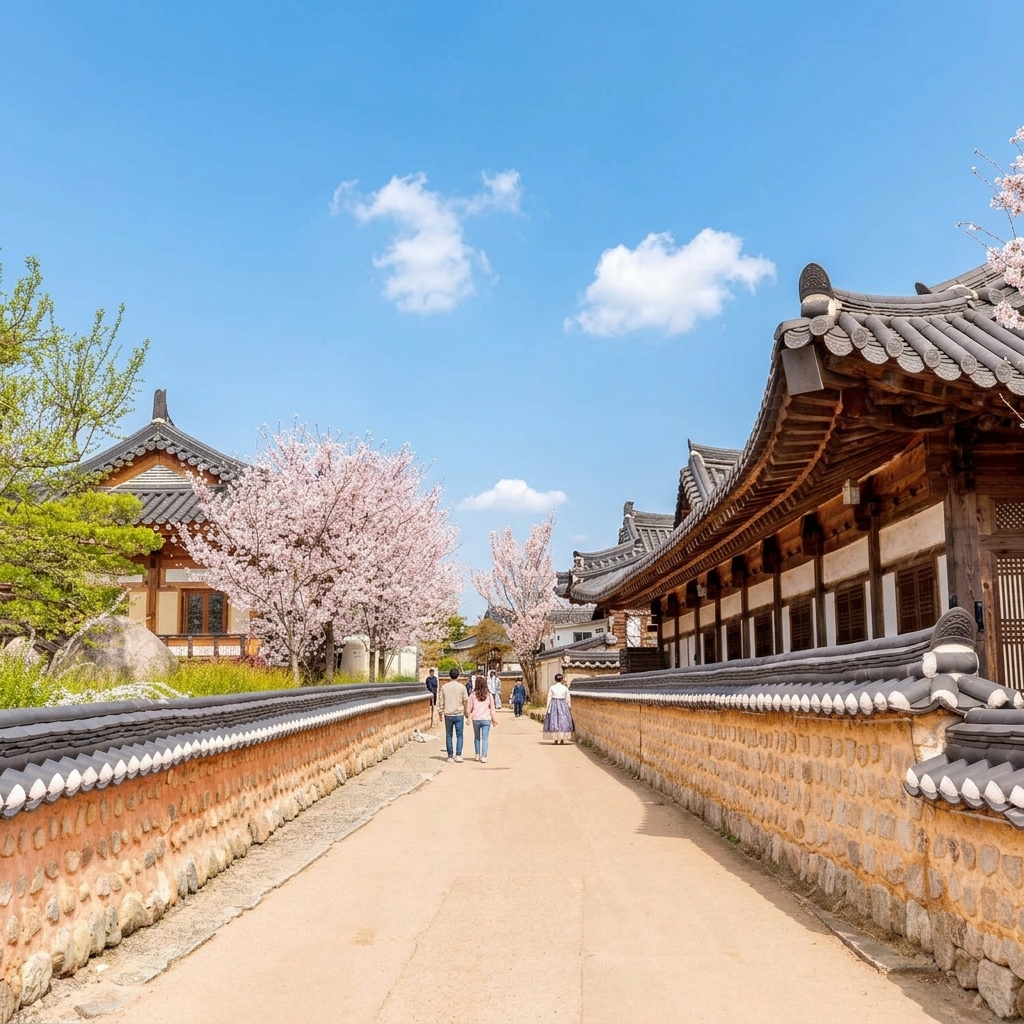
When you walk from Gyerim towards Cheomseongdae, the view opens up and becomes wider. The flat area around Cheomseongdae is one of the easiest areas to move around in the Gyeongju city area, and in the direction of Gyo-chon Village, there are traditional Korean houses and Gyeongju Hyanggyo. After seeing the stone pagoda of Silla Buddhism at Bunhwangsa and examining the golden crowns and tomb artifacts at the museum, walking through the forest path of the Kim Alji legend in Gyerim connects the story of religion, authority, and the royal origins of the Silla capital in a half-day or one-day itinerary.
When combining it into a one-day itinerary
- At Bunhwangsa, if you look at the gray-black andesite body of the Mojonseok Pagoda, the niches and guardian statues on the first floor, the lion statues at the corners of the foundation, and the turtle-shaped support stone of the Dangganjiju, you can naturally grasp the central heritage of the temple site.
- At the National Gyeongju Museum, if you look at the golden culture exhibition in the Silla History Hall, focusing on the upright ornaments and pendants of the golden crown, the beautiful jade, and the gold belt, you can easily understand the ritual attire in the tomb as a whole.
- At Gyerim, if you look at the forest path where the legend of Kim Alji's birth is told, the pavilion built in 1803, and the old trees west of Wolseong, you can see the actual topography where the Silla royal legend is located.
- The order of visiting is as follows: start at Bunhwangsa, move to the National Gyeongju Museum, and then walk through Gyerim, Cheomseongdae, and Gyochon Village. Since the museum visit may take a long time, it is better to see the golden crown exhibition first, and if you have time, you can also visit the Buddhist temple hall of the Silla Art Museum.