A Culinary Walk Through Jeju Markets, Exploring Seasonal Local Ingredients
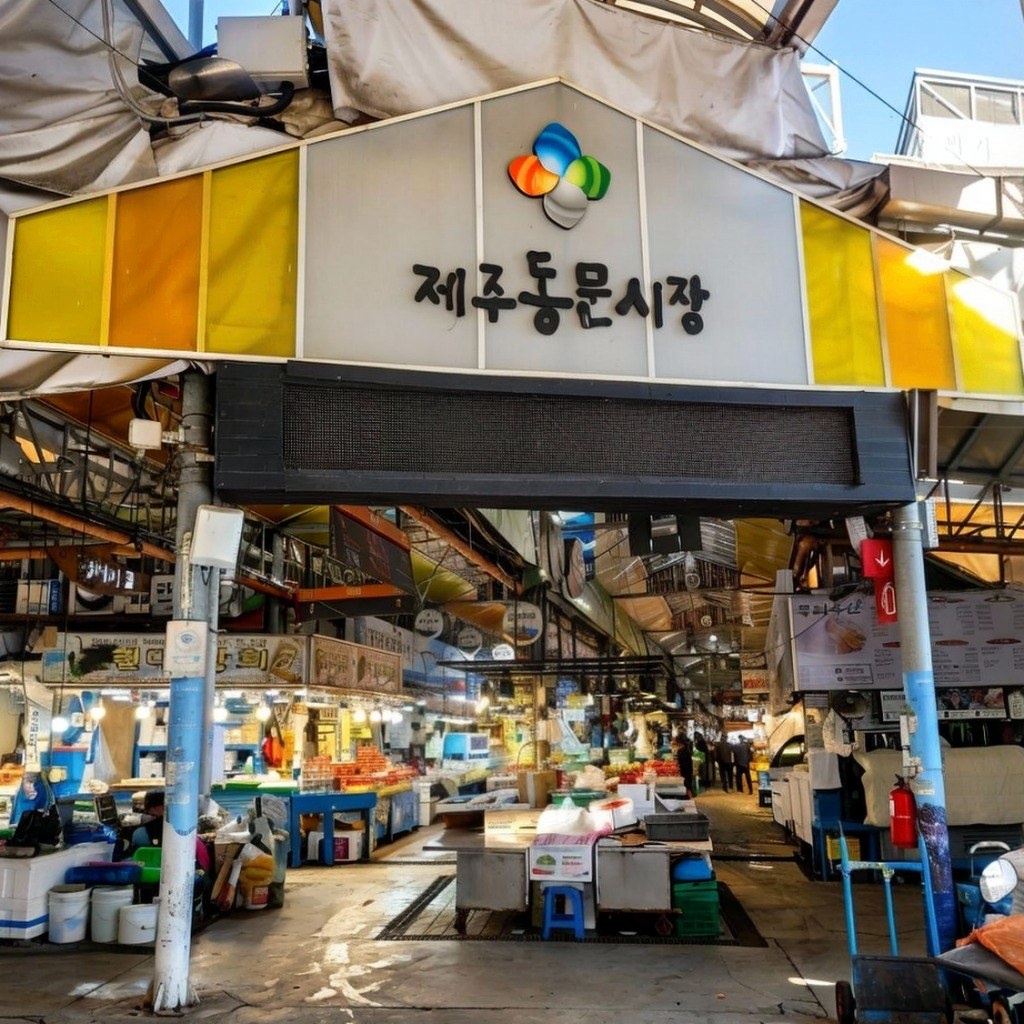
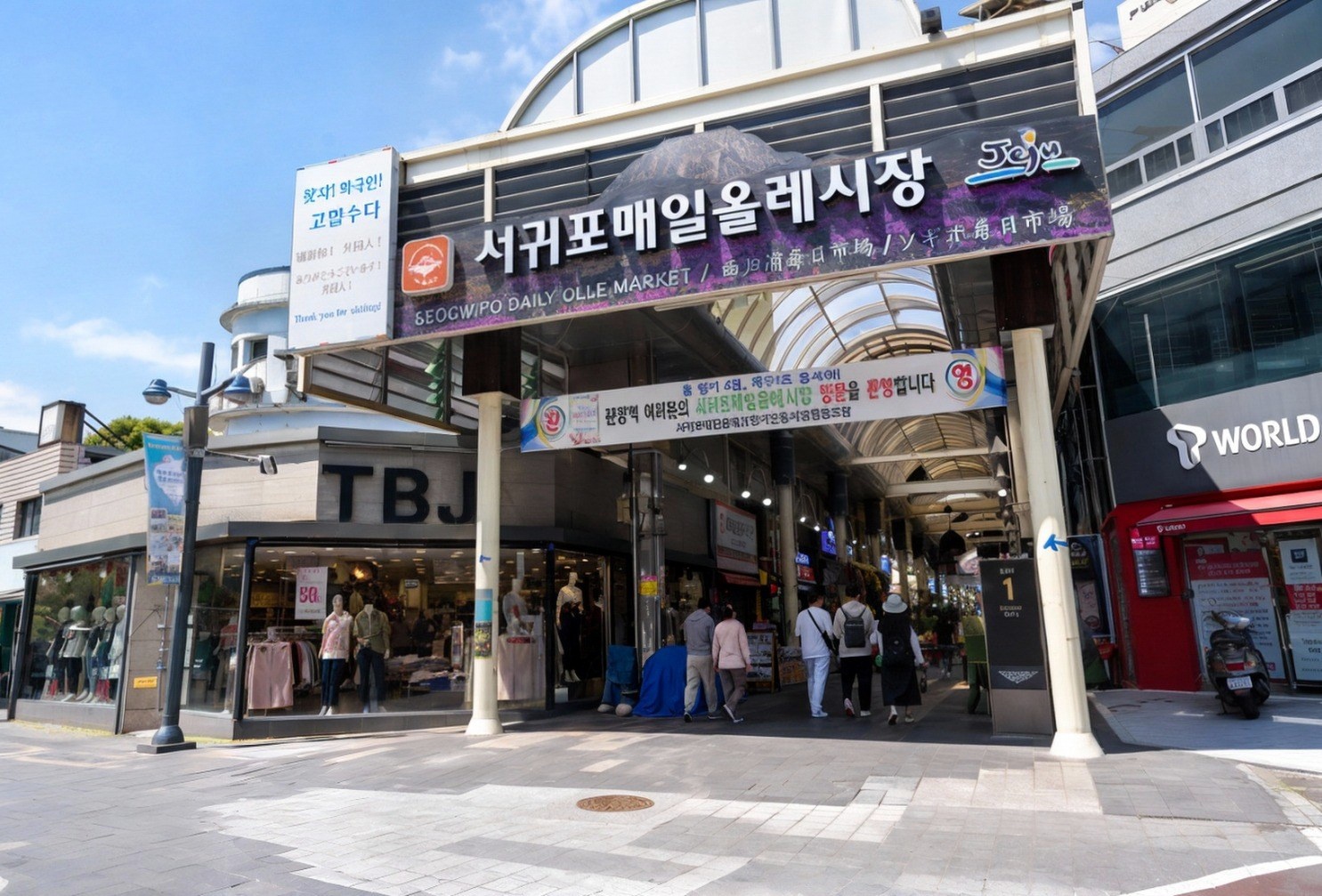
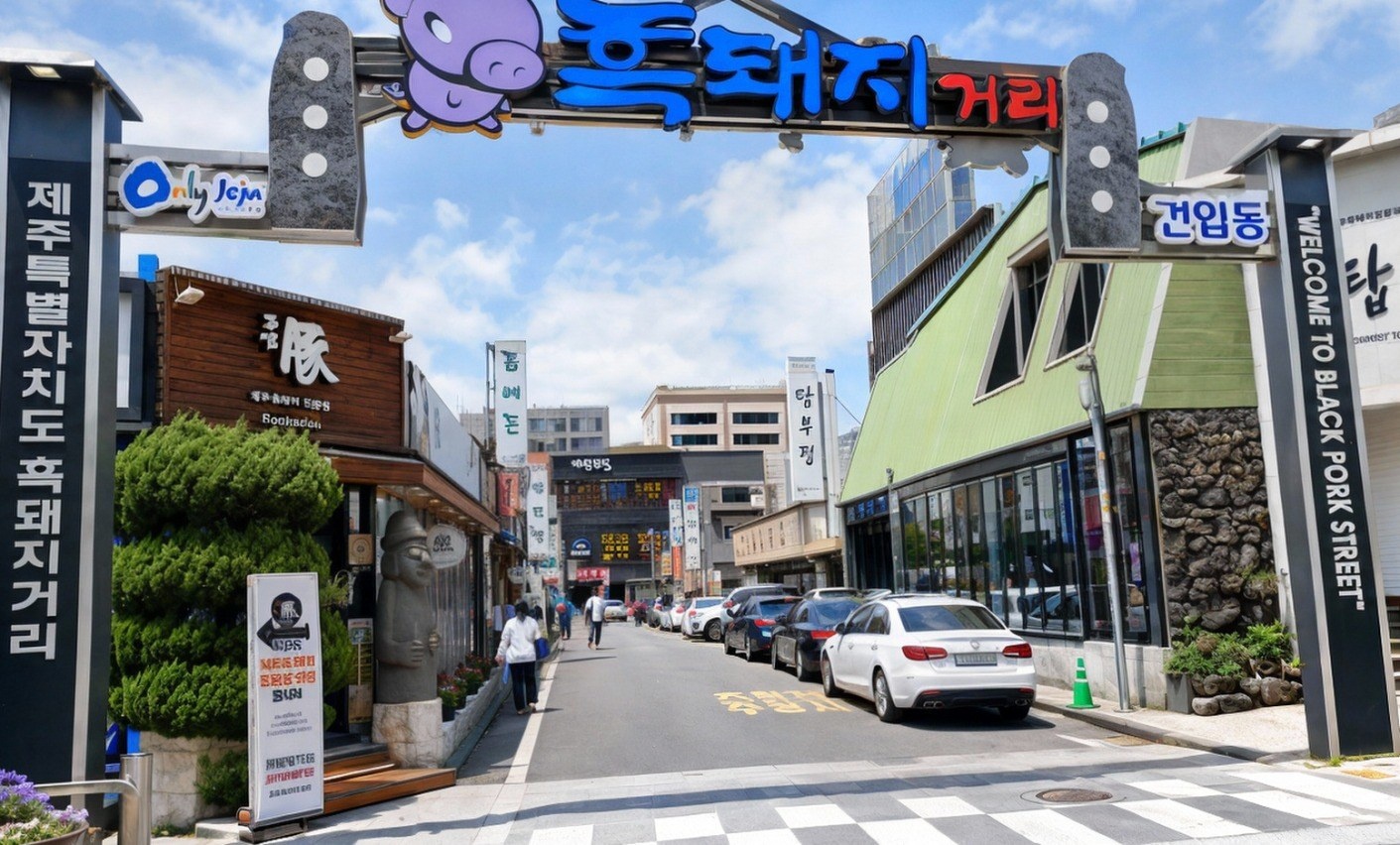
From the Dongmun Traditional Market's night market food street in Jeju City to the Seogwipo Maeil Olle Market and the Samdo-dong Black Pork Street, we've gathered gourmet alleys where you can select fresh, local ingredients with your own hands and taste them with your mouth. We'll follow the food route that connects Jeju's east, west, and city, starting with the daytime scenery of the traditional market where fruits, vegetables, seafood, and dried goods are traded, the night market where food is grilled in front of braziers, and the black pork street where fresh meat is sliced behind glass windows.
Even if it's the same black pork, you can enjoy it as a bite-sized skewer at the night market and as a thick slice of meat at the black pork street. The Omeok-tteok (a type of rice cake) also has a slightly different flavor at the Dongmun night market and the Seogwipo rice cake shop, so it's fun to compare the two markets while walking around.
Jeju Dongmun Traditional Market Night Market Food Street
Dongmun Traditional Market is the largest and oldest permanent market in Jeju, formed in 1945 with the liberation of Korea. It's conveniently located near Jeju Airport, making it a great place to visit on your first or last day. The market is divided into alleys, each with shops selling fruits, vegetables, seafood, dried goods, rice cakes, and side dishes. During the day, it's bustling with locals and tourists. The market is generally open from 8 a.m. to 9 p.m., and after sunset, food stalls appear along the passageway near Gate 8, transforming it into a night market. The night market starts around 6 p.m. and continues until midnight, operating year-round with few closures.
The night market food street is concentrated in a short, straight passageway inside Gate 8. In this 30-meter stretch, there are about 30 stalls lined up, with braziers and griddles on both sides. Most of the food is served in bite-sized portions, perfect for eating while walking around. The prices are generally between 5,000 and 9,000 won, so it's more enjoyable to try a little bit from several different stalls rather than filling up at just one. The passageway isn't very wide, so it's best to arrive early, around opening time, to avoid the crowds on weekend evenings.
One of the most popular dishes is the abalone egg kimbap, which features a whole abalone on top. It's made by grilling an egg and wrapping it in seaweed, then topping it with a whole abalone and grilling it again with a torch. This is considered a signature dish of the Dongmun night market. Other popular items include the shrimp menbosha, which is made with minced shrimp filling between slices of bread and fried; the carrot hot dog, which is made with grated Jeju carrots; and the peanut ice cream, which is made with peanuts from Udo Island. These are all bite-sized dishes that highlight Jeju's local ingredients.
The black pork is prepared in various ways, such as skewers, rolled pork belly, and grilled pork. There are also variations of black cow sushi, raw shrimp, and raw shrimp bibimbap at each stall. You can also try the Omeok-tteok, which is made with glutinous rice flour and filled with red bean paste, and the Bingtteok, which is a buckwheat pancake filled with shredded radish. For drinks, there are many fresh fruit juices made with Hallabong oranges and tangerines, which are perfect for cleansing your palate after eating fried or grilled foods. It's a good idea to separate the food into two categories: those that are easy to eat while walking, such as kimbap, skewers, and hot dogs, and those that need to be eaten while sitting, such as bibimbap and sushi, so you don't have to wander around the passageway.
At some stalls, they put on a fire show and torch performance before serving the ordered food, and some use oil extracted from Jeju tangerines as fuel. When choosing a stall, it's better to walk around the 8th gate passage, comparing the shops, rather than deciding on a menu right away at the entrance. First, check out the stalls with long lines, those with strong smoke and smells coming from the grill, and those where ingredients are prepared right in front of you. It's more convenient to eat hoe-deopbap (rice topped with raw fish) or sushi by finding a seat in the seating area inside the market or at a nearby seafood shop.
- Jeonbok Gyeran Kimbap · A signature dish of Dongmun Night Market, featuring whole abalone topped and grilled with a torch.
- Ttaksaeu Menbosha · A Jeju-style bite-sized fried snack made by putting minced shrimp in bread.
- Jeju Carrot Hot Dog, Udo Peanut Ice Cream · Street desserts that highlight Jeju ingredients.
- Heukdwae Kkochi, Ogyeop Mari · Bite-sized grilled skewers cooked right in front of you.
- Omeok Tteok, Bingtteok · Traditional Jeju rice cakes made with millet and buckwheat.
- Hallabong, Citrus Fresh Fruit Drinks · Jeju citrus fruits squeezed on the spot.
Seogwipo Maeil Olle Market Local Food Alley
Located in the heart of Seogwipo, Maeil Olle Market is a permanent market covered with an arcade roof. It's close to the sea, so it has a high proportion of seafood, and seasonal fruits such as tangerines and hallabong, which are specialties of Seogwipo, are available year-round. The roof allows you to walk through the entire alley even when it's raining or the sun is strong in midsummer, and the shops that sell raw fish and seafood are located inside the market, so you can enjoy them on the spot or take them to go. Many fruit shops, including those selling hallabong and tangerines, offer delivery services, so you can have them shipped home without having to carry them.
The four famous dishes of this market are omeok tteok, garlic chicken, kkongchi kimbap, and modakchi. Kkongchi kimbap is characterized by putting a whole cleaned kkongchi (a type of fish) in the kimbap and leaving the head and tail sticking out. The oily flesh of the kkongchi, rice, and vegetables are all in one roll, creating a savory flavor without any fishy taste. Ujeong Hoesenta is a long-standing famous shop for kkongchi kimbap.
Garlic chicken is made by marinating chicken in garlic broth and then deep-frying it with plenty of minced garlic, resulting in a strong garlic flavor and a refreshing aftertaste. Manong Chicken (formerly Joongang Chicken) is a representative shop for garlic chicken. Modakchi is a Seogwipo specialty that combines tteokbokki, fried food, jeon (Korean pancake), mandu (dumplings), and sundae (blood sausage) on one plate, topped with egg and sauce. It's a great dish to share with a group, as you can enjoy several different snacks at once. You can find modakchi at snack bars like Saerona Bunshik.
Omeok tteok is a traditional Jeju rice cake made by mixing millet flour with red bean paste and coating the outside with red beans. It's a snack that has made the name of Seogwipo Maeil Olle Market well-known. If you compare it with the omeok tteok at Dongmun Night Market, you'll find that each shop has a slightly different sweetness in the red bean paste and a different texture in the red beans on the outside. If you visit both markets, it's a good idea to compare and taste them. If you add a hallabong fresh drink, you can enjoy a meal and snacks in one go while exploring the market.
When choosing a shop, it's better to walk around the aisle and compare rather than deciding on a menu right at the entrance. It will be easier to choose if you first check the shops with long lines, those with a strong smell of fried oil and seasonings, and those where local customers are seated and enjoying their meals. If you plan your route by mixing menus that are easy to carry around while walking, such as Ggongchi-gimbap and Garlic Chicken, with menus that are meant to be shared while sitting, such as Modak-gui, it will be easier to explore the market at once.
Jeju Samdo-dong Black Pork Street
In the Samdo-dong area of Jeju City, black pork restaurants are lined up along the alley. Jeju black pork is a native breed that has adapted to the unique climate and environment of Jeju, making it hardy and resistant to diseases. The main ingredients of this street are samgyeopsal (pork belly) with layers of lean meat and fat, and thick cuts of neck meat. Purebred Jeju native black pigs were designated as Natural Monument No. 550 in 2015. This is the result of preserving the breed by collecting native black pigs that were on the verge of extinction in 1986 and propagating them as a pure lineage. The black pork grilled on this street is a modified breed raised for consumption, and it is different from the pure native breed designated as a natural monument.
The first thing you should see here is the thickly sliced "geun-gogi" (meat). Geun-gogi is a Jeju-style way of ordering meat by weight, where unseasoned, raw meat is thickly sliced. It is grilled until the outside is crispy and the inside is juicy, and then cut with scissors to eat. Because it is thick, it takes time to cook, so you should grill it in the order of placing the fatty part on the grill first to melt the fat, and then slowly cooking the lean meat. The process of grilling on a volcanic rock plate or on a grill, while observing the texture of the fat and how much oil is rendered, is the charm of this street.
The key to grilling is meljeot. Meljeot is a fermented sauce made from small anchovies (called "mel" in Jeju dialect), and it is made by salting and fermenting large anchovies caught in the Seogwipo area. It is simmered on one side of the grill and used as a dipping sauce for the grilled black pork. The salty and savory meljeot is a unique Jeju side dish that is rarely found elsewhere, and it is considered the best way to enjoy black pork in a Jeju style by dipping thick slices of geun-gogi in the boiling meljeot broth.
When you enter the street, you will notice that each shop has slightly different meat thickness, cuts, and meljeot preparation methods, so choose a shop by looking at the grill and the customer turnover through the glass windows. Black pork barbecue is usually served with kimchi, bean sprouts, and doenjang-jjigae (soybean paste stew), and many shops also offer fried rice, naengmyeon (cold noodles), or rice mixed with meljeot as a finishing touch. If you have unseasoned geun-gogi with lettuce, coarse salt, and meljeot, and try each cut of samgyeopsal and neck meat with different dipping sauces, you can compare the texture and fat content of each cut.