From Jeonju Cathedral, through the Hanok alley, to Hanbyeokdang.
This route starts at Jeondong Cathedral, located on the west side of Jeonju Hanok Village, and takes you through the hanok alleys to a teahouse where you can rest, and then to Hanbyeokdang, which is situated on the eastern foot of Seungamsan Mountain. The route connects a modern cathedral built with red bricks, a cluster of over 700 hanoks in the city center, and a Joseon Dynasty pavilion built on the cliffs of Jeonju Stream, all within a single route. While the area around Gyeonggijeon Palace and Taejo-ro is crowded with visitors, as you pass Bank-ro and turn onto Hyanggyo-gil, the number of shops gradually decreases, and you will find yourself closer to the low walls of residential houses and the Jeonju Stream.
If you simply connect these three locations, you can explore them in half a day, but if you want to take your time to visit the inside of the cathedral, enjoy a cup of tea, and also visit Jeonju Hyanggyo or Wanpanbon Culture Museum, it is better to allow more time. Jeondong Cathedral is still a place of worship where masses and ceremonies are held, and the tea ceremony experience is usually offered on a reservation basis. The last section of the route to Hanbyeokdang includes stairs and slopes. Operating hours and programs may vary depending on the time of your visit, so please check the latest information from each facility before you go.
Jeondong Cathedral Facing the Hanok Roofs
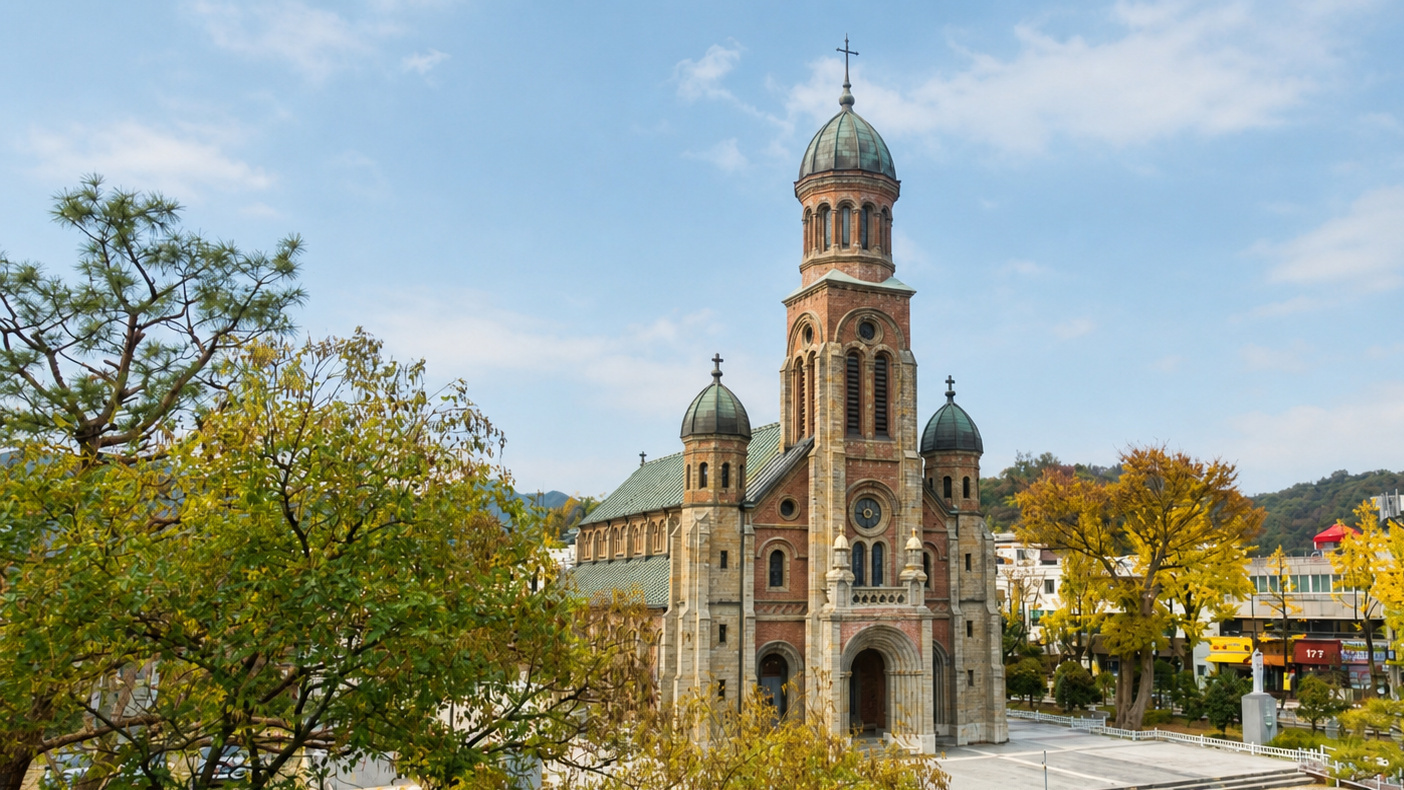
Jeondong Cathedral is located opposite Gyeonggijeon Palace and at the western entrance of Hanok Village. This area is known as the place where Yun Ji-chung and Kwon Sang-yeon were executed during the Shinheo Persecution in 1791. Yun Ji-chung was accused of burning his ancestral tablets and refusing to perform ancestral rites according to Catholic doctrine, and he was beheaded along with Kwon Sang-yeon. The two are considered the first martyrs of Korean Catholicism, and this is why Jeondong Cathedral is considered an important place in the history of Catholicism in the Honam region, as the cathedral was built on the site of their martyrdom.
The first pastor, Father Bodune, acquired the site for the parish near the martyrdom site around 1891 and then began planning the construction of the cathedral. The design was overseen by Father Pwanel, who also participated in the construction of Myeongdong Cathedral in Seoul, and the construction began in 1908. The exterior was completed in 1914, and the interior work continued until 1931, when the entire building was completed. Knowing that the building was not built all at once but took a long time to take shape, you can appreciate the materials used in the exterior and interior in more detail.
It is said that the stones from the demolition of the Jeonju Fortress walls, which were removed to build a road at the time, were used as the foundation stones of the cathedral. The bricks were made from the soil of the fortress walls, and it is also recorded that the stones were brought from Hwangdeungsan in Iksan and the wood was obtained from the area around Chimyeongja Mountain. Although it is a Western-style religious building, the stones and bricks that support the building contain materials from the old Jeonju Fortress. If you look at it together with the martyrdom memorial in front of the cathedral, the history of the place from which the architecture began is naturally connected.
The exterior walls are regularly mixed with red and gray bricks, and small towers stand on either side of the central bell tower, creating a balanced composition. Semicircular arches are repeated above the entrances and windows, and the thick walls and heavy bell tower show the characteristics of Romanesque architecture. Above this, a round dome and curved decorations are added, also showing elements of Byzantine style. If you stand a little away from the front yard and look at it, you can see the triangular outline with the central bell tower being the highest and the height of the two side towers being lowered.
When viewed up close, the building reveals distinct features such as the mortar lines between the bricks, the granite decorations, and the deeply recessed entrance beneath the arch. Despite its large scale, the facade does not appear heavy or monolithic due to the use of different brick colors, which create horizontal lines and delineate the window frames. The white statue of Christ in front of the cathedral and the commemorative stone marking the site of martyrdom are not merely decorative elements but rather serve to convey the religious significance of the place; therefore, when taking photos, it is advisable to leave space for people who are praying or paying their respects.
If the interior is open, you can see a structure with repeating columns and arches that extend to the altar under the high ceiling. The long nave is laid out straight from the entrance under the bell tower towards the altar, and the light that enters through the side windows reflects off the bright walls and columns. Compared to the red brick and massive bell tower on the outside, the interior is characterized by its height and the repeating arches, which create a long and orderly space.
Jeonju Cathedral is not just a tourist attraction but also a place of worship for believers. Access may be restricted during mass or other religious ceremonies, and even when access is permitted, it is advisable to avoid talking loudly or engaging in boisterous conversations. Instead of moving close to the altar or taking photos during the service, please follow the instructions of the staff and remain quietly in the back. The opening hours may vary depending on the mass and event schedule.
When you exit the cathedral, you will see the stone wall and the main gate of Gyeonggijeon Shrine, which houses the portrait of King Taejo Lee Seong-gye, across the street. From the side of Jeonju Cathedral, you can see the overlapping roofs of the traditional Korean houses, and from the front of Gyeonggijeon Shrine, you can see the cathedral's bell tower rising high above the wall. The scene of the space symbolizing the ancestral home of the Joseon Dynasty and the Catholic martyrs' site facing each other across Taejo-ro vividly shows that the history of the Joseon Dynasty and the modern era coexist in the old city center of Jeonju.
Jeonju Hanok and Tea Ceremony in the Alleyways
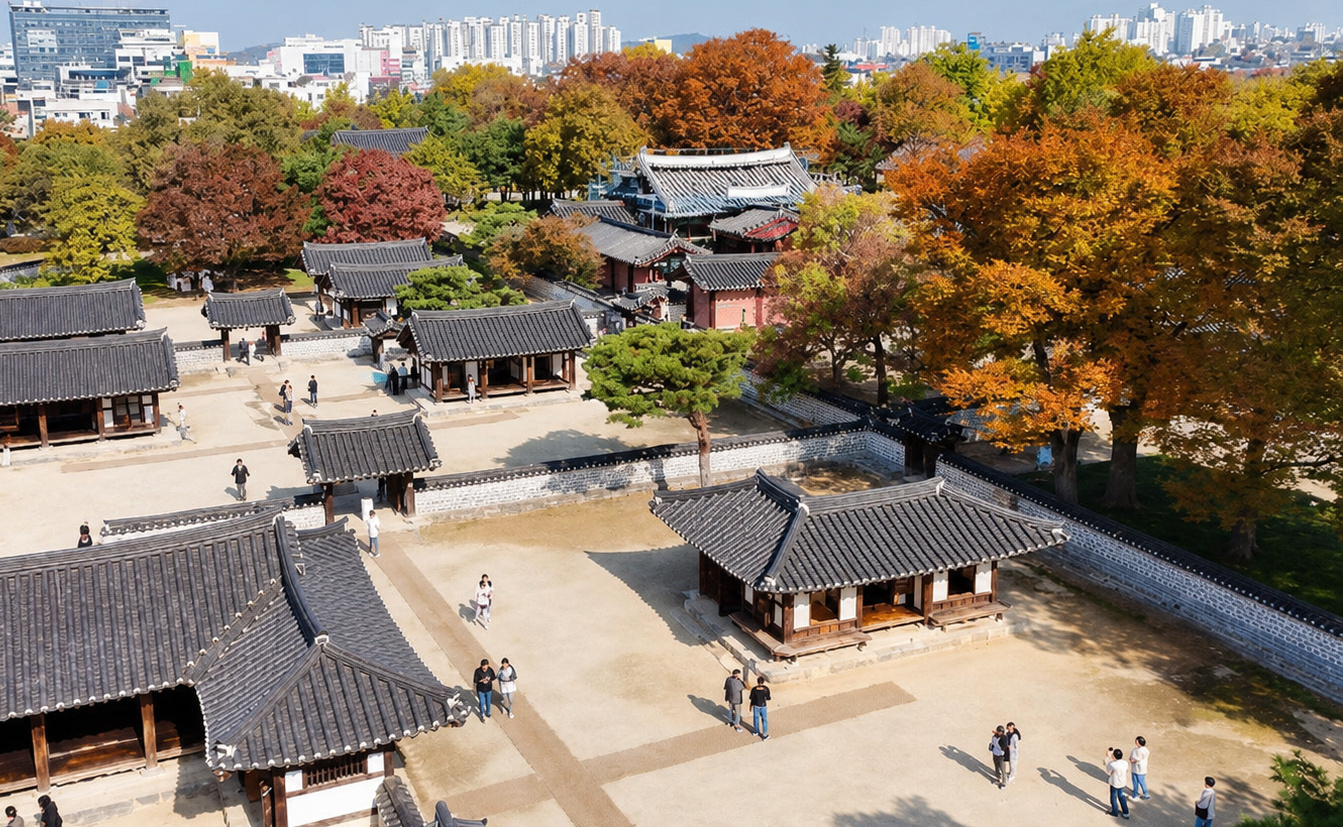
Jeonju Hanok Village is the largest traditional Hanok village and urban Hanok complex in Korea, with over 700 Hanoks clustered in the Pungnam-dong and Gyo-dong areas. In addition to cultural heritage sites such as Gyeonggijeon Shrine, Omokdae, and Jeonju Hyanggyo, there are also various cultural facilities, including museums, workshops, and literary museums, located among the residential areas. Unlike a folk village that was created specifically for tourism, this is a village where people have lived and built their homes, so the appearance of the bustling main streets and the quiet alleyways is distinctly different.
The formation of the current Hanok complex began around 1910. After the Jeonju Fortress was demolished, the Japanese commercial district and residential area expanded into the fortress, and the people of Jeonju built Hanoks and gathered in the Gyo-dong and Pungnam-dong areas, which led to the establishment of Hanok residential areas within the modern city. These houses were built in accordance with the basic principles of traditional wooden architecture but were also adapted to the smaller lots and changing lifestyles, so they differ in scale and layout from the Hanoks found in palaces or government buildings.
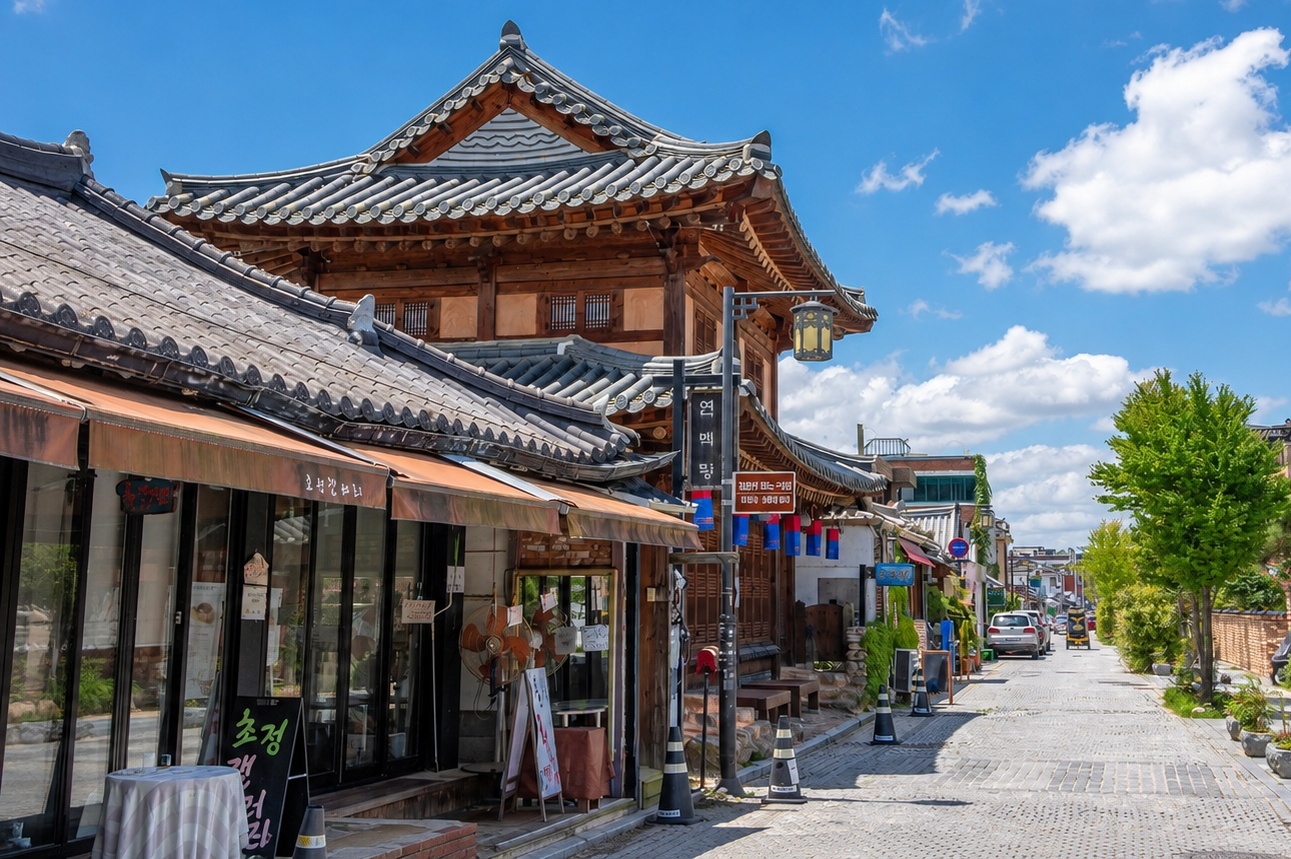
When you enter the alleyways from Taejo-ro, you will find a series of houses with wooden gates, low stone walls, and small courtyards instead of the wide tourist roads. Above the walls, the curved roofs overlap, and under the eaves, you may find gutters for collecting rainwater or everyday objects used by the residents. In the summer, wisteria and ivy climb the walls, and on rainy days, the water dripping from the eaves wets the stones and soil in the courtyard. In the narrow sections of the alleyways, vehicles and residents share the space, so it is safer to walk along one side.
Many traditional Korean houses, called “Hanok,” have a structure where the door between the veranda and the room can be opened to connect the courtyard and the interior, or a seating area is created under the eaves. When you sit on the veranda, you can see the rafters and pillars up close, and in the room, the light that passes through the paper windows spreads softly. Even if it is the same Hanok, the structure differs depending on whether the main building has been converted into a teahouse or whether the annex or courtyard is used as a guest space, so you should follow the staff's instructions regarding where to take off your shoes and what spaces are available.
A traditional tea ceremony is not just about learning the order of drinking tea, but also about learning the process of handling water and tea utensils. First, the teapot, tea bowl, and teacups are arranged, and then the utensils are warmed with hot water. The water temperature and steeping time are adjusted according to the type of tea, and the tea from the teapot is not filled into one cup at a time. Instead, it should be poured into several teacups in turn, so that the amount and concentration are evenly distributed in each cup.
It is more stable to hold the teacup with one hand and gently support the bottom with the other hand. Rather than drinking it all at once, it is easier to distinguish the taste of the tea by smelling the aroma close to the cup and then drinking it in small sips after the temperature has cooled down a bit. The tea cakes served with the tea soften the astringent or bitter taste of the tea, but whether they are served and what kind they are varies depending on the teahouse.
You must make separate reservations for visiting a regular teahouse and participating in a tea ceremony. Some places serve tea and tea cakes when you order from the menu, while others operate a separate program that teaches how to use the tea utensils and the order of brewing tea, as well as basic etiquette. Tea ceremonies and traditional etiquette experiences are also offered at cultural facilities in Jeonju Hanok Village, such as Seungwangjae, but the operating hours, whether individual participation is possible, and the minimum number of participants vary depending on the program. If you want to learn about the tea ceremony, it is best to check the operating hours and reservation requirements for the day of your visit in advance.
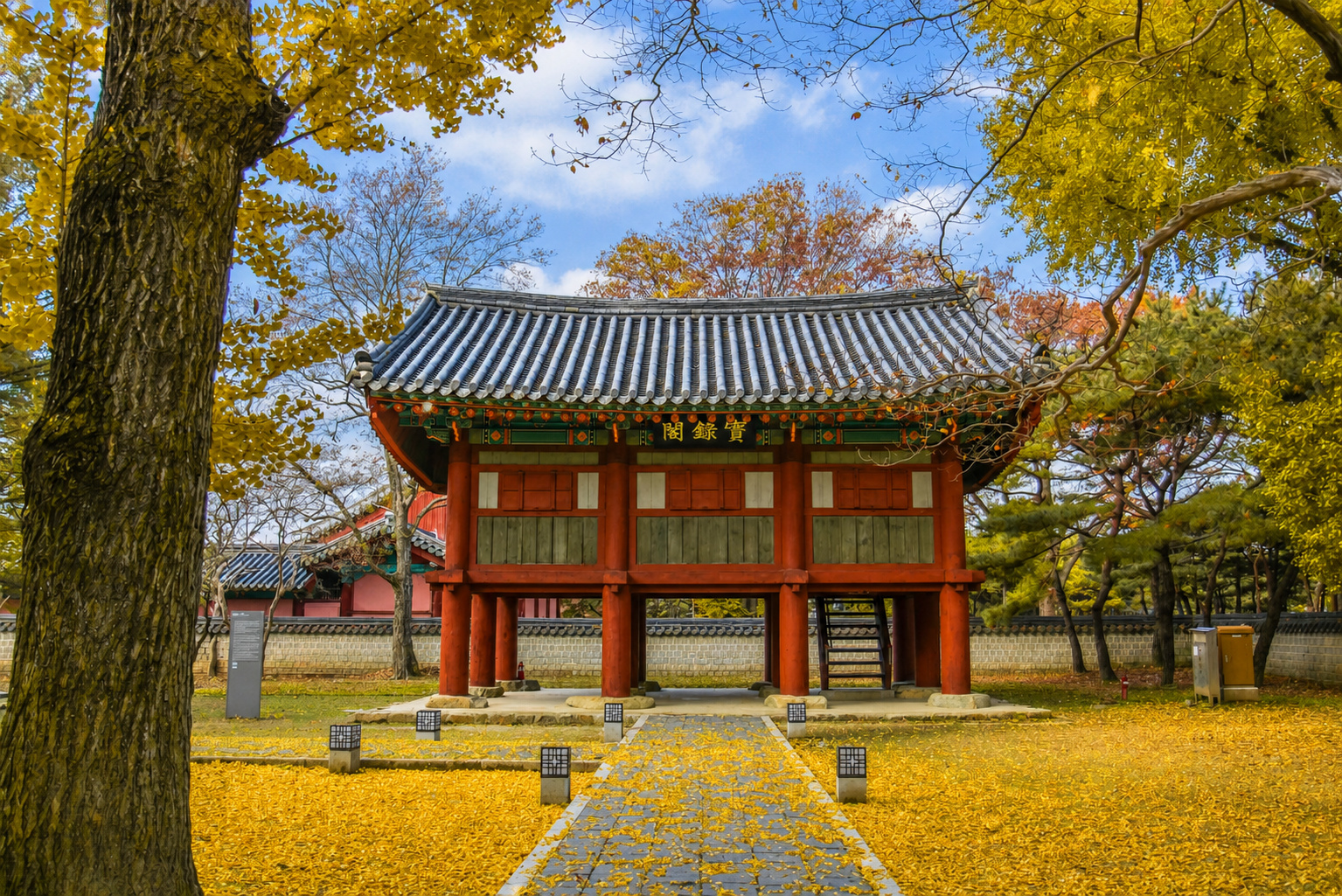
After drinking tea, you can move east along Hyanggyo-gil, passing through Eunhaeng-ro. Eunhaeng-ro is lined with workshops and cultural spaces, and Jeonju Hyanggyo is located inside Hyanggyo-gil. Jeonju Hyanggyo is a place that has continued the Confucian ritual and educational functions centered on Daeseongjeon and Myeongnyundang, so it is a good idea to check the open areas and whether there are any events before visiting. If you do not have much time, you can simply walk along the low wall of Hyanggyo-gil towards Jeonjucheon, which will lead you to Hanbyeokdang.
At the end of Hyanggyo-gil, there are the Wanpanbon Culture Museum, which deals with old books and woodblock printing culture in Jeonju, and the Jeonju Hanbyeok Culture Museum, which hosts traditional cultural events. Wanpanbon refers to books published in Jeonju during the Joseon Dynasty, and Jeonju is known as a region where woodblock printing was actively practiced. The exhibition and experience operating days may vary depending on the facility, so if you plan to visit, please check the closed days and whether reservations are required.
This area is not only visited by tourists but also used daily by residents. Please avoid standing in front of the gate and blocking access, or taking pictures of the inside of the courtyard. When stopping in a narrow alley with a group, be sure to leave space for other pedestrians to pass. In the evening, the alleys away from the main road can become dark quickly, so it is easier to move around the illuminated Hyanggyo-gil and the Jeonjucheon promenade after sunset.
Hanbyeokdang, Perched on a Cliff Above Jeonju Stream
Hanbyeokdang is a pavilion built on a rocky cliff at the eastern end of Hanok Village, at the foot of Seungamsan Mountain. It is said that during the reign of King Taejong of the Joseon Dynasty, Choi Dam, a scholar, built it as a retreat after retiring from his official post, and it was initially called Wolldang Pavilion. The building has been renovated several times, including in 1683 and 1733, and its current form is based on a major renovation in 1828. It is designated as a tangible cultural heritage of Jeollabuk-do Special Self-Governing Province and is also known as Hanbyeok Pavilion.
It is said that the name Hanbyeokdang comes from the expression that describes the cliff and the clear, cool water flowing beneath it. In the past, the scenery of the mist rising from the rocks below the pavilion and the forest was called "Hanbyeok Cheongyeon," and it was one of the Eight Views of Jeonju. It was also mentioned as one of the "Three Han" pavilions, along with Gwanhallu in Namwon and Hanpung Pavilion in Muju, which represent the famous pavilions in the Honam region.
The building is a paljak-style roof building with a front of three bays and a side of two bays. It was not built on a flat, leveled ground, but rather it was built by accepting the irregular heights of the natural bedrock. On the cliff side, the pillars are supported by stone pillars of different heights, and on the back side, which is connected to the mountainside, a retaining wall is built up to the floor. When viewed from below the Jeonju Stream, the wooden pillars and roof seem to be connected in sequence above the rocks and stone pillars, making it appear as if the pavilion is perched on the edge of the cliff.
The three sides, excluding the back, are open, and the edges of the floor are surrounded by low walls and railings. The space between the pillars is not walled off, so the Jeonju Stream and the forest on the opposite side extend into the interior of the pavilion, and the deep eaves of the paljak roof block the midday sun. When the pavilion is open to the public, it is best to remove your shoes before stepping onto the floor, lean against the railings, and avoid touching the pillars and signboard with your hands, and leave a passage for other visitors to pass through.
From the floor, you can see the Jeonju Stream winding along the foot of Seungamsan Mountain, and the forest in the direction of Namgosan Mountain extends on the opposite side. The sound of water and the rustling of leaves are close by, and the wind coming from the river passes through the open floor, making it relatively cool even in the summer. Thanks to this location, it has been a gathering place for poets and scholars since ancient times, where they would compose poems and share stories, and many of their poems have been passed down. There is also a story about the famous calligrapher Changam Lee Sam-man and his connection to Hanbyeokdang, which remains as a local tale in the Jeonju area.
To the east of Hanbyeokdang is Yowoldae, which means "a place to greet the moon," and the current facilities were restored in 1986. The area around the pavilion is where the Seungamsan Mountain and the Jeonju Stream walking paths meet, so it is a good place to extend your walk from Hanok Village in the direction of the river. However, after heavy rain, the water level of the Jeonju Stream may rise, so if there are access control lines set up along the river, you should follow the detour signs.
Traces of a Modern Railway Leading to Hanbyeokgul
Hanbyeokgul, located below Hanbyeokdang, is an artificial tunnel created by piercing through the slopes of Seungamsan Mountain when the Jeolla Line railway was built during the Japanese colonial period. The railway passed under the pavilion, which had been known as a scenic spot since the Joseon Dynasty, and the natural rock face and the surrounding terrain were also affected. Later, when the Jeolla Line railway was moved to the east of Jeonju City, train operations stopped, and now it is used as a pedestrian path connecting the Jeonju Stream and the Natural Ecology Center.
The tunnel is not long, but when you go a few steps inside, it feels darker and cooler than the outside. On rainy days or days with high humidity, there may be moisture on the walls and floor, and pedestrians and bicycles sometimes use the same path. It is safe to pass through if you check the situation inside from the entrance first and reduce your speed. It is best to avoid climbing on the cliffs around the tunnel or in areas where railway tracks remain.
When going from the center of Hanok Village to Hanbyeokdang, it is natural to go past Bank Road and Hyanggyo-gil towards Jeonju Hyanggyo, Wanpanbon Culture Museum, and Hanbyeok Culture Museum. Just before Hanbyeokdang, there are stone steps and a sloping path, and the rocks and wooden steps may be slippery after rain or snow. This is not a route where you only walk on flat alleys, so comfortable shoes with good grip are suitable.
When returning, you can retrace your steps along Hyanggyo-gil or move along the Jeonju Stream promenade towards Namcheon Bridge and Gangam Calligraphy Museum. When it gets dark, the area under Seungamsan Mountain and inside Hanbyeokgul become dark first, so please check the lighting and traffic conditions on the riverside path during late hours. The route that starts at the Catholic Church passes in front of Gyeonggijeon Palace, where traces of the Joseon Dynasty remain, then goes through modern Hanok residential areas and traditional cultural spaces, and ends in front of the pavilion on the cliffs of Jeonju Stream and the old railway tunnel.