Jeonju Hanok Village: Exploring the Geunjeon Shrine and the Alleyways of Nambu M


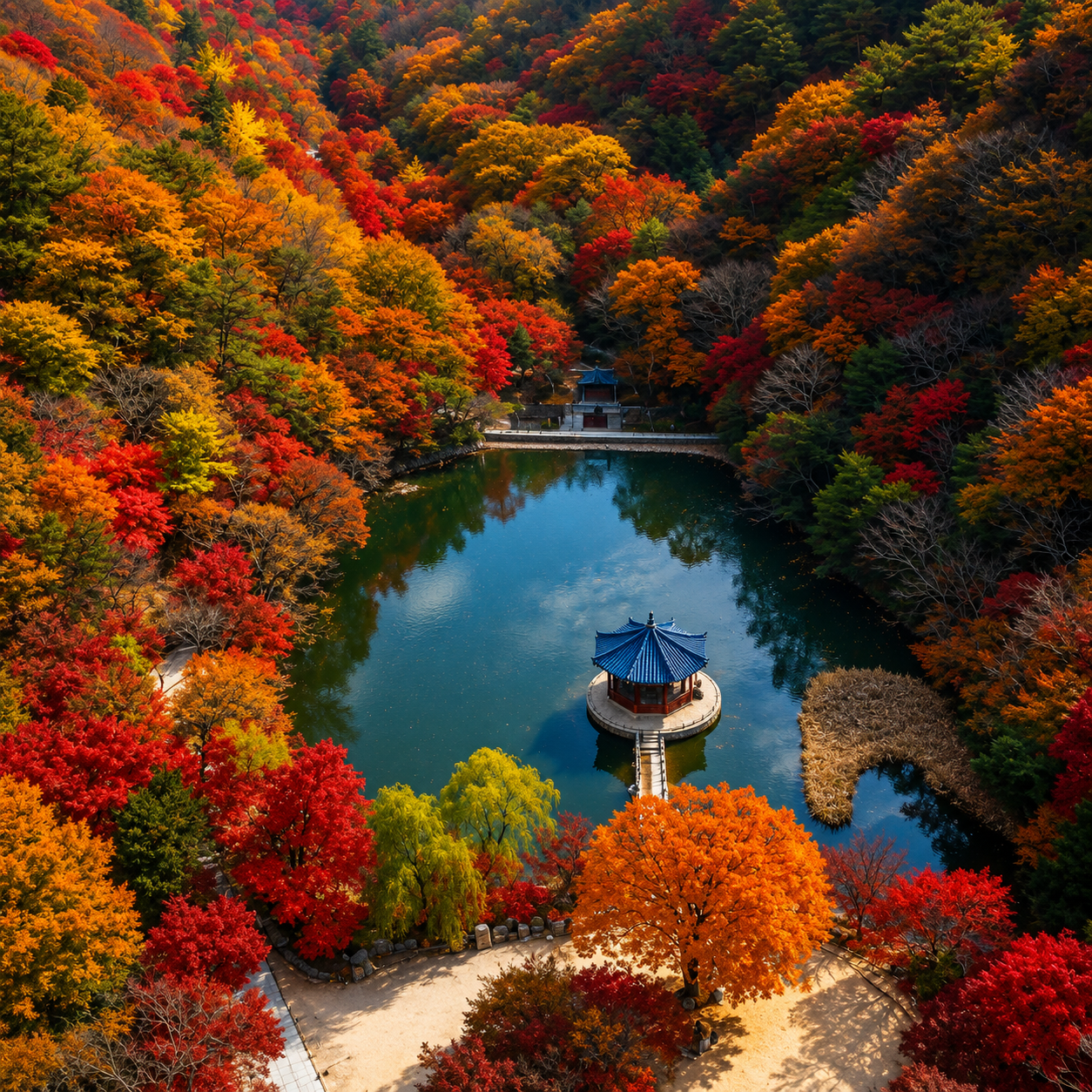
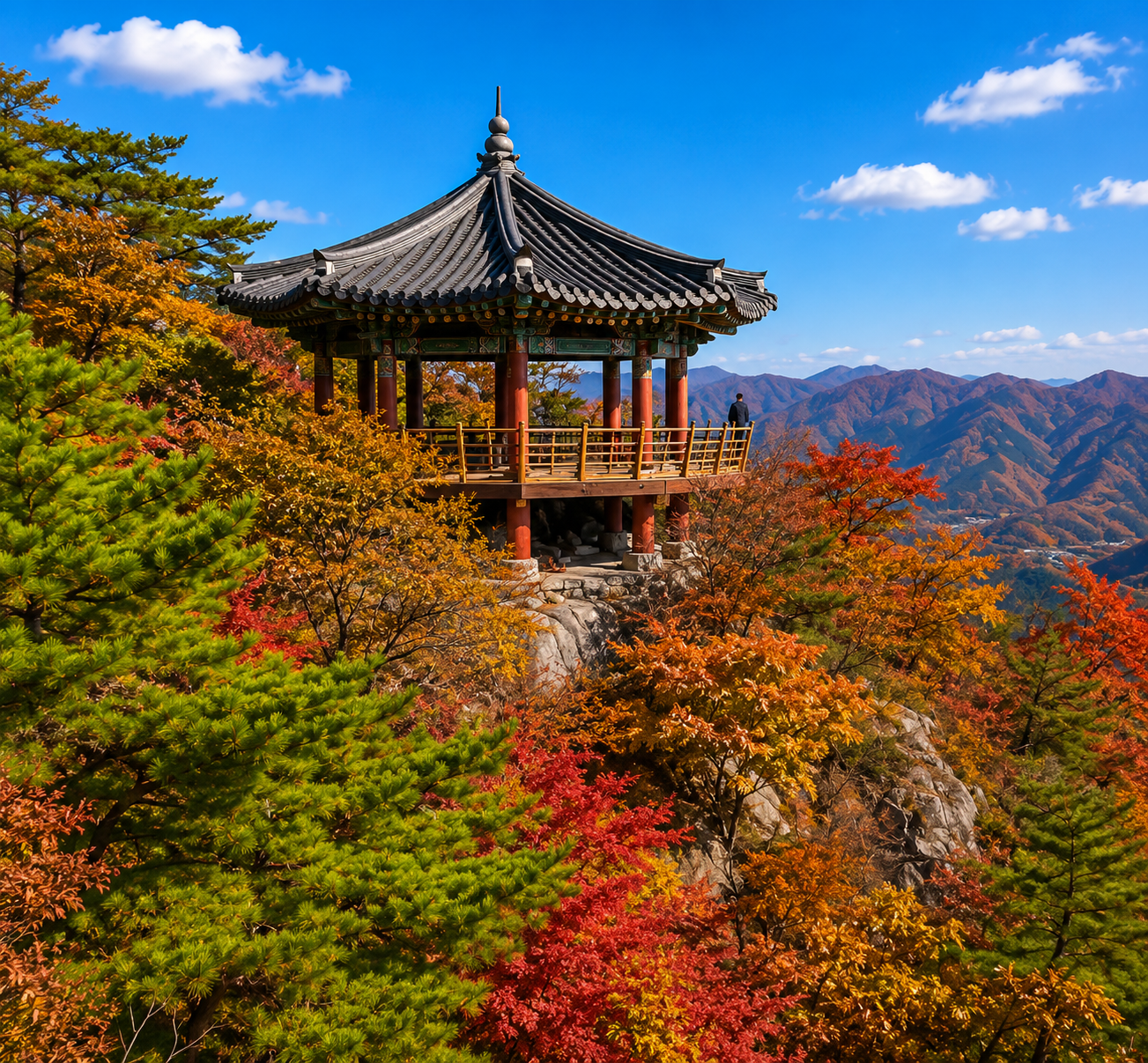
The central hall of Gyeonggijeon, the shops in Nambu Market, and the tiled ridges on Omokdae Hill – each location requires a different perspective. Therefore, let's explore what to see, where to see it, and how to see it.
Below is not an itinerary but rather reviews of each location. Each section can be read separately, allowing you to understand what to see at each place. Although the Hanok Village area is connected by walking paths, its structure often leads you to pass through the same alleyways two or three times. Knowing where to focus your attention beforehand will make your day much more fulfilling.
Gyeonggijeon in Jeonju Hanok Village: Exploring the Jeongjeon Hall housing portraits of past kings and the bamboo grove courtyard
Gyeonggijeon is a shrine that houses the portrait of King Taejo, the founder of the Joseon Dynasty. It was first built in 1410, destroyed during the Imjin War, and rebuilt in 1614 during the reign of King Gwanghaegun. Unlike typical temples or pavilions, the essence of this place lies in walking along the axis that connects the Hongsalmun Gate → the Outer Triple Gate → the Inner Triple Gate → the Jeongjeon Hall. If you align your gaze from the Hongsalmun Gate at the entrance to the end of the roof of the Jeongjeon Hall, you will immediately understand why shrine architecture rarely allows for asymmetry. The red pillars and arrow-shaped latticework of the Hongsalmun Gate, as well as the gradually decreasing and then rising heights of the roofs of the Outer and Inner Triple Gates, are all part of the intentional hierarchical structure.
In front of the Jeongjeon Hall, observe the elevated platform (woldae) and the curved eaves of the hall. The woldae is a wide stone platform in front of the main hall, designed to provide space for rituals. By shifting your gaze to the slightly rounded corners of the stones and the direction of the paving stones that stretch along the sides of the woldae, you can get a sense of how the ritual procession was organized. The Jeongjeon Hall, which houses the portraits of past kings, has a higher ceiling than ordinary halls and its decorations are relatively simple, creating a space where restraint is valued over extravagance. Since the portrait inside the Jeongjeon Hall is often a replica rather than the original, it is best to find a position where you can stand directly facing the portrait and capture the hall, the side rooms, and the folding screen depicting the Five Peaks and the Moon in a single frame.
Once you leave the Jeongjeon area, you will find the Portrait Museum and its annex buildings on your right, as well as the bamboo grove courtyard. The Portrait Museum is a two-story building (one above ground and one below) that houses ceremonial artifacts used in the enshrinement and relocation of the portraits, such as the palanquin (sinyeon) and the incense pavilion (hyangjeongja). It is an exhibition worth taking your time to explore. The exhibition follows the sequence of the portrait's creation → the enshrinement ceremony → preservation process, allowing you to visualize the steps involved in placing the portrait in its current location. The bamboo grove that surrounds the back and side of the Portrait Museum is a place often associated with Gyeonggijeon. Tall bamboo trees create shade, and dirt paths and stone walls intersect within. If you want to take photos, I recommend capturing the scene from inside the bamboo grove, framing the wall and tiled ridges, rather than taking pictures at the crowded main entrance. The morning hours, when sunlight streams through the bamboo stalks in diagonal rays, are particularly beautiful.
A point that is easy to overlook is the King Yeongjong's Royal Tomb and Stele located in the annex area next to the main hall. Many people simply pass by because they are focused on viewing the main hall, but this neatly arranged stone structure, which enshrines the royal fetus, is located a little away from the main hall area and shows another aspect of Joseon's royal culture. The tomb was originally located in the Guimyeon area of Wanju, but it was moved during the Japanese colonial period. It has a neat shape with an octagonal roof stone placed on top of a round stone box. The stele contains information about King Yeongjong's birth and the burial of his fetus, so if you read the inscription carefully, you can see a glimpse of the royal childbirth ceremony. Since it is a space that is worth more than just taking a photo in front of the main gate while wearing hanbok, I recommend at least following the route: Main Hall → Bamboo Forest → Portrait Museum → Royal Tomb.
Deep inside Gyeonggijeon Palace, there is also the Jeonju Historical Archive. It is well known that during the Imjin War, all other archives were burned down, but only the Joseon Dynasty Annals stored in the Jeonju Historical Archive survived because they were moved to Yonggulam Cave near Naejangsan Mountain. However, the current building is a restored version from later periods. Since it is located slightly off the axis of the main hall, it is easy to pass by if you are not paying attention to the route, so you can naturally visit it by including it in the course that starts at the Portrait Museum and follows the wall clockwise.
A perspective that views Gyeonggijeon Palace together with Pungnam Gate and Jeonju Cathedral
If you cross one road from the main gate of Gyeonggijeon Palace, you will see Pungnam Gate and Jeonju Cathedral facing each other diagonally. Pungnam Gate is the southern gate of Jeonju Castle in the Joseon Dynasty, and it is the only gate that remains relatively intact out of the four gates that once stood in the east, west, south, and north directions. If you look at the two-story pavilion-style gatehouse, the rainbow-shaped archway below, and the shape of the bastion (甕城) that curves inward on both sides of the gate, you can see a picture of Joseon's late-period castle defense structure. Jeonju Cathedral is the first Romanesque-style cathedral in Honam Province, which was started in 1908 and completed in 1914. It is also a meaningful building because it was built on top of a site where martyrs were persecuted during the Joseon Dynasty.
The composition in which the Joseon royal shrine (Gyeonggijeon Palace) – the old southern gate of Jeonju (Pungnam Gate) – and the Romanesque-style cathedral (Jeonju Cathedral) are all visible in one frame is rare even in Korea, so when you leave Gyeonggijeon Palace, do not immediately move on to the next place, but take a moment to look at the three buildings at once from the corner of the crosswalk. In particular, there is a section where the red brick exterior wall of Jeonju Cathedral and the grayish-white surface of the stone wall of Gyeonggijeon Palace contrast with each other across the road. If you lower your body slightly in this spot and place the roofline of the stone wall as the foreground and capture the bell tower of the cathedral, you can capture two eras in one shot. The Byzantine-style dome at the top of the bell tower and the arched windows on the front facade also look completely different when viewed up close and from across the street.
Jeonju Nambu Market Food Street: How to choose a shop and representative menu
Nambu Market is a market that continues the tradition of Nambumun Market, which was located in front of the south gate of Jeonju Castle during the mid-Joseon Dynasty. It is just across the street from Pungnam Gate, and you can see the main entrance right away. Its official name is Jeonju Nambu Market, and it has been established as a permanent market since the 1970s. The entire market is not a giant food court; rather, the first floor is a daily life market with fruit, fish, meat, and side dish shops lined up, and the food alley is located in between them. Therefore, it is better to check the direction of the alleys once at the main entrance and again at the intersection in the middle of the market before entering, so that you can avoid unnecessary walking. The map at the entrance shows the store numbers for each area, so take a picture and use it as coordinates while exploring the alley.
If you were to summarize the representative menu items in one line, pig blood sausage, bean sprout soup with rice, red bean noodles, and bibimbap would be the core lineup. Pig blood sausage is made in Jeonju style, with a high proportion of pig blood and many places serve it thickly sliced, so it has a strong visual appeal and may not be to everyone's taste. It is recommended that you order one serving for two people to try it first. Some places serve it in the style of sundae soup with plenty of chives, cabbage, and perilla powder, while others serve it in a clear broth like white sundae. If it is your first visit, it is safer to go to a store that has picture menus. Bean sprout soup with rice is divided into two types: Jeonju-style and Nambu Market-style. Most of the old shops in the market use the method of warming the rice by pouring hot broth over it several times. Red bean noodles are made by adding handmade noodles to a rich broth made from ground red beans, and the more rustic the shop is without added sweetness, the longer the line will be. Bibimbap is a signature dish of Jeonju, but in the market, you are more likely to find bibimbap served quickly in a bowl rather than a formal set meal.
When choosing a store, look at two things. First, whether you can see inside the kitchen. A place where you can see the pot, cutting board, and ingredients being prepared is a sign that it has a fast turnover rate. Take a quick look to see if steam is constantly rising from the pot, if the ingredients on the cutting board are frequently changed, and if the dishes are not piled up on one side. This will give you an idea of the average quality. Second, a place where the price list on the wall is consistently organized with printed and laminated menus instead of handwritten ones is likely to have stable prices and a high proportion of regular customers. On average, it is safer to choose a store where market merchants gather for lunch rather than a restaurant that only attracts tourists. A good sign is a place where market merchants wearing aprons gather around noon, and there are one or two customers who come alone and eat while reading the newspaper or looking at their phones.
Another face of the market, Nambu Market Youth Mall, can be reached by going up the stairs to the second floor. Launched as part of a traditional market revitalization project in 2011, the youth mall is famous for its slogan, "Let's earn moderately and live very well," and the entrance sign with this slogan still remains today. It is separated from the first-floor traditional market, so it is easy to miss, but the second floor is filled with unique cafes, desserts, and souvenir shops run by young entrepreneurs along a narrow passage. The scene of colorful signs overlapping in the low-ceilinged corridor is completely different from the meat and fish shops on the first floor, giving you the feeling of experiencing two different time periods within the same building. Since stores change frequently, the composition of the stores may vary depending on when you visit, so it is a good idea to check the current operating stores on the entrance map and plan your route.
If you are visiting on Friday or Saturday evening, first check whether the night market is open at the notice board near the entrance. On days when the night market is held, food truck-style stalls line up along the passage in the middle of the market, offering street food (skewers, dumplings, Vietnamese bun cha dishes, churros, tacos, and even fusion menus) that are different from the regular menu items of the first-floor stores. Each stall has one or two small tables attached, where you can eat standing up or sit down briefly. While most stalls now accept both cash and card payments, some still only accept cash, so it is convenient to bring some cash with you. The scenery is so different that you could say that the Nambu Market on weekdays and the Nambu Market on weekend nights are almost two different markets, so it is a good idea to adjust your expectations according to your schedule.
A food tour route from Nambu Market to Pungnam Gate and Hanok Village
If you want to sample some of the market's offerings without having a full meal, I recommend trying a plate of pig blood sausage + a bowl of bean sprout soup + one dessert from the Youth Mall, which can be shared among three people. If each person orders a full course at one store, it will be difficult to try other stores, so the "small portions and many tries" principle is best suited for exploring the market's food scene. If there are only two of you, you can order one bowl of soup on the first floor to share, and then choose one or two desserts from the handmade pudding, donuts, or jam butter toast at the Youth Mall on the second floor.
After your meal, walk past Pungnam Gate towards Hanok Village. Along both sides of Taejo-ro, you will find a street lined with hanbok rental shops and street food stalls. Taejo-ro is the central axis of Hanok Village, so it is usually crowded even on weekdays, and the scene of the signs of the stores on both sides of the street hanging under the eaves of the traditional Korean houses creates its own unique atmosphere. If you have already had a good meal at the market, you can still enjoy a satisfying food tour by choosing snacks from the following options in the Hanok Village alleys.
- Octopus skewers – These are made by cutting whole octopuses into pieces with scissors and skewering them on sticks, then grilling or blanching them. Shops that offer this without any seasoning, preserving the octopus's natural salty flavor, are popular.
- Street dumplings – There are various types of dumplings available, such as large dumplings, fried dumplings, and meat dumplings, so it is fun to buy one or two from each shop and compare them.
- Handmade ice cream – It is common to see soft ice cream piled high on a Hanji cone or a long stick-shaped cone.
- Skewers and hot dogs – There are various options that are easy to eat while walking, such as cheese hot dogs, chicken skewers, and grilled short rib skewers.
If you deliberately slow down your pace and pick up one item from each shop, you can naturally complete a dessert course within a single block of Taejo-ro. However, since street food is packaged for easy carrying and eating while walking, please dispose of the bags or skewers in nearby trash cans immediately. Recycling bins are available throughout the alleys of Hanok Village.
Jeonju Omokdae Hill Observatory: The best spot to view the tiled rooftops
Omokdae is a pavilion said to be where Lee Seong-gye, who later became King Taejo, held a feast with his relatives after defeating Japanese pirates in Hwangsan in 1380. It is located on a hill at the eastern end of Hanok Village. The current pavilion was rebuilt in later years, and inside the pavilion, there is a plaque with the inscription "Taejo Gohwangjeo Jupil Yuji," which is said to have been written by King Gojong himself. There is no separate entrance fee, and anyone can freely visit. It is also open at night and is often mentioned as a good spot for viewing the night scenery. The main attraction is not the pavilion itself, but rather the stairs leading up to the pavilion and the view of the tiled roofs from the observation deck next to the pavilion.
There are two routes commonly used to climb the hill. One is the wooden staircase route that starts at the end of Taejo-ro, which is short but steep and leads quickly to the top. Small juniper and maple trees line the side of the stairs, so in autumn, the same path takes on a completely different color. The other is a gentler dirt path that goes around from the direction of Hyanggyo. If you have someone with weak knees, this route would be more comfortable. The dirt path winds along the Hyanggyo wall and a low stone fence as it ascends, making the scenery itself feel like a walking path. If you have camera equipment, try taking the stairs to climb quickly and then descending via the dirt path to experience both routes.
When you stand on the observation deck, a view unfolds where the tiled roofs overlap like waves from Gyeonggijeon → Hyanggyo → the center of Hanok Village. The black tiles gradually fade as you look from the nearest roof to the farthest one, and your gaze reaches the tall buildings in the direction of the guest house. At this time, instead of just taking a full shot straight ahead, try capturing the distant view of the guest house and the nearby eaves in the same frame to create a composition that emphasizes perspective. If you use a telephoto lens, you can capture only the roof ridges to create an abstract pattern shot, or if you use a wide-angle lens, you can capture the entire skyline of Hanok Village in one shot, allowing you to obtain two different types of photos from the same spot. Sit slightly on the edge of the deck and place the ends of the eaves at the bottom of the screen to create a landscape where the roof flows like a horizon.
The most popular time is during the magic hour, from just before sunset to right after the night lights are turned on. The black surface of the tiles briefly turns reddish in the glow of the setting sun, and then the scenery changes as the streetlights and eaves lights of the village turn on. The sunset time varies by more than an hour depending on the season, so it is best to check the sunset time for the day you plan to visit in advance and arrive about 30 minutes early to secure a spot. If you only want to see the night view, the end of the deck next to the pavilion offers a wider view than the front of the pavilion, so it is best to go early and secure a spot. However, the floor above the pavilion is narrow and shakes when many people gather, so it is better to use a tripod only on the decks on either side so as not to disturb other visitors.
Right next to Omokdae is Imokdae (梨木臺), which is said to be where Mokjo, the fourth great-grandfather of Lee Seong-gye, lived. The two pavilions are connected by a bridge over the road, so you can easily walk between them. If you stand in the middle of the bridge, you can see the cars passing under the bridge and the Hanok scenery on both sides of the hill at the same time, creating a strange contrast. There are much fewer people on the Imokdae side, making it a good place to quietly look down at the eastern part of Hanok Village. Inside the pavilion, there is a neatly placed stele with the inscription "Mokjo Daewang Gugeo Yuji (穆祖大王舊居遺址)," and a small walking path extends around it. If you get tired of taking pictures at Omokdae and being surrounded by people, add a route that takes you across the bridge to Imokdae, where you can take a 5-10 minute break before heading down.
Tips for connecting the three locations in one flow
Although the three places are within walking distance of each other, if you plan your route poorly, you may end up going back and forth on the same path two or three times. The most efficient route is to see Gyeonggijeon first, cross the street to Pungnam Gate, enter Nambu Market, and then walk along Taejo-ro from the market to the eastern end of Hanok Village and go up to Omokdae. This order goes from flat ground → flat ground → hill, so the physical burden gradually increases, which is also beneficial for managing your knee and foot condition. On the other hand, if you go to Omokdae first, you will climb the hill and then descend back to flat ground to visit the market and Gyeonggijeon, making it difficult to manage your energy.
It would be good to review the time allocation as well. For Gyeonggijeon Palace, the best time is between 9:00 AM and 11:00 AM when the morning sunlight shines diagonally through the bamboo forest. Nambu Market is at its most lively between 12:00 PM and 2:00 PM during lunchtime. Omokdae Peak is best visited before and after sunset, so it's a good idea to go up slowly in the late afternoon and wait for the magic hour. If you finish lunch early, you can add Hyanggyo Confucian School between the market and Omokdae Peak to create a rest area.
If you plan to rent Hanbok (traditional Korean clothing), it is most efficient to change at one of the rental shops on both sides of the road before entering Gyeonggijeon Palace. In many cases, those wearing Hanbok are exempt from the entrance fee, so be sure to confirm this when renting. However, the inside of Nambu Market is narrow and crowded, so it's easy to trip on long skirts. It's safer to hold up your skirt with one hand while walking through the market area. The steps at Omokdae Peak can be slippery in Hanbok shoes, so many people bring separate sneakers and change into them just before climbing the hill. If you don't want to carry extra luggage, you can use the lockers or cafe storage service near the entrance of Hanok Village to temporarily store your main bag.
You can get around mostly on foot, but using taxis or city buses at the beginning and end of your itinerary will save energy. From Jeonju Station or the intercity bus terminal to Hanok Village, it takes about 10-15 minutes by taxi, and the closest bus stop is Pungnammun Gate, which is near the entrance of Hanok Village. If you are driving, it is convenient to park in the public parking lot outside Hanok Village and walk in, as this will avoid the one-way streets within the village.
Jeonju is a city where a "one-day trip focusing on details" is better than a "trip trying to see everything." At Gyeonggijeon Palace, focus on the portraits of kings and queens. At Nambu Market, choose your shops carefully and try two or three representative dishes. At Omokdae Peak, admire the tiled roofline and the magic hour. Each of these places has its own unique appeal, so instead of trying to see every alleyway, I recommend focusing on these three aspects.