Seongsu & Hannam-dong: A Guide to Trendy Lifestyles
The route that starts from Dokseodang-ro in Hannam-dong, passes through Itaewon Antique Furniture Street, and extends to Seongsu-dong Handmade Shoes Street is a course where you can see items that are carefully selected, repaired, and used for a long time, even within Seoul. Along the hillside between the Han River and Namsan Mountain, gallery-style showrooms and lifestyle goods shops are nestled within old residential areas, and in the alleys of Itaewon, the legacy of vintage furniture from the US military base and the foreign resident culture continues. If you move to the area around Seongsu Station, you can still find workshops that handle shoe molds, leather, and shoe sole materials, preserving the time for actual production.
Although these three neighborhoods are connected and easily accessible by subway, it is best to take a slightly different pace when walking. In Dokseodang-ro, you can enjoy discovering quiet showrooms as you pass low walls and inner entrances, and in Itaewon Antique Furniture Street, you will slowly browse the display cases and lighting that are placed in front of the shops. In Seongsu-dong, the shoe exhibition spaces and joint sales areas inside and outside Seongsu Station, and the workshops around Yeonmujang-gil are close to each other, so you can see how manufacturing and new commercial districts are intertwined within a short distance.
Hannam-dong Dokseodang-ro Lifestyle Street
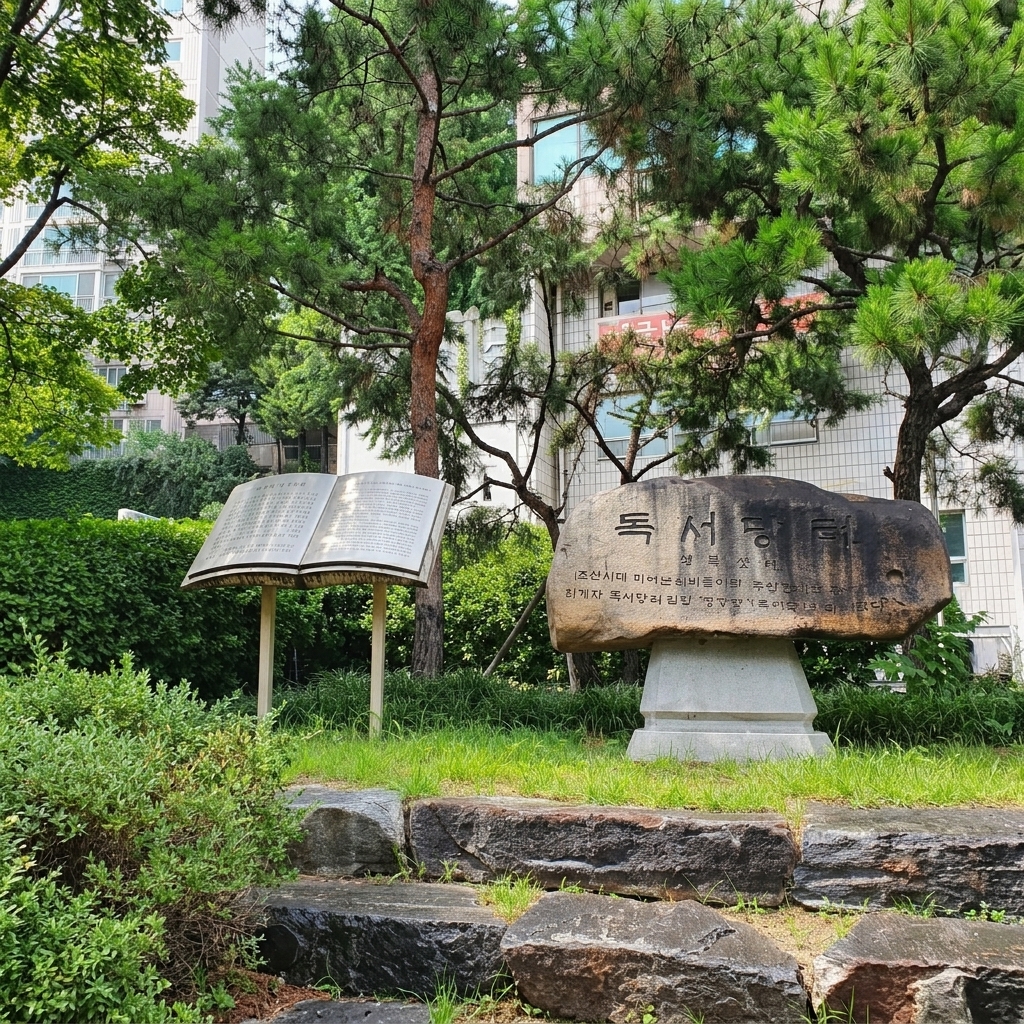
The name Dokseodang-ro is associated with the Dokseodang, where young scholars in the Joseon Dynasty devoted themselves to studying. The stone marker of the Dokseodang site remaining in Seongdong-gu describes that it was a place where outstanding scholars of the Joseon Dynasty were given special time off to read, and Dongho Dokseodang was also known as Dongho-dang. The current street extends from Hannam-dong to Oksu-dong and Eungbong-dong, following the Han River and passing through gentle hills and winding alleys.
Unlike the history contained in its name, Dokseodang-ro in Hannam-dong is not a heavily decorated street, but rather a place where galleries and lifestyle shops are quietly located between residential areas. If you come up from Hannam Station or down from Hangangjin Station, you will first notice the hidden spaces one block away from the large stores on the main street. Some stores have renovated old houses and left low walls, and some showrooms have doors that can only be seen by going around the exterior, which makes you walk through the alleys a little slower.
The shops in the Dokseodang-ro area often display items not by stacking them densely, but by arranging dishes, clothing, craft objects, and small furniture as if they were placed in a real house. Some spaces have exhibition pieces visible through large windows, but many others create a scene that includes the threshold, garden, stairs, and window frames, so the process of entering the building is naturally connected. As it is adjacent to the quiet streets around the embassies and the unique high-end residential area of Hannam-dong, you can easily find cafes and gallery-style shops operating side by side in one building.
In this neighborhood, it is more natural to walk by paying attention to the details outside the shops, such as the small logos attached to the walls, metal handles, wooden door frames, and low flowerbeds, rather than just looking at the large signs. Since the area around Dokseodang-ro has some sloping roads, comfortable shoes are recommended, and since the operating days of small showrooms or spaces that require reservations may change frequently, it is safe to check the announcement channel before visiting a specific store.
Itaewon Antique Furniture Street Traditional Alley
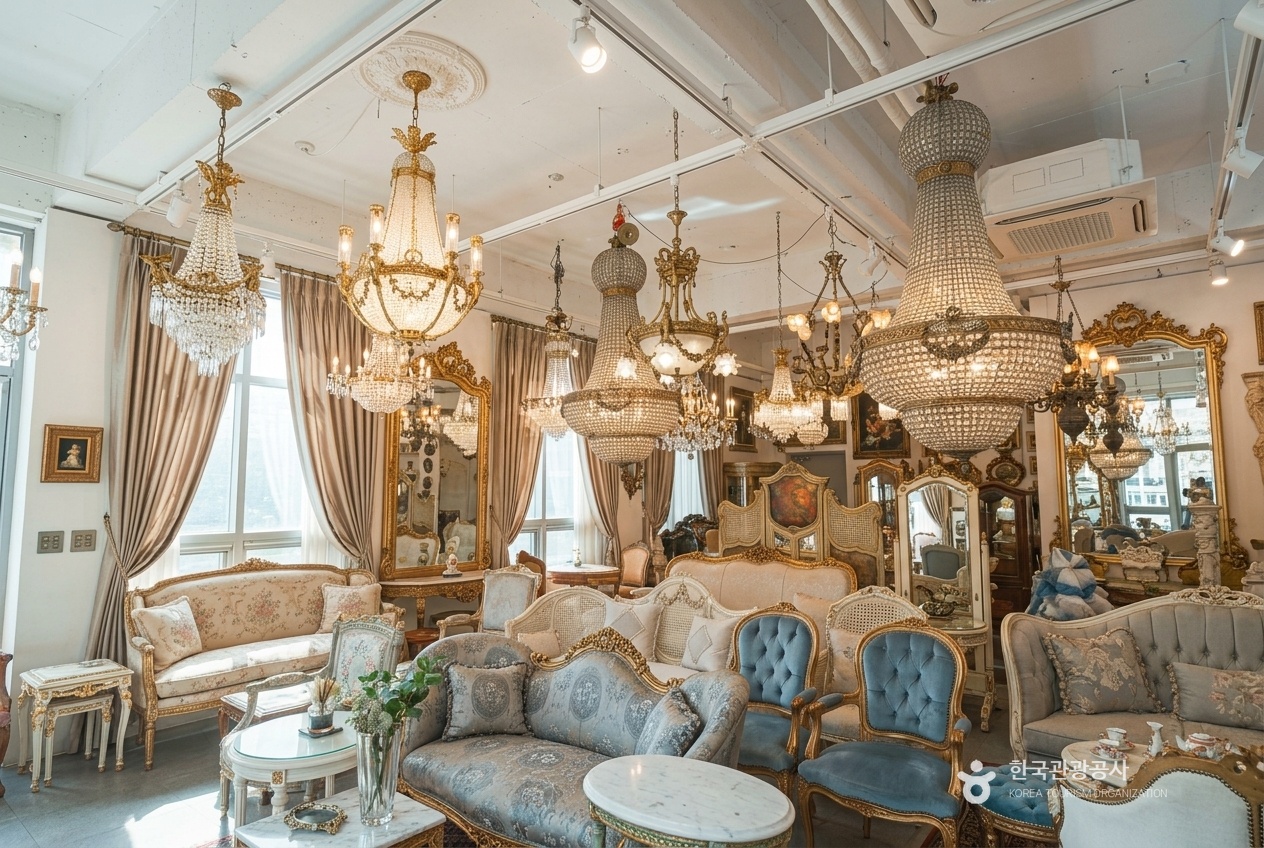
Itaewon Antique Furniture Street is known as a street where the trade of antique furniture took root early in Seoul. Various tourist materials describe how soldiers working at nearby U.S. military bases in the 1960s brought out their furniture and household goods when they returned to their home countries, and merchants bought them, starting the business in the alley. Over time, shops dealing with high-end antique furniture and vintage items from Europe, the Americas, and Asia gathered, and that trend continues today in the alleys around Itaewon Station.
If you walk from near exits 3 and 4 of Itaewon Station towards Bogwang-ro, you can see old cabinets, wooden tables, mirrors, stand lamps, and wall clocks placed inside and outside the shops. There are also large pieces of furniture with a strong presence, such as European-style chairs and cabinets with carved decorations, but there are also small items such as teacups, candlesticks, picture frames, small trays, and doorknobs, so it is worth taking a walk around the alley even if you don't have the intention of buying large furniture.
Antique and vintage items do not have uniform specifications like new products, so it is important to check their condition. If you find a cabinet or table that you like, it is best to slowly ask about cracks between the wood grain, wobbling of the legs, movement of the drawer rails, and whether the handles are original or replaced. For items with functions such as lamps and wall clocks, you should check whether they actually work, the bulb specifications, and whether they can be used directly in the domestic electrical environment to reduce the amount of work that needs to be done after purchase.
It is better to walk around the furniture street during the day to examine the wood surface and color. Old furniture may look different in color when viewed under lighting and when viewed in natural light, and scratches inside glass doors and discoloration of metal decorations are also more noticeable during bright hours. If you are likely to purchase large items, it is best to confirm with the store in advance whether they can deliver to your area, the cost of delivery, and whether they can bring the item into a building without an elevator, which will make subsequent arrangements easier.
Itaewon Antique Furniture Street is also conveniently located for exploring the surrounding area. You can first take a leisurely walk through the furniture alley and then move to restaurants or cafes around Itaewon Station, and if you continue walking towards Noksapyeong, you will naturally be connected to other commercial areas in Yongsan. However, small shops may have the owner absent due to sourcing goods or delivery, so it is best to check whether a specific store is open before visiting.
Seongsu-dong Handmade Shoe Street Art Studio Road
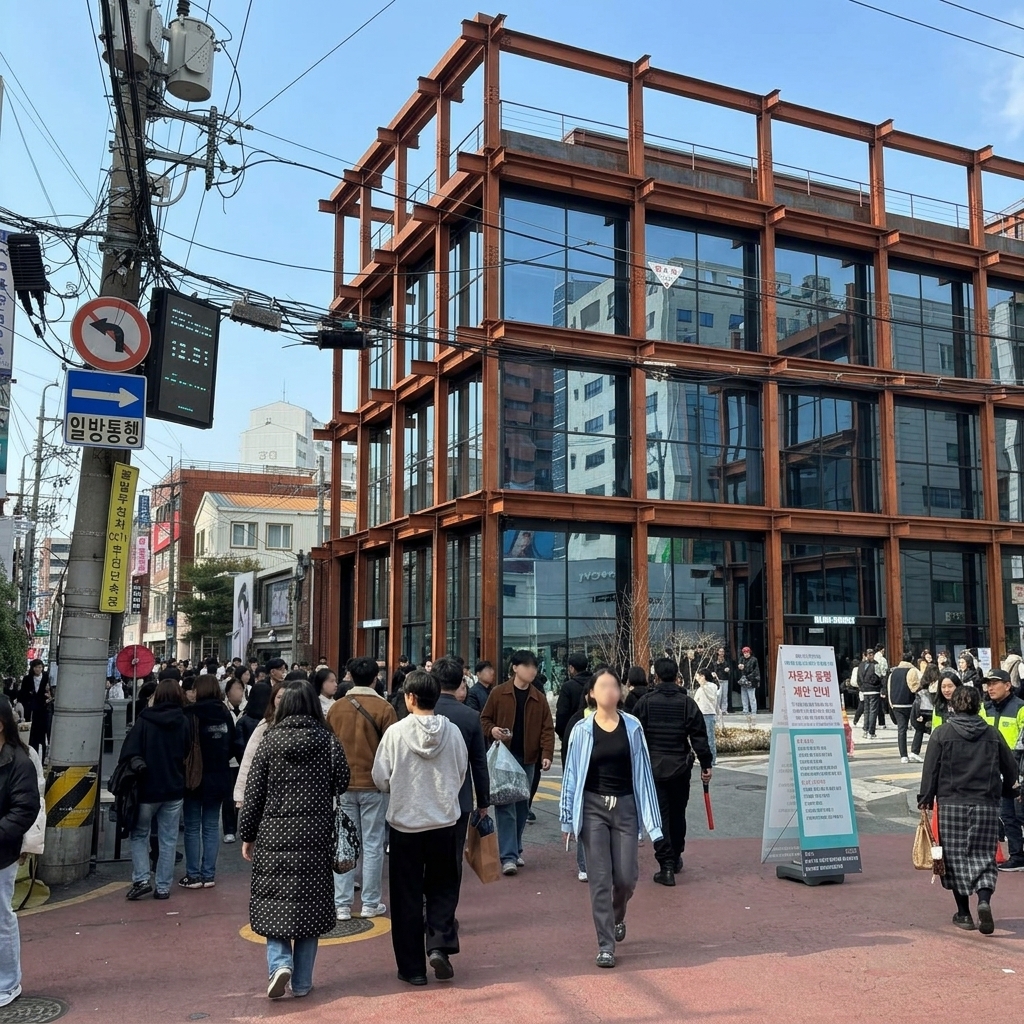
Seongsu-dong Handmade Shoe Street is a place where Seoul's manufacturing history still exists in the alleys. According to Seongdong-gu data, Seoul's shoe industry has moved from Yeomcheon Bridge to Myeongdong and Gumeo-dong, and then to Seongsu-dong, and after the 1997 financial crisis, related factories and technicians gathered in Seongsu-dong, creating a concentration of leather, raw materials, and production studios. The Seoul History Archive also describes Seongsu-dong as the largest handmade shoe industry cluster in Korea, introducing that it is where manufacturers, intermediate processing companies, and raw material distribution companies are located.
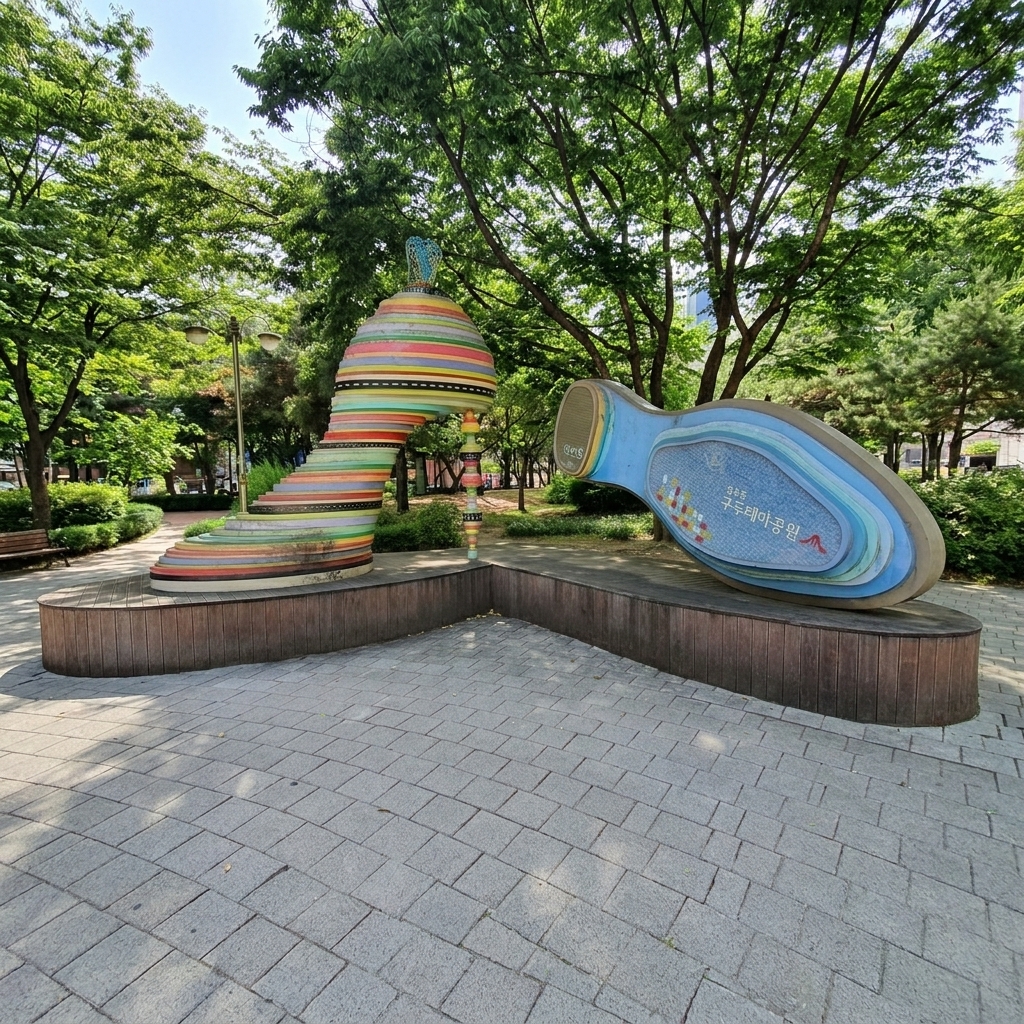
When you get off at Seongsu Station, the handmade shoe street begins right inside the station. Seongdong-gu introduces Seongsu Shoe Theme Park, also known as Shoespot Seongsu, which is an exhibition space related to shoes created in November 2013 by utilizing part of the space within Line 2 Seongsu Station. After passing through the ticket gate, you will see exhibitions about the history of the shoe industry and displays introducing artisan work, and if you move towards exits 1 and 4, you can get a sense of why Seongsu-dong is connected to handmade shoes.
Outside the station, you will find shared sales spaces such as Seoul Seongsu Handmade Shoe Town SSST and fromSS, along with handmade shoe stores and workshops, all located within a relatively close distance. According to Seongdong-gu's guide, FromSS is located under the bridge between exits 1 and 3 of Seongsu Station, and around Seongsu Station, there are scattered handmade shoe stores and businesses related to manufacturing and materials. In the stores, you can try on finished shoes, and in some workshops, they offer consultations where you can customize the fit and design by discussing aspects such as instep, heel height, toe shape, and leather color.
An interesting aspect of the Seongsu-dong handmade shoe street is that traces of the manufacturing process remain throughout the alleys rather than just finished products. In front of workshops or around workbenches, you can find lasts (shoe molds), cut pieces of leather, and materials for soles and heels, and sometimes you can see sewing, gluing, and finishing being done inside. Even with the same black shoes, the feel on your feet changes depending on whether the toe is round or pointed, whether the leather is soft or hard, and how high the heel is, so when choosing handmade shoes, it is important to discuss not only the design but also the shape of your foot and the intended use.
Seongsu-dong has expanded its surrounding commercial area so much that it can no longer be described solely as a handmade shoe street. Along Yeonmujang-gil, old factories and warehouses have been renovated into cafes, exhibition spaces, and brand pop-up stores, and on top of the traces of the industrial area where shoe factories were concentrated, there are now added complex cultural spaces. It is good to first explore the workshops and shared sales areas in the handmade shoe street and then walk along Yeonmujang-gil, which allows you to easily follow the flow of Seongsu-dong expanding from a manufacturing alley to a neighborhood with many cafes and shops.
Order for Visiting the Three Neighborhoods Together
If you have about half a day, it is less burdensome to combine Hannam-dong Dokseodang-ro and Itaewon Antique Furniture Street. After slowly browsing the showrooms and gallery-style stores on Dokseodang-ro, move towards Itaewon Station and look at vintage items and old furniture in the Antique Furniture Street. Both areas have many small shops and spaces that can only be seen by going into the alleys, so it is better to walk a few steps and change direction rather than staying in one place for a long time.
If you want to continue to Seongsu-dong, it is best to set aside separate travel time. After arriving at Seongsu Station, it is efficient to first see Shoespot Seongsu inside the station, the shared sales area around Exit 1 of Seongsu Station, and the workshop alleys, and then move on to the cafes or shops on Yeonmujang-gil. If you want to see all three places in one day, focus more on walking and exploring than shopping, and if you have a clear purpose for buying something, it is better to narrow your scope to Hannam-dong and Itaewon or Seongsu-dong.
Operating hours vary greatly depending on the store and workshop. The small showroom in Hannam-dong may have changing exhibition schedules or reservation-based operations, and the antique shop in Itaewon may be closed due to delivery or purchasing schedules. The Seongsu-dong workshops may also have overlapping production and consultation times, so if you plan to visit a specific brand or artisan, it is necessary to check in advance. If your purpose is to take a walk through the alleys, the daytime is the most convenient, and it is also easier to examine the wood grain of the furniture, the texture of the leather, and the texture of the old brick buildings during the bright hours.