Seongsu-dong: A 1km Walk Through Three Alleys, Exploring Cafes, Handmade Shoes,
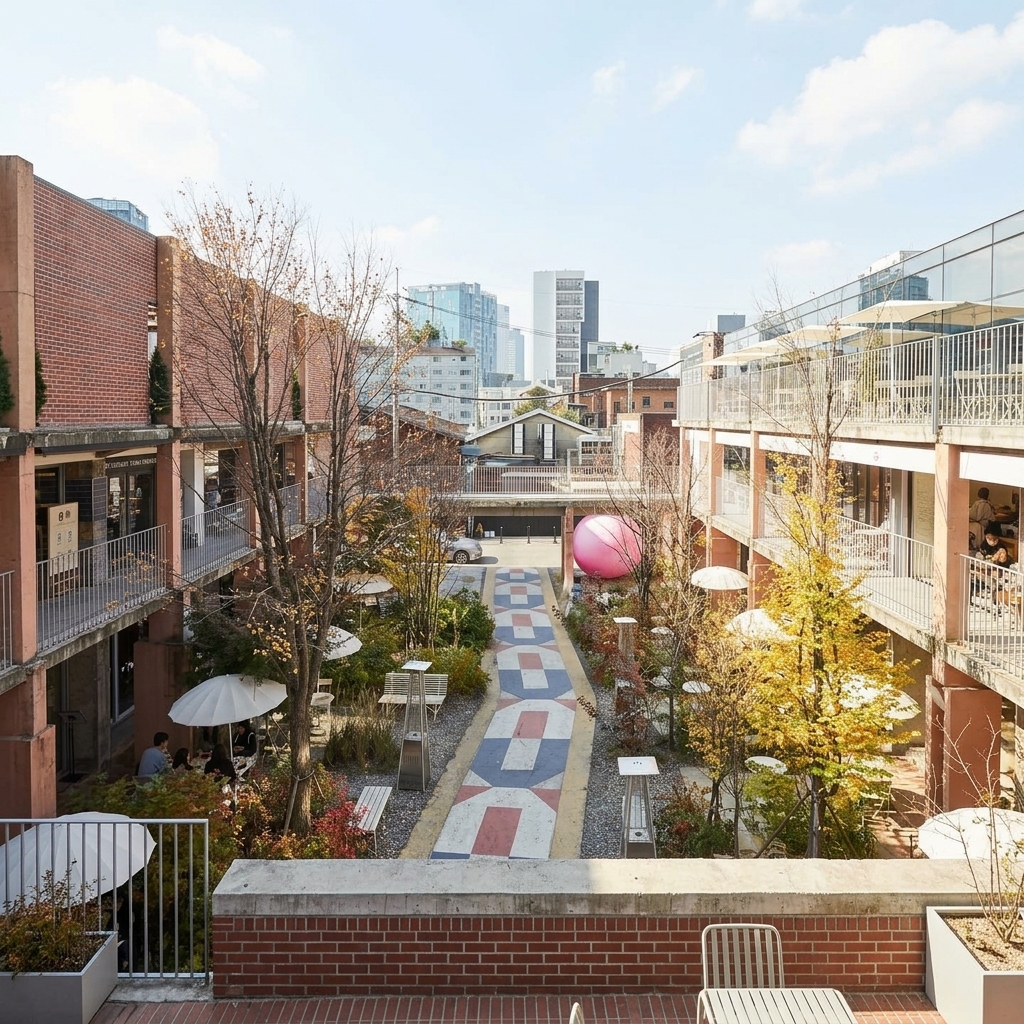
- Seongsu-dong was an industrial area where handmade shoe workshops, printing companies, and car repair shops were densely concentrated from the 1970s. Within walking distance, there were wholesalers and retailers dealing with leather and fabrics, factories producing accessories such as heels and buckles, and workshops handling cutting and sewing, allowing the entire shoe-making process, from design to finished product, to be carried out in one neighborhood. At one point, a significant portion of Seoul's shoe manufacturing was concentrated in this area, and the high density of workshops, combined with low rental costs and convenient access to Gangnam and the city center via Subway Line 2 and the Suseo-Bundang Line, led to young artists and designers starting to gather in vacant factories and warehouses around 2010. Red brick buildings and slab warehouses were transformed into espresso bars, select shops, and bakeries, while retaining their original exterior, creating a scene where a cafe with large windows is located next to a metalworking shop with its shutters open. As the renovation of old factory structures spread throughout the area, Seongsu-dong became known as "Seoul's Brooklyn," and it was even included in the "Coolest Neighborhoods in the World" list published by the British magazine Time Out in 2024.
It is recommended to divide the walking route into three sections. Start at Yeonmujang-gil, where old warehouses have been converted into cafes, pass through the area around Gudutema Park, which is home to many handmade shoe workshops, and walk to Seoul Forest Cafe Street, where shops converted from detached houses line the street. Seoul Forest, Seongsu Station, and Ttukseom Station are located within approximately 1 km of each other in a straight line, allowing you to visit cafes, workshops, and bakeries in a single walk.
Seongsu-dong Yeonmujang-gil Cafe Alley
The name Yeonmujang-gil comes from the Yeonmujang (training ground) where soldiers in the Joseon Dynasty practiced martial arts. The street is an alley that extends from Subway Line 2 Ttukseom Station, passes Seongsu Station, and continues towards Seongsu Intersection. As you walk, you will see cafes and select shops converted from old warehouses located next to car repair shops and printing companies with their oil-stained shutters still in operation. Recently, shops have also spread to "Dongyeonmujang-gil," which extends from Seongsu Station towards the opposite side of Seoul Forest, and to the "Bukseongsu" area in the north, so even if you turn off the main street into a side alley, you will find new showrooms and old workshops alternating.
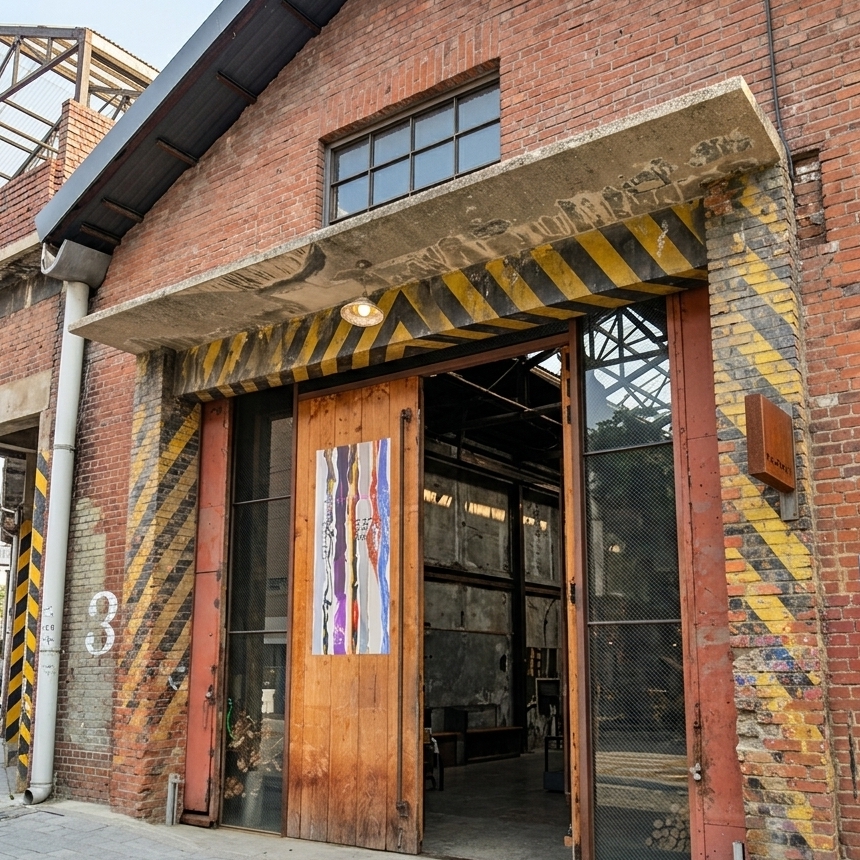
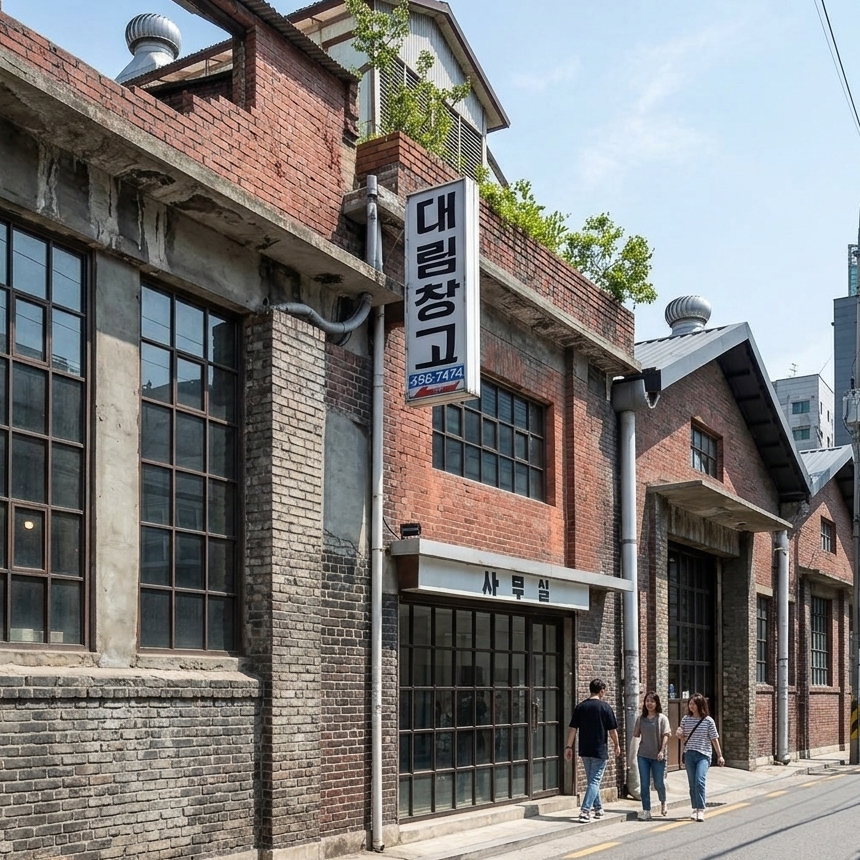
The building that first initiated the transformation of this street is Daerim Warehouse. It was built as a rice mill in the early 1970s and used as a warehouse for storing factory materials from the 1990s. Today, it has been transformed into a gallery-style cafe that preserves its faded red brick exterior, high ceilings, and wide, open interior without pillars. The structure and bricks from the rice mill era have been preserved as much as possible during the renovation, and it now operates as a cafe while also hosting art exhibitions, fashion shows, new car launch events, and performances. Inside, the wide entrance used for loading cargo, the steel trusses that extend to the ceiling, and the brick walls with peeling paint are mixed with the exhibition furniture, allowing you to read the three layers of use – from rice mill to warehouse to gallery – in the structure of the building.
When choosing a shop, start by looking at the original purpose of the building. Places that have left the iron gates, H-beams, and rough concrete floors untouched, or that have left the signs of printing shops or metalworking shops, or espresso bars that show off their roasting machines through large windows, each have a different character. The more a shop retains traces of the old factory, such as cargo sliding doors, exposed pipes and steel trusses on the ceiling, and machine fixing anchor bolts embedded in the floor, the more it preserves the original form of the industrial building. If you go just one block into the alley from the main street where cafes line up, you will find a section where there are more people in work clothes than tourists. The sound of handcarts carrying leather accessories and sewing machines still lingers here, and this is closer to the original industrial landscape of Seongsu-dong.
While walking, pay attention to the details such as the color and mortar of the bricks, the low-lying roofline, and the typeface of the new signs. Since 2018, Seongdong-gu has been operating the 'Red Brick Building Support Project,' managing 1970-80s factories and warehouses and 1980-90s red brick houses as preservation targets. The target area has been expanded to all of Seongsu-dong by 2025, and up to 20 million won per building is provided for construction or major renovations, up to half of the construction cost. As a result, the streets still have industrial architectural elements such as brick walls stacked thickly like a firewall, long vertical factory windows, and triangular outlines of gable roofs. The contrast between the weathered exterior walls, which have been touched by time for nearly half a century, and the minimalist English signs is the key to the facade of this alley. Before entering a cafe, take a walk around the block and try to figure out which buildings used to be rice mills, printing shops, and shoe factories by looking at the ventilation openings, sign traces, and window shapes on the exterior walls.
Seongsu-dong Shoe Theme Park and Atelier Shops
The Seongsu-dong handmade shoe street is an alley created by shoe workshops that have gathered since the 1970s. The flow of the shoe industry, which began after liberation near Yeomcheon Bridge near Seoul Station, passed through Myeongdong and moved to Seongsu-dong, and settled in this area. It is now considered the largest handmade shoe production area in Korea, with more than 70% of the country's handmade shoe production concentrated here. The structure of carrying out all the processes of shoe making, from design and cutting to sewing and finished product delivery, within one neighborhood still remains, and the street extends from the center of Seongsu Station (lines 1-4) to the Ttukseom Station direction.
Located in the center, the Shoe Theme Park is an outdoor space of 5,197 square meters, located about 250 meters from Seongsu Station. It started with a citizen participation budget proposal in 2013 and underwent a renovation project in 2015, adding solar power facilities and sports facilities, and now has its current form. Inside the park, there is a large shoe-shaped symbolic sculpture, benches commemorating artisans, a circular plaza, an outdoor stage, and a handmade shoe promotion center. Nearby, there are about 30 shoe workshops and local workshops that jointly operate the 'FromSS' 1 and 2 stores, which are connected to stores where you can directly purchase finished products. At the promotion center, you can see various shoes made by local workshops, experience leather crafts, and use the communication space, so it is natural to walk around the park, see the sculptures and promotion center first, and then enter the alley.
Seongsu Station itself is worth exploring. The Seoul Metropolitan Government, Seongdong-gu, and Seoul Transportation Corporation have jointly created a handmade shoe museum and exhibition space called 'ShoeSpot Seongsu' inside Seongsu Station on Line 2, guiding visitors through the history of the handmade shoe district and the shoe-making process from the moment they step out of the station. As you exit the station, you will find murals that guide you towards the handmade shoe district, and at the entrance of the district, there is a sculpture called 'Beautiful Hands - The Artisan's Hands' that depicts the hands of an artisan, along with a red shoe sculpture. Inside the alley, there is also a complex space that houses a pop-up store and showroom on the first floor and offers leather crafting classes on the upper floor, so the process of buying and selling finished shoes and teaching the skills to make them takes place in the same building, one above the other.
In the alley, walk one block further from the main street. Through the glass windows of the workshops on the first floor, you can directly observe the shoe-making process, such as cutting the leather according to the pattern, shaping the leather on the last (shoe mold), attaching the sole, and finishing the heels. Throughout the district, there are also wholesale and retail distributors selling accessories such as leather fabric, buckles, insoles, thread, and adhesive, so you can see not only the finished shoes but also the materials that make them up, all in one alley.
Here is a summary of the points to look out for while walking through the alley:
- Workshop windows — Leather spread out on the cutting table, lasts hanging on the wall, workbenches where sewing and sole attachment are in progress
- Promotional center and joint sales store — Exhibition of local workshop products at the Shoe Theme Park promotional center, display of finished products and price comparison at the FromSS store
- Generational differences in signage — Comparison of old shoe store signs written in handwriting and the design signs of newly established ateliers and select shops
- Accessory shops — Display shelves and samples of wholesale and retail stores that sell leather, buckles, thread, insoles, and adhesives
- District markers — Signboards and entrance sculptures guiding the way from Seongsu Station towards Ttukseom Station, ShoeSpot Seongsu exhibition
- Building materials — Sections with old red bricks, wooden window frames, and low rooflines remaining
This is a neighborhood where pop-up stores and select shops come and go quickly, so the stores that are there may change depending on when you visit, even if it's the same alley. You can see the order of change, with new stores being added on top of the old handmade shoe workshops, by looking at the font of the signs, the layout of the stores, and the old names that remain on the shutters. If you are thinking of getting custom-made shoes, you will go through the process of having your feet measured at a workshop and choosing the last, leather, and heel height, so it is a good idea to visit both the finished product stores and the custom-made workshops.
Seoul Forest Cafe Street, Handmade Bakery Street
Seoul Forest Cafe Street is a bakery and cafe area located north of Seoul Forest Park, in the alleyways of a residential area with red brick houses. It is a few minutes' walk from Seoul Forest Station on the Suseo-Bundang Line and a similar distance from Ttukseom Station on Line 2, making it a great place to combine with a walk in the park. Unlike the large warehouse-style cafes on Yeonmujang-gil, this area features small shops that have been converted from detached houses, lined up along the alleyways. From a rustic bakery with a yellow exterior to a bakery that uses its basement as a workshop, and a dessert shop that uses its courtyard as seating, the shops, which occupy entire houses, display their signs beyond low fences.
Seoul Forest, which is conveniently located nearby, is a large park that opened in June 2005. It was originally the site of Korea's first water treatment plant in 1908, which was later used as Ttukseom Amusement Park and Seoul Racecourse. After the racecourse moved to Gwacheon in 1989, the area was transformed into a park. The approximately 350,000-square-meter site is divided into four areas: a cultural and artistic park, an experiential learning center, an ecological forest, and a wetland ecological center. The Han River and the Jungnangcheon stream flow along the edges of the park. With an ecological forest where deer roam, a wide grassy field, and a pedestrian bridge leading to the Han River, it is a great place to buy some bread, find a place to sit, and relax.
When choosing a bakery, first take a look at the display case. The more freshly baked croissants, tangzhong bread, olive ciabatta, and salt bread are available, the faster the oven is turning, and the more likely you are to find warm bread. If the shop has an open kitchen or a workshop that you can see from the inside, you can check the items that were baked that day by tray, and you can choose between bread that is being warmed and bread that is being baked. The best time to buy is when the smell of butter wafts through the alleyway, and you can catch the moment when an employee is refilling the empty trays with fresh bread.
If you plan to visit Seoul Forest, it is convenient to finish your walk in the park and exit through the north gate, then enter the residential alleyways. Bakeries, dessert shops, and small cafes appear alternately between the low fences and red brick walls, making it a good route to buy bread and then return to the park benches or grassy areas to eat. Since the alleyways are narrow and each shop does not have many seats, it is better to buy the bread to go and head towards the park rather than trying to find a seat in the shop. This will reduce your waiting time and allow you to enjoy a longer walk along the forest path that leads to the Han River.