Meet at Sodol Adeulbawi Park and see the Jukdojin Sea.
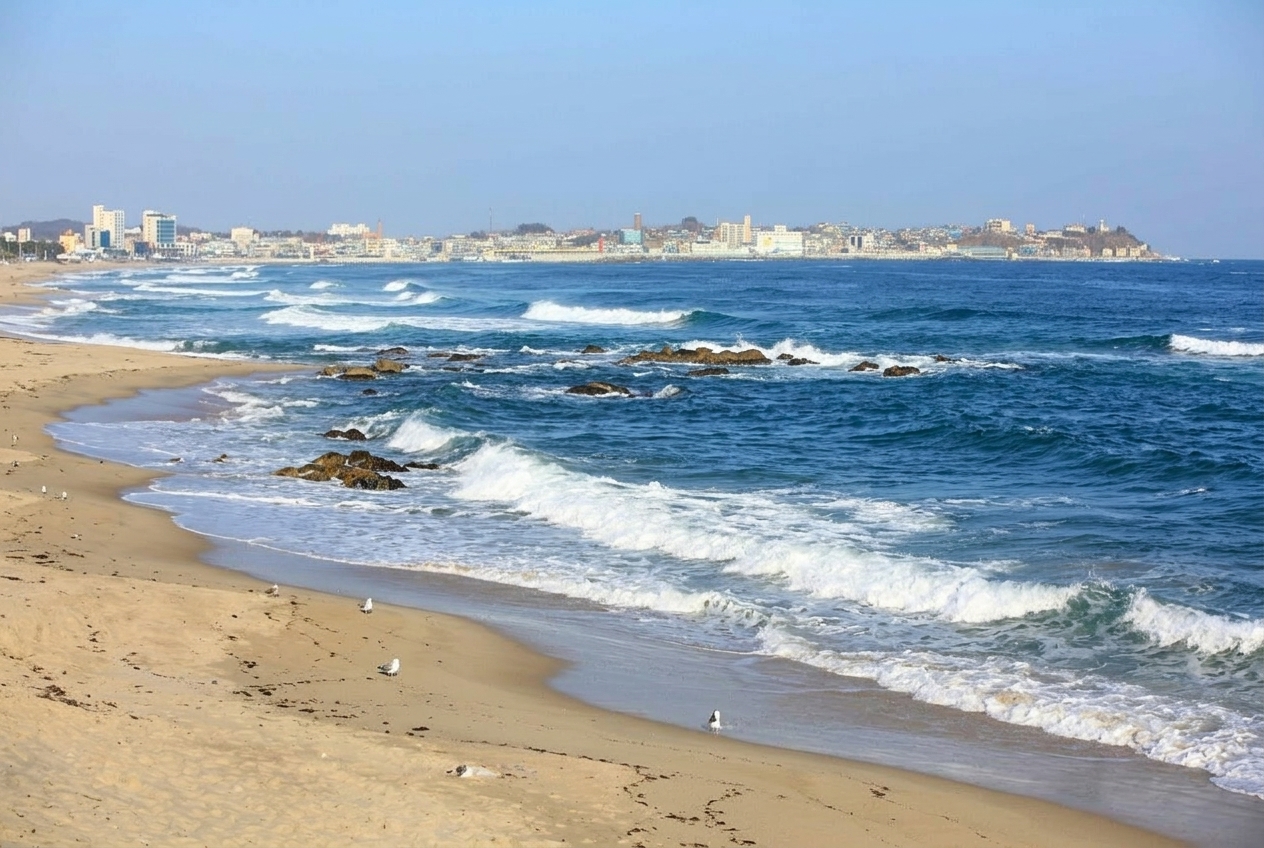
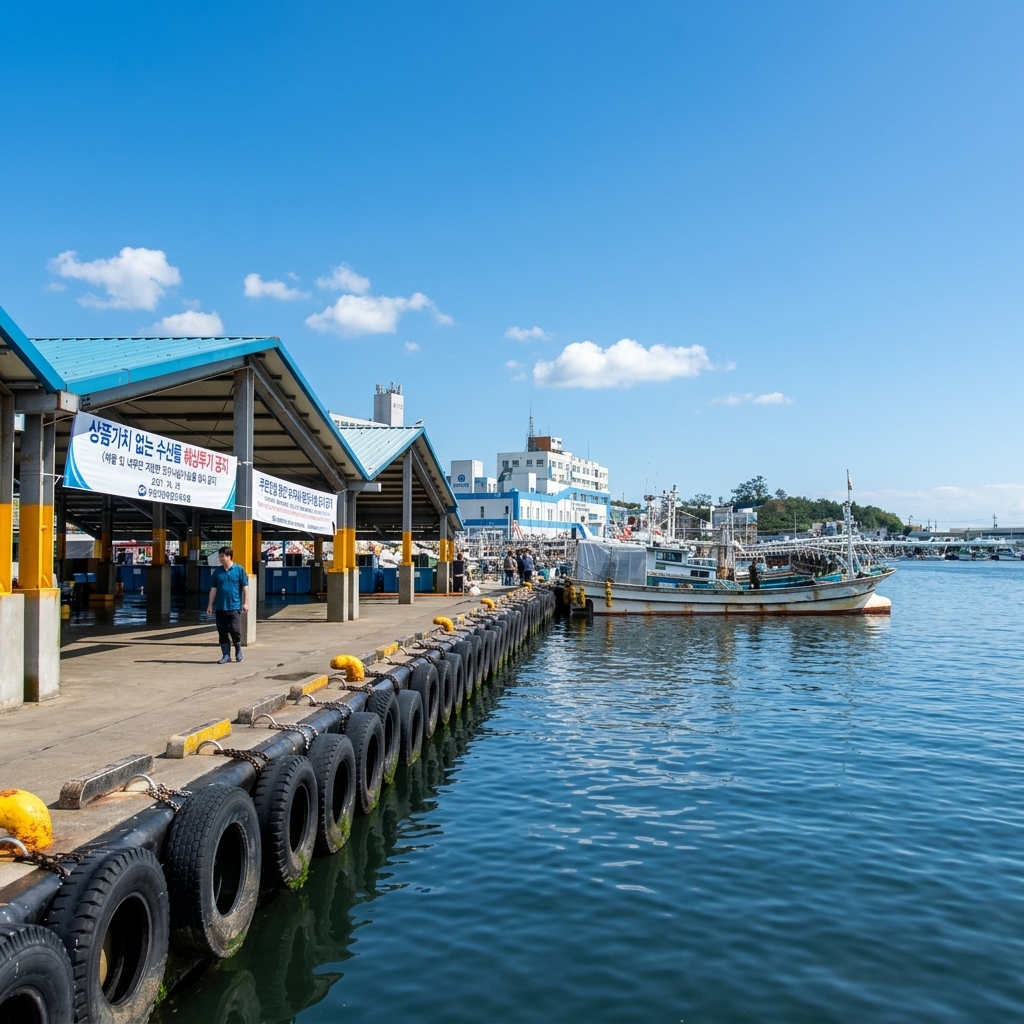
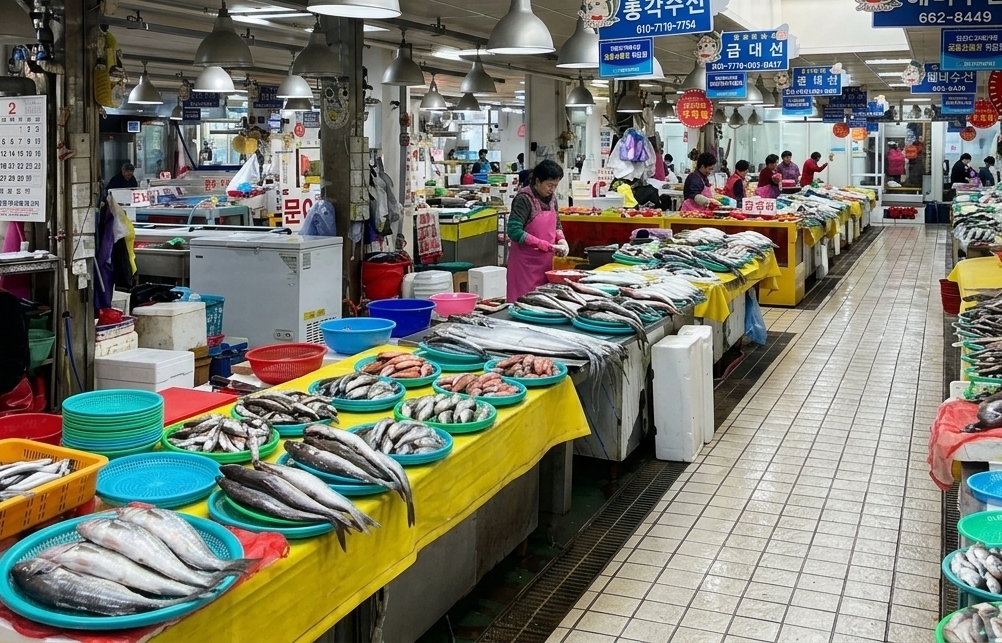
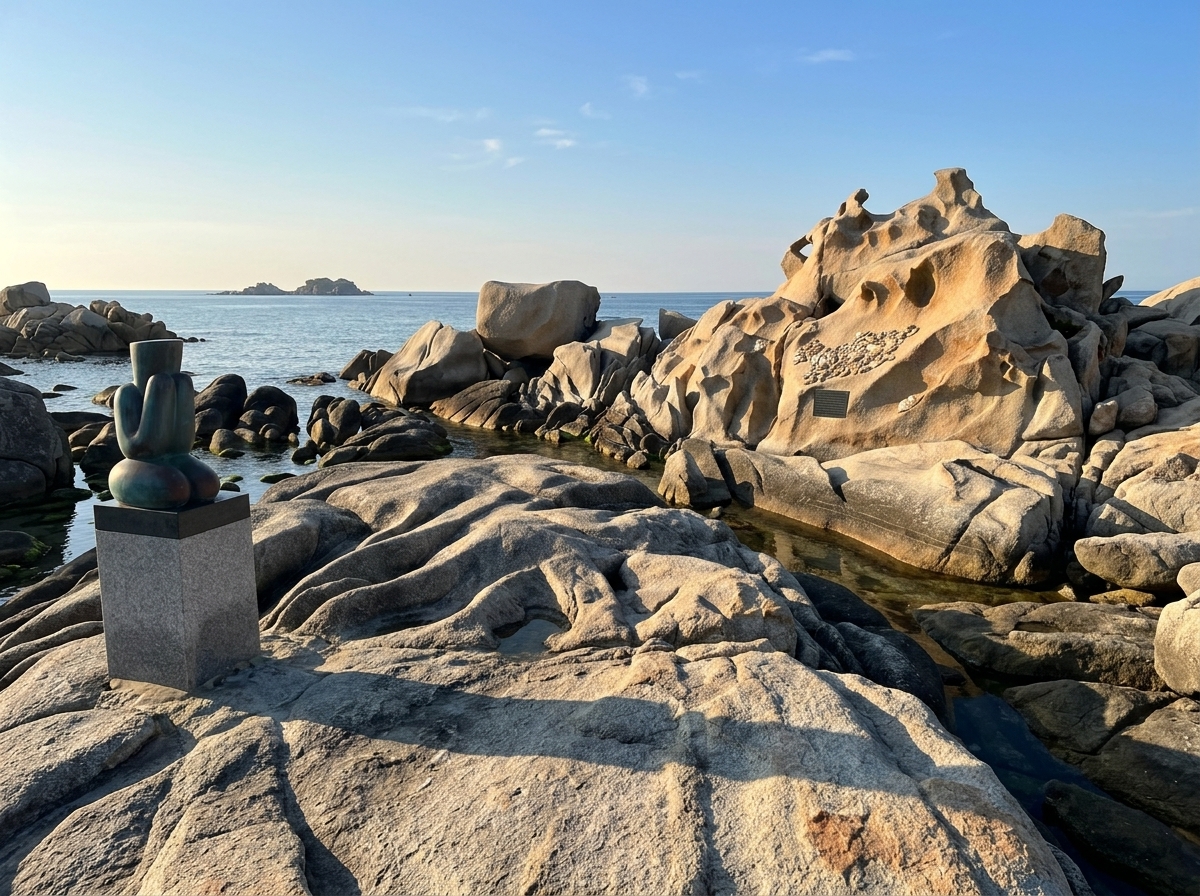
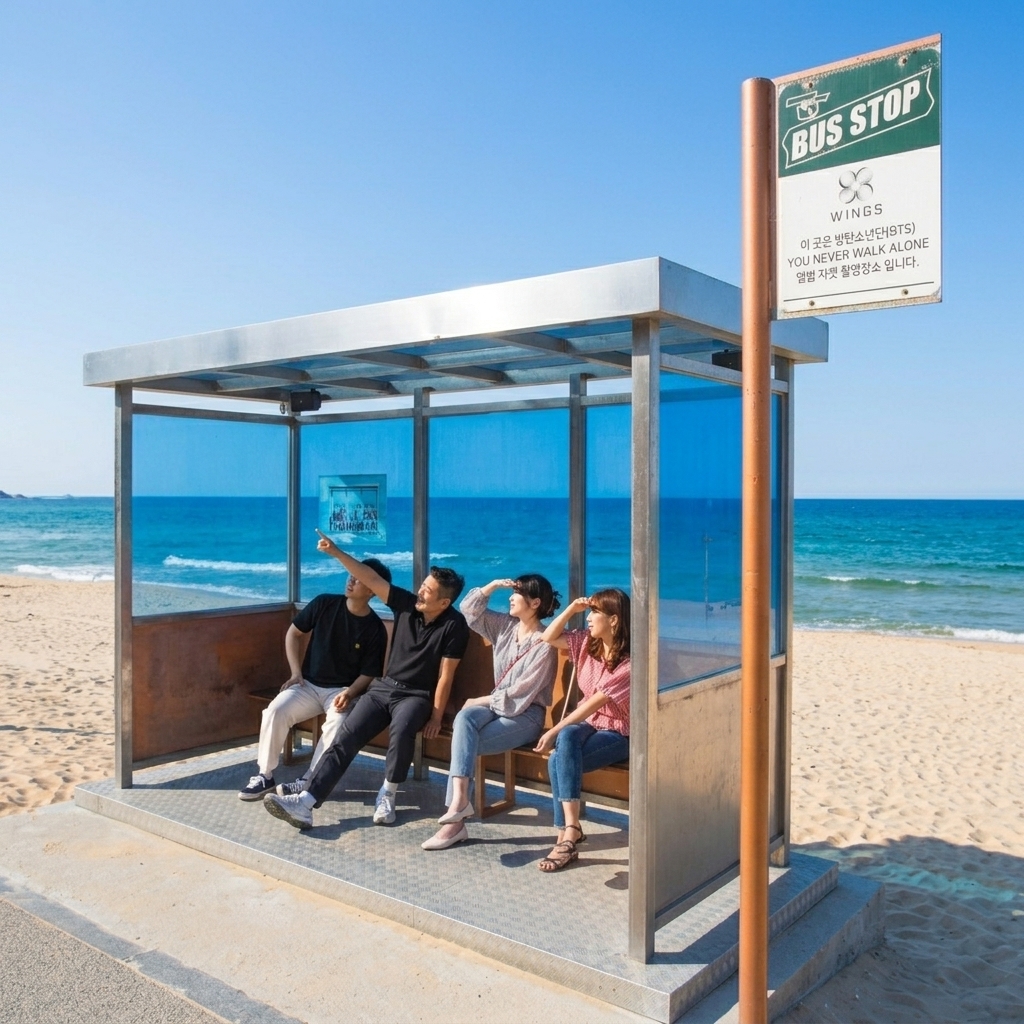
If you plan a day trip to Joomunjin Beach, it is convenient to start at the BTS bus stop at Hyangho Beach, go down to the alley of the Joomunjin Port's seafood market, and end at Sodol Adeulbawi Park. All three places are located along the northern coastline of Gangneung, so the distance between them is not too far, and even though they are all on the East Sea, the scenes you encounter are different: a photo zone on the sandy beach, a market next to the port, and a coastal park with rocks. You can start by walking along Hyangho Beach in the morning, where the sea is clear, and then around lunchtime, choose fresh seafood and seasonal marine products at the market. In the afternoon, when the wind has calmed down a bit, you can walk along the Sodol coastal promenade, and you will gradually experience the sea of Joomunjin.
Joomunjin Beach Hyangho Beach BTS Bus Stop
The BTS bus stop at Hyangho Beach became a representative K-pop travel destination in Joomunjin, as it is known as the location where the album jacket for BTS's album YOU NEVER WALK ALONE was filmed. At the time of filming, it was a temporary structure set up for the album photos and was later dismantled, but as fans and tourists continued to visit, it was rebuilt as a white bus stop photo zone of the same shape. Now, it has become a place where domestic and international travelers visiting Joomunjin Beach and Hyangho Beach take photos with the sea in the background.
The bus stop is placed low and neatly on the sandy beach. If you sit on the white chair, the horizon stretches out behind you, and if you stand a little further away, the blue sea, sky, and bright sand all come into one frame. The bus stop itself is not a large or fancy facility, but since there are no tall buildings nearby, it is good for taking photos with the sea in the background, just like in the album jacket. Next to the bus stop, there is a beach deck and a walking path, so you can naturally walk along the beach after taking photos.
During peak hours, a short line may form in front of the bus stop. Often, one group sits on the chair and takes photos, and the next group adjusts the overall composition from outside the bus stop, so it is more convenient to take photos quickly and move towards the beach rather than staying for a long time. If you are traveling alone, you can use the tripod installed on site to place your phone and take photos, but on windy days, the device may shake, so it is a good idea to double-check the stability.
Hyangho Beach is adjacent to Joomunjin Beach, so it would be a pity to just see the bus stop and leave. The sandy beach is wide and the water is clear, so you can walk slowly to the waves without feeling cramped, and in the summer, the unique vibrancy of the beach adds to the activity around the bus stop. On windy days, sand may blow, so it is more comfortable to bring a hat or a light jacket, and in the late afternoon, soft light falls on the white wall of the bus stop, making the color of the sea even more vivid.
Joomunjin Traditional Seafood Market Fresh Seafood Street
If you come down south from Hyangho Beach, you will find a seafood market alley centered around Joomunjin Port. The traditional Joomunjin Seafood Market is a place where you can choose fresh seafood brought in from the East Sea. Shops selling live fish, restaurants serving raw fish dishes, and dried seafood stores are densely packed inside and outside the market. As Joomunjin is well known as a squid producing area, many tourists come to enjoy squid sashimi and cold noodle soup with raw fish. Depending on the season and catch, various types of seafood such as Korean lanternfish, sand lance, red crab, blue crab, flounder, and rockfish fill the tanks and stalls.
When you enter the market, your eyes will first be drawn to the movement in front of the tanks. Live fish such as flounder and rockfish swim through the water, baskets are filled with fresh fish and squid that arrived that day, and the smell of grilled food and spicy soup wafts from the restaurants inside the alley. If you walk together to the open-air stalls near Joomunjin Port, you can see the natural flow of the port where boats come in and goods are moved, and how it connects with the market's business.
It is better to take a look around the alley before deciding on a menu, compare the condition and composition of the tanks, and then choose. The ordering method varies slightly from store to store, but it is common to pick seafood and have it prepared as sashimi or enjoy a meal at nearby restaurants with spicy soup, steamed dishes, or grilled food. Korean lanternfish is often enjoyed in stews or grilled, while squid can be eaten in various ways depending on its condition and the season, such as sashimi, cold noodle soup with raw fish, blanched squid, or whole steamed squid. The satisfaction level of red crab and blue crab can vary greatly depending on their yield and size, so it is better to check how many are included and whether there is a separate steaming fee or dining method rather than just looking at the price.
If you are with people who don't like raw fish, you can choose menus such as cold noodle soup with raw fish, pufferfish dishes, codfish stew, or spicy soup at restaurants near the market. This is also a good reason to include Joomunjin Market as a lunch spot during your trip along the northern coast of Gangneung. One person can eat live sashimi, while another can choose hot soup or grilled fish, so even if there are differences in taste, it won't cause much inconvenience. After the meal, you can browse the dried seafood stores for dried squid, anchovies, and salted seafood, or take a walk around the harbor to see the docked fishing boats and breakwater.
- Since the composition of seafood varies depending on the season and fishing conditions, it is best to compare the tanks and stalls of several stores before and after your visit if you have decided on a specific menu.
- The method of preparing sashimi, setting the table, and cooking spicy soup may vary from store to store, so it is helpful to briefly check what is included before ordering to avoid confusion when paying.
- There are many areas with moisture on the market floor, so shoes that provide good grip are more comfortable, and parking and waiting times may be longer during peak meal hours on weekends.
Sodol Adeulbawi Park Coastal Rock Formation Trail
Sodol Adeulbawi Park, located on the seashore of Sodol Village, north of Jumunjin, is a place that shows a different kind of sea from the lively atmosphere of the market alleys. Sodol Village is said to be a port village that has been around for about 400 years, and it is said that the village was named after the fact that the shape of the village resembles a cow. If you pass the Sodol Port sign at the entrance of the park and head towards the sea, the white rocks that rise suddenly from the water will first catch your eye.
It is said that the rocks here are rocks that were in the sea during the Jurassic period about 150 million years ago, and that they rose to the surface through tectonic movements. Over a long period of time, waves, wind, and salt eroded and carved the surface of the rocks, creating joints and weathering pits, and if you look closely, you can see small holes and rough textures on the surface of the rocks. Therefore, the Sodol coast is closer to a geological travel destination where you can observe how the East Sea waves have shaped the rocks, rather than just a walking path to look at the sea.
The most famous rock is Adeulbawi, which has a hole in the middle. It is also called Jukdobawi, Elephant Rock, and Sowonbawi, and it is widely known by its current name because of the legend that a couple who longed for a child had a son after praying for 100 days. When the waves rush through the holes in the rocks, the waves break into white foam, and on windy days, the sound of the waves echoes more loudly around the rocks. It is a good place to stay for a while while thinking about the legend, but it is safer not to go down to the bottom of the rocks, as it is wet and the surface is uneven.
The path inside the park is closer to a short coastal walking path that connects Sodol Port, a group of rocks, and a sea observation deck at relatively short intervals, rather than a long, continuous course. In the sections with decks and railings, the East Sea horizon opens up widely, and you can also see small waterways where the waves are relatively calm between the rocks. If you explore the path to Seonghwangdang and the village together, you will naturally feel that this is not just a tourist spot, but a place where the port life and seaside beliefs of Sodol Village overlap.
If you are walking with a child, it is good to move along while thinking of names based on the shape of the rocks. There are rocks that look like elephants, rocks that stretch out long towards the sea, and rocks that have been rounded at the bottom by the waves, all gathered within a short distance, so it is not boring even if you do not walk fast. However, after rain or on days with high waves, the surface of the rocks and the steps may be slippery, so it is better to wear shoes with stable soles, such as sneakers. On windy days, it is safer to move around the observation deck and the flat deck sections rather than leaning out beyond the railings.
Order of walking along the Jumunjin Sea
If you want to combine all three places at once, it is good to set the order of movement as Hyangho Beach, Jumunjin Fish Market, and Sodol Adeulbawi Park. At Hyangho Beach, you can see the bright sea centered on the BTS bus stop and the wide sandy beach, and at the market around Jumunjin Port, you can see the seasonal flavors of the East Sea seafood by going back and forth between the tanks, stalls, and restaurant alleys. Finally, if you go up to Sodol Adeulbawi Park, the scenery changes from the sandy beach and port to the coastal landform created by rocks and waves.
If you are traveling by car, the distance between each point is along the Jumunjin coastline, so there is no need for a major detour. If you use public transportation, it is best to check the bus schedule and stop locations in advance, and if you plan your day around meal times at the market, your itinerary will be less disrupted. By simply adjusting the order of activities – taking photos with the sea as a backdrop, eating seasonal seafood, and walking along Sodol Beach during a time when the wind is less strong – your trip to Jumunjin will flow much more smoothly.