A Spring Day Illuminated by Lanterns: A Journey to a Peaceful Mountain Temple.
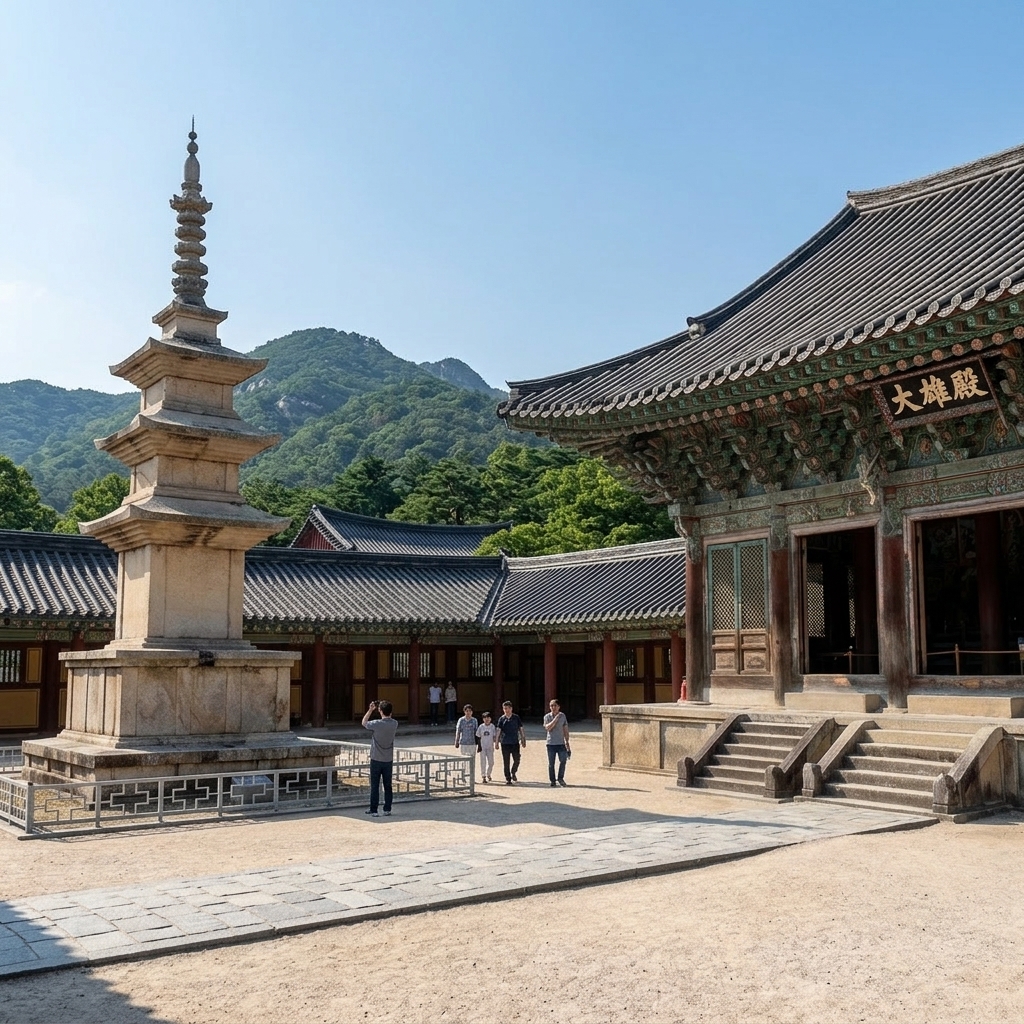
As spring deepens and the verdant hues of May become more vibrant, it's a season that stirs the heart and makes one want to embark on a journey. When the mountains and fields are awash in light green, one's feet naturally lead them outside. Especially around Buddha's Birthday, the sight of colorful lanterns hanging in rows at mountain temples comes to mind. The lanterns swaying gently in the spring breeze, hanging at the eaves, is a unique charm of this season that brightens the heart just by looking at it. The tradition of lanterns, which has been passed down for generations, is said to have originated from the desire to hang them with each person's wishes, like guiding lights in the dark, and their warm light subtly colors the spring night.
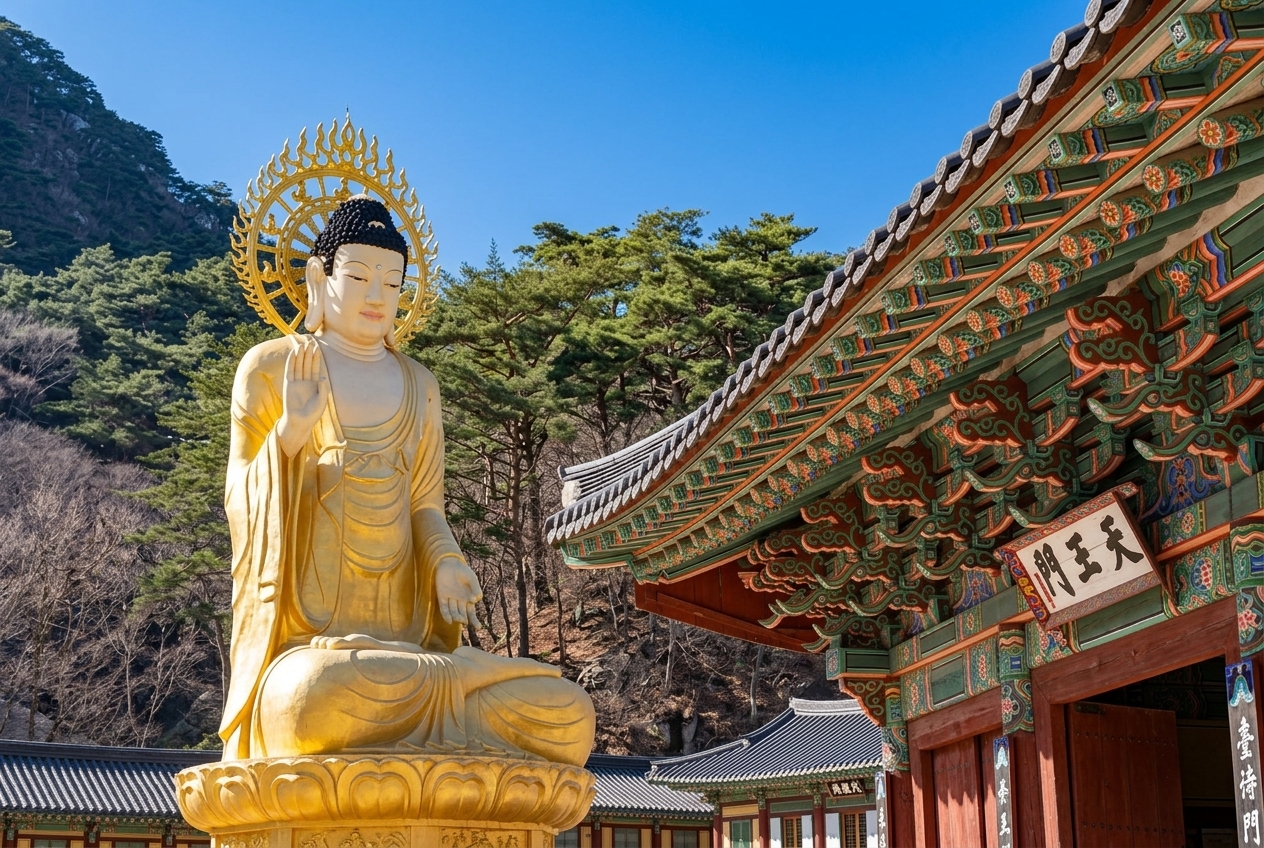
If you want to take a step back from the hustle and bustle of daily life and quietly contemplate your thoughts, there is no better place than an old temple. The moment you enter the temple grounds, the air feels different, and your pace naturally slows down. This is a gift that only temple travel can offer. Typically, after passing through the main gate, which is often the first entrance to a temple, you'll encounter the four guardian deity gate and the gate of non-duality, leading you step by step from the secular world to the realm of the Buddha. As you slowly walk along this path, your mind gradually calms down. Today, I'd like to introduce a collection of temples and a shrine, each with its own unique story and atmosphere. Take your time, walk slowly, and enjoy the deepening spring and the tranquility of the temple.
A Place Where a Thousand Years of History Flows, Boeun Lawju Temple
Nestled in the foothills of Sokrisan in Boeun, Chungcheongbuk-do, Lawju Temple is an ancient temple that has silently endured for over a thousand years. It is said that it was first established by the monk Uisin during the Silla Dynasty, and later, after being rebuilt by Yeongsim, a disciple of the monk Jinpyo, it became a central place for the practice of the Maitreya faith. As you walk along the well-maintained forest path past the main gate, the noise of the secular world gradually fades away, and you are left with the sounds of birds and the murmuring of the stream. The evergreen pine forest and lush trees alternate, casting shadows, making the walk to the temple itself a place of rest. In spring, the light green new leaves scatter a soft light on the path, allowing you to fully feel the vitality of the season with each step.
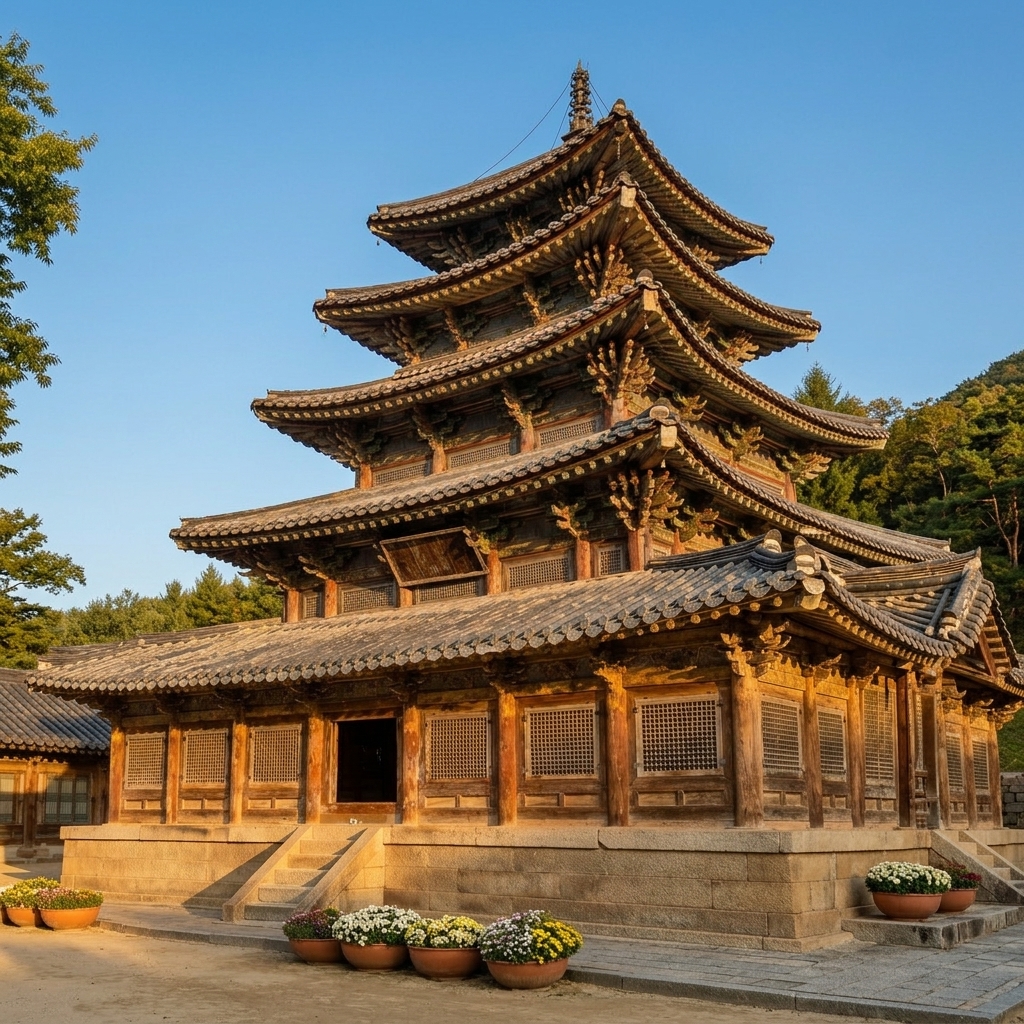
This is also the place listed as a UNESCO World Heritage Site under the name Mountain Temples, Korea: Sanctuary for Buddhist Culture. The most striking feature of the temple grounds is undoubtedly the Palsangjeon. It is the only remaining five-story wooden pagoda in Korea, and the current building is said to have been rebuilt after the Imjin War. Inside, it houses the Palsangdo, which depicts the eight scenes of Shakyamuni's life, making it both a pagoda and a vessel containing the life of the Buddha. In addition, there are numerous other cultural treasures designated as national treasures throughout the temple grounds, such as the Ssangsa Stone Lantern and the Seokyeonji, and simply walking slowly allows you to feel the weight of the long history that has been accumulated over the years. If you read each of the information boards as you go around, you will find that even the smallest sculptures that you might otherwise overlook reveal the dedication of the ancestors.
On the way to the temple, you can also see the Jeongipumsong. This pine tree is said to have lifted its branches to clear the way for the king's palanquin during the reign of King Sejo, and it is now designated as a natural monument and protected. When you see the majestic form of this old pine tree that has stood in the same place for hundreds of years, your heart becomes more generous even before you reach the temple. In particular, when the sound of the law drum and the temple bell echoes through the mountain slopes in the early morning and evening, and the chanting from the Daeungbojeon Hall gently flows out, the unique atmosphere of the temple becomes even more profound. If you would like to spend a night and fully experience the daily life of the temple, I recommend that you check the availability and schedule of the temple stay program in advance. A day in the mountains is different from a day in the city, and even a short stay will allow you to experience a lighter heart.
A Place Where the Aesthetics of Silla Remain, Gyeongju Bulguksa Temple
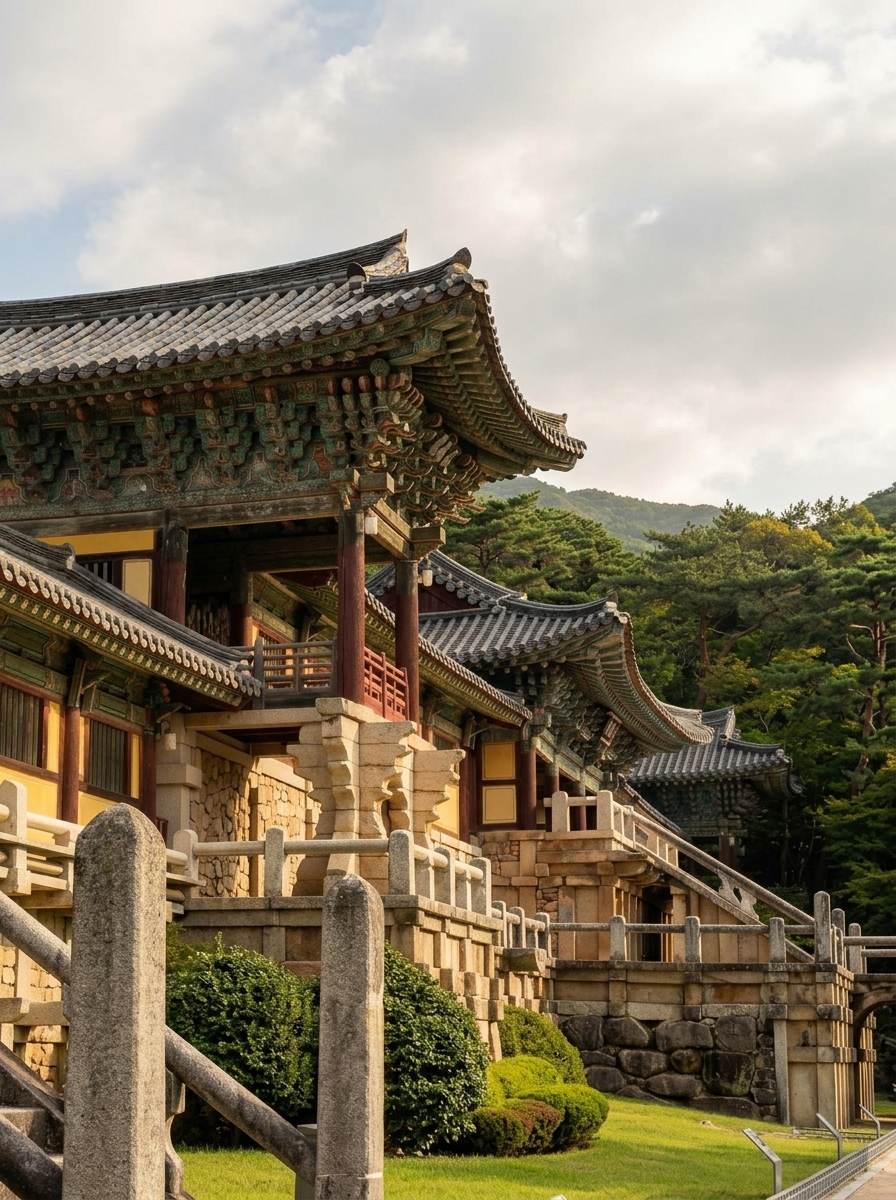
When you think of Gyeongju, the first temple that comes to mind is Bulguksa Temple. It is said that it was started by Kim Daeseong during the reign of King Gyeongdeok of Silla and completed during the reign of King Hyegong, and it is a place where the desire of the Silla people to bring the land of the Buddha to this world is fully reflected in every corner of the temple grounds. When you see the stone walls and steps, each one carefully crafted, you feel as if the touch and wishes of the people from a thousand years ago are being passed down to you across time. In particular, the Cheongungyo and Baegungyo bridges, which lead to the Daeungjeon Hall, are not just simple steps, but are said to be built as a symbol connecting the world of people below the bridge and the world of the Buddha above the bridge, adding a deeper meaning to each step you take.
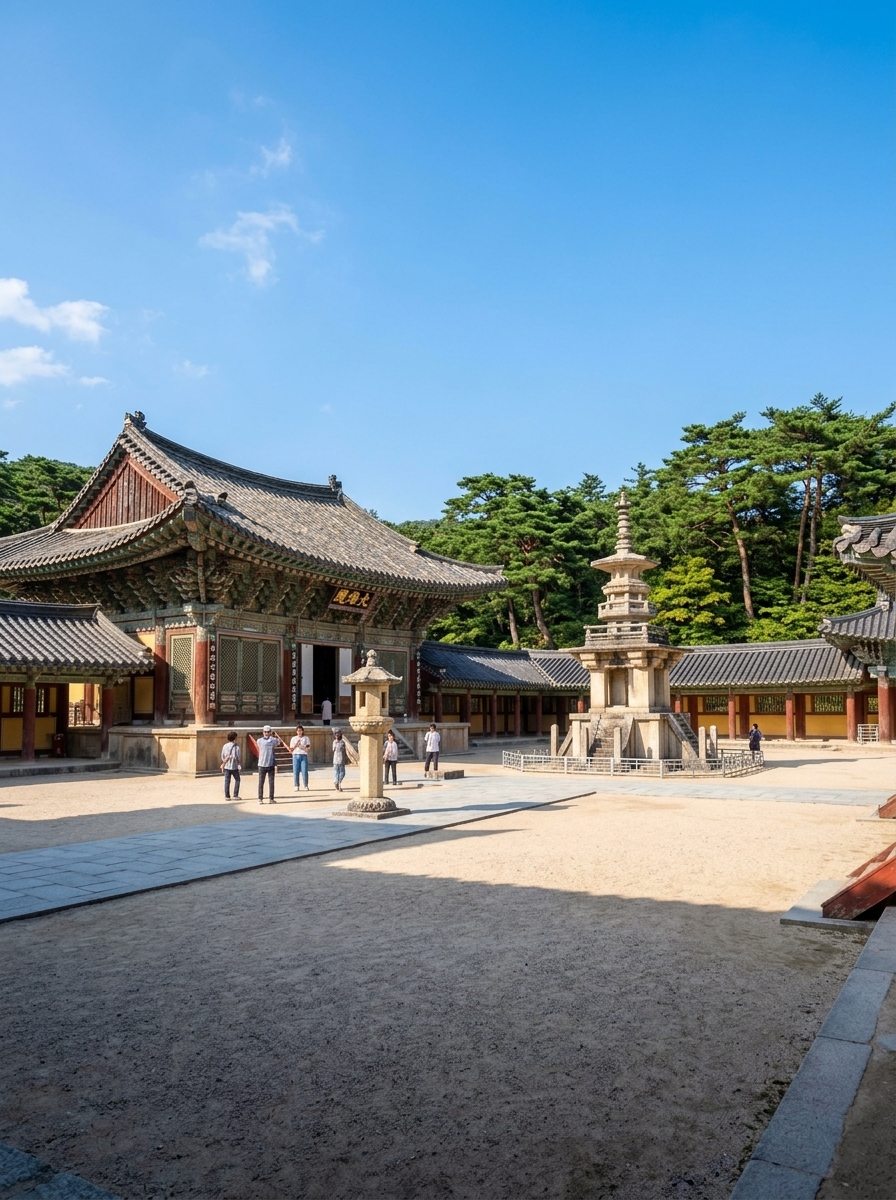
The Dabo Pagoda and Seokgatap, which stand side by side in front of the Daeungjeon Hall, are iconic landmarks that showcase the beauty of Korean Buddhist architecture. It is said that the two pagodas were placed facing each other to show that the past Buddha, Dabo Buddha, affirms the correctness of the teachings of the present Buddha, Shakyamuni, and that the Lotus Sutra is being visually demonstrated. As you gaze at the Dabo Pagoda, which is full of splendor, and the Seokgatap, which stands out with its restrained elegance, facing each other in balance, you will feel that even your restless mind is calmed. If you visit early in the morning, there will be relatively few people, so you can enjoy the peaceful temple grounds more leisurely.
The temple grounds are large and the paths are well-maintained, making it easy to stroll around, which is another great attraction. The terrain is not very steep, so it is also easy to visit with your parents, making it a perfect place for a leisurely spring outing with the whole family. If you have time, I recommend that you also visit Seokguram, which is located on the slopes of Tohamsan. It is also listed as a UNESCO World Heritage Site along with Bulguksa Temple, and it is considered one of the finest examples of Silla stone art, with a round ceiling made of carefully carved stones. As you walk along the path connecting the two places, you will naturally understand why the entire city of Gyeongju is often compared to a giant museum. I recommend that you take a day or two to explore it slowly.
A Treasure Trove Nestled in the Gaya Mountain Forest, Haman Haeinsa Temple
Located deep in the Gaya Mountains of Haman, Gyeongsangnam-do, Haeinsa Temple is one of the most important temples in Korea, along with Tongdosa and Songgwangsa. Among them, it is widely known as the Haeinsa Temple, a repository of Buddhist scriptures. Above all, it is famous for housing the Tripitaka Koreana. During the Goryeo Dynasty, after the wooden printing blocks that had been created earlier were destroyed in a foreign invasion, the monks spent more than a decade recreating them in order to pray for the peace of the country. These are the more than 80,000 printing blocks that are now housed in the temple, and their enduring presence adds a heavy weight to the entire temple grounds.
The Janggyeongpanjeon, where the printing blocks are stored, cannot be viewed from the inside, but simply facing the space where the wisdom of centuries has been quietly preserved will make your heart feel solemn. The two buildings, the Sudarajang and the Beopbojeon, which make up the complex, are simple in appearance, with all the elaborate decorations removed. What is remarkable is that the size and location of the windows are different at the top and bottom, so that the wind can naturally flow in and out, and the humidity and temperature are automatically regulated. Thanks to this scientific wisdom, the printing blocks have been preserved without any changes for many years, and when you stand in front of the building, you can faintly grasp what the dedication and wisdom of the ancestors were like. The Janggyeongpanjeon is also listed as a UNESCO World Heritage Site in recognition of its value.
From the main gate to the temple, a lush forest path stretches out. It is not a long walk, but as you slowly pass through the trees casting cool shadows, you will experience that your mind is cleared. The sound of the stream flowing along the valley follows you as you walk, making you feel more relaxed. Thanks to its location deep in the mountains, the temple grounds are surrounded by clear air and the scent of the forest throughout the year, and there are relatively few visitors, making it a perfect place to take a break and have some time for yourself during your travels.
A Place Where the Spirit of Admiral Yi Sun-sin Resides, Asan Hyeonchungs Shrine
This time, I would like to introduce a slightly different place. The Hyeonchungs Shrine in Asan, Chungcheongnam-do, is a shrine dedicated to Admiral Yi Sun-sin. It is said that it was established at the request of a group of local scholars during the Joseon Dynasty, and later the king personally wrote the inscription Hyeonchungs Shrine. It is not a temple, but it is a perfect place to reflect on the unwavering spirit that one person maintained throughout his life and to gather one's thoughts. Simply walking slowly through the spacious grounds will make you feel more composed. It has a different atmosphere than the tranquility of a temple, a solemn and refined atmosphere that is unique to this place.
The pine tree path, which stretches straight from the entrance, is the first thing that greets visitors, and as you walk along the well-maintained path, your heart naturally becomes reverent. You can also see the main hall where the admiral's memorial tablet is enshrined, as well as the old house where he lived for a while after his marriage, allowing you to feel the history more closely. The admiral's connection to Asan, where his maternal family lived, is reflected in this old house, and you will find yourself quietly thinking about the life of the man who is remembered as a hero.
The spacious grounds also include an archery range, a red gate, a well-maintained garden, and a pond, and the scenery changes with the seasons, adding to the pleasure of walking. There is also a memorial hall where artifacts related to the admiral's life and the Imjin War are displayed. If you carefully examine the Nanjung Ilgi, which is the admiral's diary of his daily life during the war, as well as his sword, the Imjin Jangcho, the collection of letters, and the Sipgyeongdo, a series of ten paintings depicting the admiral's life, you will have a clearer understanding of the story of that day. As you follow the stories and artifacts on display, you will find that the admiral, who was once just a figure in a textbook, becomes more familiar. If you are visiting with children, it is a good idea to talk about the admiral's life beforehand, so that you can have a more meaningful time. I recommend that you take your time and visit.
Before You Leave, Remember This
- The operating hours, prayer times, and days of closure may vary from temple to temple and shrine to shrine, so it is a good idea to check again before you visit to avoid disappointment.
- Temples and shrines are generally located on slopes and have many stone steps, so it is safer and easier to walk if you wear shoes with low heels and comfortable soles.
- During prayer times, please be quiet and respectful of the other people who are praying.
- Photography may be restricted in some of the cultural treasures and buildings in the temple grounds, so please check the information beforehand and follow the instructions.
- The temperature can fluctuate greatly during the day in the mountains, so it is a good idea to bring a light jacket in case it gets chilly.
- Around Buddha's Birthday, the number of visitors may increase, so if possible, try to visit early in the morning to enjoy a more peaceful temple.
A quiet afternoon spent in a temple is a time to pause and gently soothe the self that has been rushing around.
How about taking a walk to a nearby temple in May, when lanterns are brightly hung, and letting your heart guide you? The warm spring sunshine, the breeze that brushes against your skin, and the peace of mind that you find in between. No matter which place you choose, the time you spend walking slowly and staying quietly will be the most precious gift. I hope that your temple trip on Buddha's Birthday will remain in your heart as a lasting and gentle comfort.