Build a one-page consultation record: from pre-treatment questions to follow-up at home
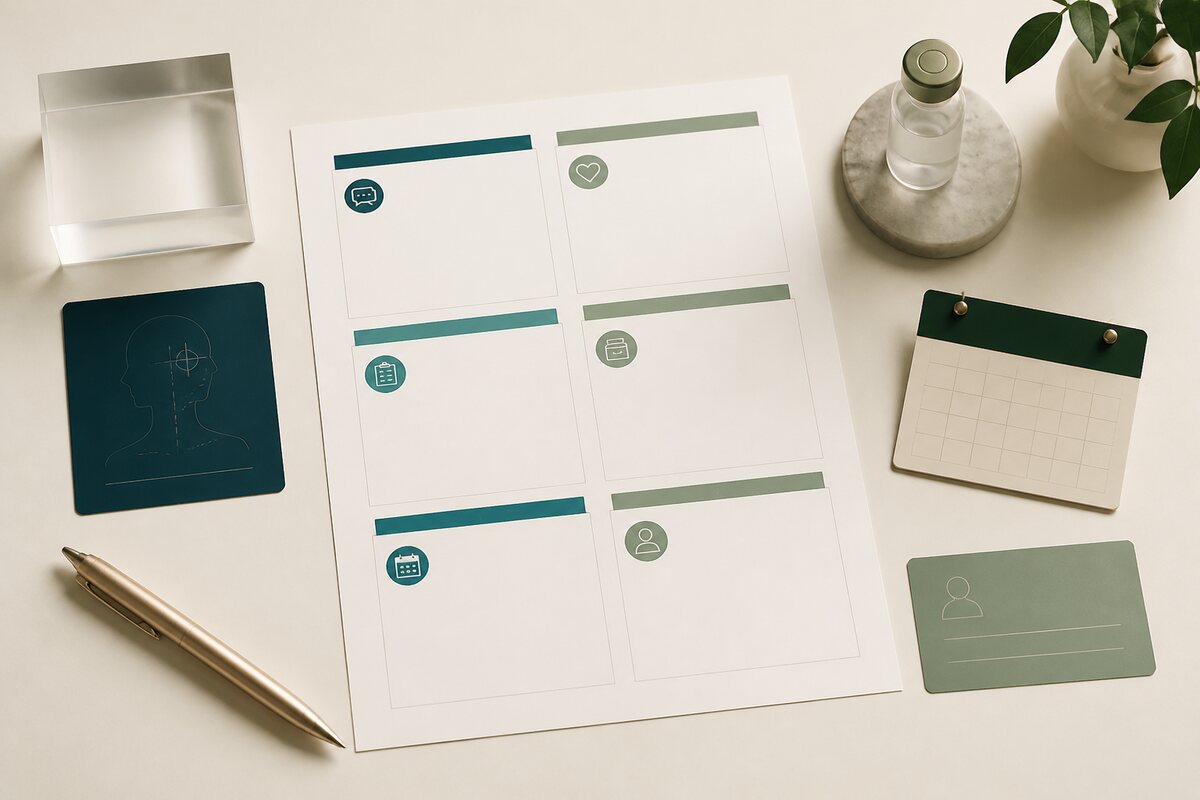
After several clinic consultations, a phone may contain nothing but screenshots of prices. Later you cannot tell whether the product or quantity differed, who would perform the treatment, or whether follow-up was included. Fill the same six fields at every consultation and a quote becomes the beginning of a useful care record.
1. The change you want — and do not want
Words such as “natural” mean different things to different people. Write down the area and change you want, along with changes you do not want, such as reduced expression or facial volume. If you have photographs of previous treatment, show the before state and result with dates.
2. Medicines, allergies, and previous procedures
Disclose prescription and over-the-counter medicines, supplements, and topical treatments. If you do not remember a name, bring the packaging or a prescription photograph. For a medicine allergy, record what happened when you took it, not only the name. Include pregnancy or breastfeeding and any history of severe swelling, pigmentation, or scarring after treatment.
3. The actual product, device, and quantity
Confirm that what will be used matches what was advertised. For injectables, record the product, manufacturer, and units or cc. For energy devices, record the exact device, area, and shot count. Product licensing can be checked again by name in Korea’s official drug and device database.
4. The consultant and the person treating you
Ask whether the person consulting with you is also performing the treatment, and record the treating practitioner’s name and specialty. A clinic employing a specialist and that specialist treating you today are two different facts. Check the institution’s registered specialties and specialist head-count in public data; confirm the individual in person.
5. Final total and cancellation terms
Confirm whether the displayed price includes anaesthesia, sedation, consumables, prescriptions, aftercare, and follow-up visits. For a package, record the expiry date, cancellation and refund terms, and what happens to unused sessions after you return home. Get the total you will actually pay, not only a per-session figure.
6. The route to help if something goes wrong
Confirm contacts inside and outside opening hours, an email or messenger that works after you leave Korea, and the languages available. After treatment, request receipts, medical records, documentation of the product and dose, and aftercare instructions. If possible, obtain them in a language a clinician at home can read.
When not to wait
If your condition after treatment worries you or worsens unexpectedly, do not wait for the sightseeing schedule or flight home to end before telling a healthcare professional. If the treating clinic cannot be reached or you suspect an emergency, seek care at the nearest medical facility first. Dispute procedures come after immediate care and documentation.
The six lines to keep on one screen
- Wanted change / unwanted change
- Medicines / allergies / previous procedures
- Product or device / quantity / area
- Consultant / treating practitioner / specialty
- Inclusions / final total / cancellation terms
- Aftercare contact / how to obtain medical records
References
General information only; it does not replace a diagnosis. Decide with a doctor whether a procedure suits you.