Why laser hair removal takes several sessions: growth cycles, skin tone, and comparable quotes
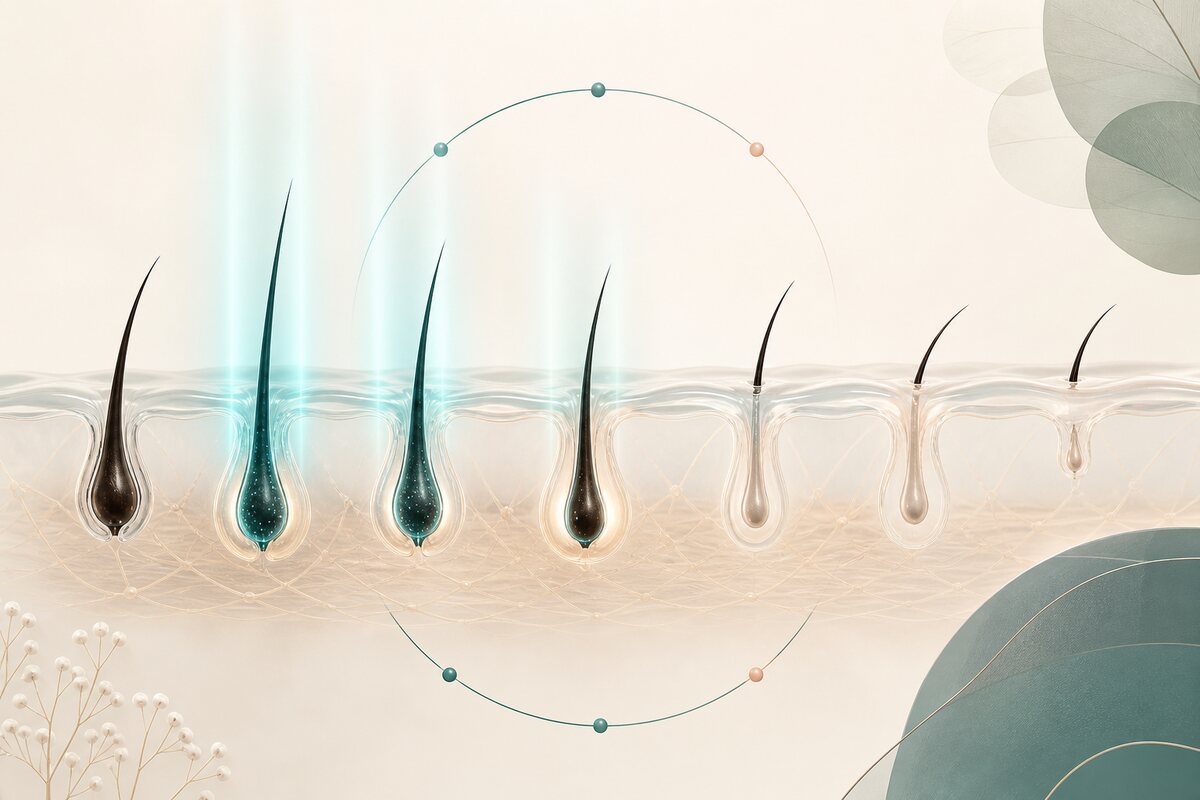
Laser hair removal is usually advertised by body area and number of sessions. The number actually needed varies with hair thickness and colour, skin tone, body area, hormonal influences, device, and response. It is more accurate to think of laser hair removal as reducing responsive hairs across successive growth cycles, not removing every hair in one visit.
Visible hairs are not all in the same phase
Hairs in one area do not share one growth stage. Laser energy follows pigment in the hair toward the follicle, so hairs in a responsive phase are mixed with hairs that respond less. Some regrowth after one visit does not by itself mean failure. The next interval should follow the growth cycle of that area and observed regrowth, not merely a package calendar.
Why skin tone and hair colour are assessed together
The laser must distinguish pigment in the target hair from surrounding skin. Thick dark hair often provides a clearer target, while low contrast between hair and skin, or very fine light hair, can change both expected response and safe settings. Disclose a recent tan, substantial sun exposure, or a history of burns or colour change after hair removal.
Options exist across skin tones, but that does not mean using the same device and setting for everyone. Ask which wavelength and cooling method are planned for your skin and hair, and whether a test spot is appropriate.
Shaving and pulling hair out are different preparation
Shaving cuts hair above the skin. Waxing, tweezing, and epilating remove hair from the follicle as well. Removing the target can change a laser plan. Preparation and timing differ by provider, so obtain the instructions before the appointment and disclose how you recently removed hair. Medicines and topical products can also alter the skin’s response to light and should be listed.
A comparable quote matters more than “unlimited”
- Area boundary — labels such as full face, upper lip, or jawline may include different edges.
- Device and wavelength — exact device and why it was selected for your skin and hair.
- Sessions and interval — initial proposal, when response is reassessed, and terms for maintenance.
- Inclusions — whether shaving, anaesthesia, cooling, prescriptions, and care for a reaction are in the total.
What to watch after treatment
Redness and swelling can occur, with intensity and duration varying by person. Do not wait until the next appointment if you develop blistering, worsening pain, spreading colour change, or signs of infection; contact the treating provider or a nearby medical facility. Leave room in the itinerary to limit intense sun exposure and follow the aftercare plan you were given.
References
General information only; it does not replace a diagnosis. Decide with a doctor whether a procedure suits you.