Why pores look larger: oil, reduced firmness, and acne scarring need different plans
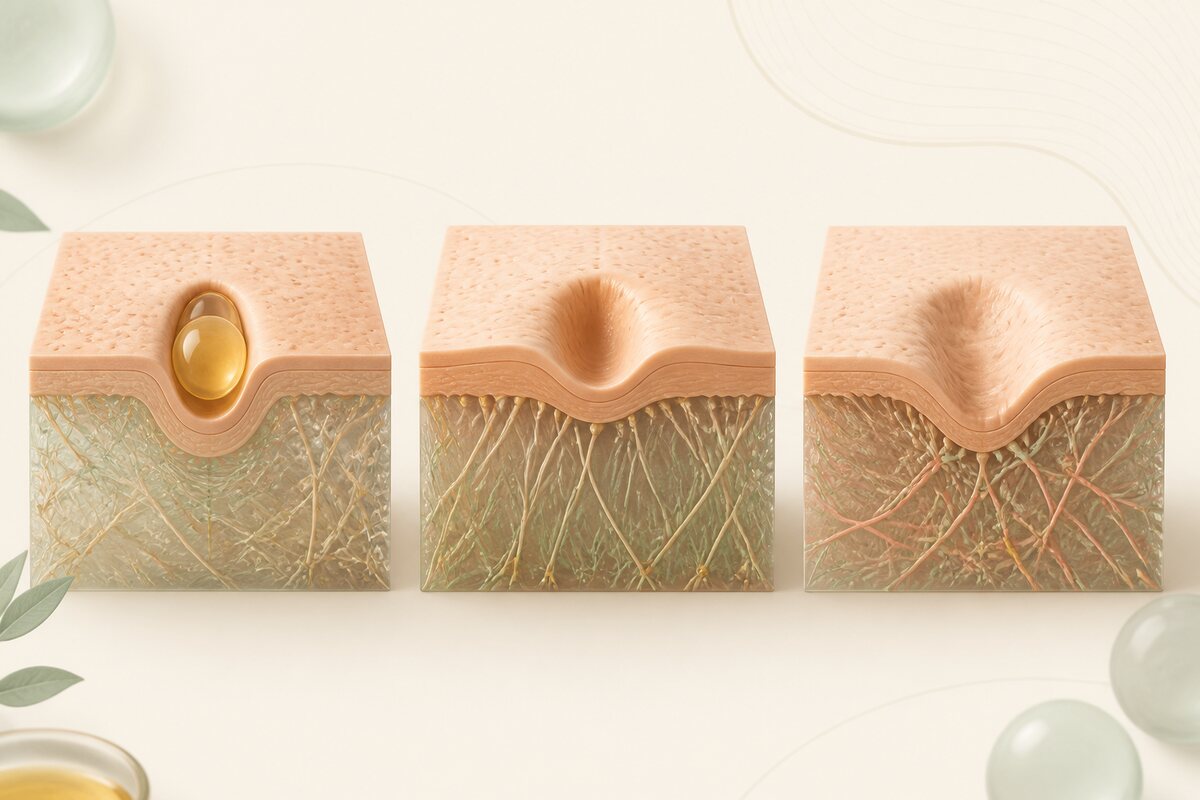
“I want smaller pores” sounds like one request, but pores can look prominent for different reasons. Oil and keratin may congest the opening, reduced firmness may let the rim stretch, and shallow acne scars may resemble pores. When the cause differs, repeating the same device is unlikely to produce the change you expected.
A pore is not a structure to erase
Pores are normal openings through which oil and hair reach the skin surface. They cannot be deleted or permanently sealed. Care aims to reduce congestion and excess oil, limit irritation, and improve support around the opening so it becomes less noticeable. Ask what can improve and what will remain instead of accepting claims to “erase” pores in one visit.
Separate the possible causes
- Oil and congestion — whether shine, blackheads, or comedones are present.
- Reduced firmness — whether pores look elongated with sagging or less visible when the cheek is supported.
- Acne scars — whether the surface level differs from the surrounding skin or has a defined depression.
- Irritation — whether harsh washing, scrubbing, or squeezing leaves the area red and more obvious.
This is not a self-diagnosis. It is a way to form better consultation questions; skin disease and scar type require an examination.
Microneedling and radiofrequency are not casual facials
Microneedling, radiofrequency microneedling, and fractional lasers often appear in pore and scar consultations. They are medical procedures that create controlled injury or heat to trigger a healing response. In 2025, the U.S. FDA reported serious complications associated with certain aesthetic uses of RF microneedling, including burns, scarring, fat loss, and nerve damage, while its evaluation continues.
The notice does not mean every device and every use has the same risk. It does mean you should ask about the exact device, needle depth and energy settings, the treating practitioner, and the plan for an adverse reaction before buying a package.
What a quote should identify
- What the practitioner believes is making your pores look prominent
- Whether oil and comedone control or a resurfacing procedure comes first
- Device, tip type, treatment area, and proposed number of sessions
- Expected redness, flaking, and crusting — and warning signs that require contact
During a short trip, include a way to review the skin’s response after you return rather than stacking several aggressive procedures together.
References
General information only; it does not replace a diagnosis. Decide with a doctor whether a procedure suits you.